

Maddy summaryHR 6768, the Public Health Nursing Act, authorizes $5 billion annually (2024-2033) to expand public health nursing services through federal grants to state and local health departments. The bill requires grantees to use funds for recruiting and training registered nurses in underserved areas, covering wages, medical supplies (like PPE), and administrative costs to improve maternal/infant health and chronic disease management. Priority is given to applicants serving communities with high chronic disease rates, maternal mortality, low-income populations, rural areas, or health professional shortage zones. This directly affects public health departments and their ability to hire nurses providing in-person care, home visits, and mobile clinic services.
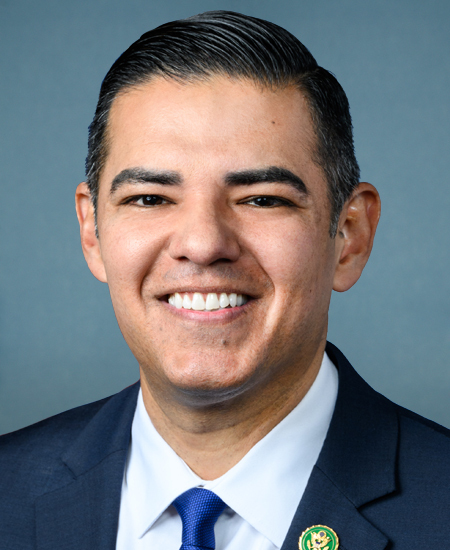
Rep. Robert Garcia
Sponsored bills
Maddy summaryThe Restore Honor to Service Members Act of 2023 establishes a Department of Defense "Tiger Team" to improve outreach to veterans with certain discharge statuses (specifically those discharged under "former section 654" before 2011, often related to policies like the "Don't Ask, Don't Tell" era). The team will collaborate with the VA, veterans' groups, and other stakeholders to identify eligible veterans, share contact information, and guide them through the existing review process under Section 527 of the 2020 National Defense Authorization Act. The bill requires the team to submit regular progress reports to Congress and a final report within three years, tracking how many veterans successfully changed their discharge status to "honorable" through the review process. This focuses on streamlining access to an existing review mechanism, not creating new benefits or altering discharge standards.
Maddy summaryHR 6720 creates a grant program administered by the U.S. Department of Agriculture to provide stabilization payments to farmworkers, meat processing workers, and grocery workers affected by natural or other disasters designated by the Secretary. Eligible entities - such as labor unions or membership organizations representing these worker groups - can apply for funding to support affected workers. The program is authorized to spend up to $50 million, with the Secretary required to report on its outcomes within four years. This bill directly affects workers in specific food industry sectors during disaster events, offering financial stabilization through grants administered by the Agricultural Marketing Service.
Maddy summaryHR 6654, the Farewell to Foam Act of 2023, bans the sale and distribution of expanded polystyrene foam food containers, packaging peanuts ("loose fill"), and coolers starting January 1, 2026. It directly affects food service providers (like restaurants and schools), manufacturers, distributors, and retailers who sell these foam products. The bill prohibits selling these items, with enforcement starting with a written warning for first violations, followed by escalating civil penalties ($250 for a second violation, up to $1,000 for fourth+ violations), while exempting small businesses with low annual revenue from repeated penalties within a 7-day period.
Maddy summaryThe Poverty Line Act of 2023 updates how the federal poverty line is calculated to better reflect current costs of basic needs. It requires annual revisions using detailed data on food, housing (adjusted for regional Fair Market Rents), childcare, and health costs (including premiums and out-of-pocket expenses), with adjustments for household size and geographic location. This revised line will directly affect households applying for federal assistance programs like SNAP, Medicaid, and housing subsidies, as it determines eligibility thresholds. The bill mandates regional poverty line variants and a public lookup tool, with implementation beginning three years after enactment. The changes aim to align the poverty measure with actual household spending patterns rather than the current methodology.
Maddy summaryThe Workers POWER Act (HR 6634) strengthens federal labor enforcement by expanding staffing and resources for the Department of Labor's Wage and Hour Division and Occupational Safety and Health Administration (OSHA). It creates new paid student positions (5 in Washington, DC, plus 2 per regional office), establishes child labor fellowships (5 per agency), and increases student loan repayment benefits for eligible employees. The bill also authorizes performance-based bonuses, retention incentives, and $250 million annually in grants to states to improve their labor enforcement capacity. These changes directly affect Department of Labor enforcement staff and state/local labor agencies working to address wage theft, child labor, and workplace safety violations.
Maddy summaryThis bill makes the Department of Education's 2023 SAVE Plan repayment regulations permanent by incorporating them directly into federal law. It directly affects federal student loan borrowers who use the SAVE Plan, which sets income-driven repayment terms. The key mechanism is transferring the specific rules from the 2023 regulations (published in the Federal Register) into Title 34 of the U.S. Code, ensuring those terms remain in effect without needing future regulatory updates. This change provides stability for borrowers and eliminates the need for the Department to reissue the same rules as new regulations.
Generating Relief for Academic Debt Using Assisted Tax Efficiency Act or the GRADUATE Act This bill expands the tax deduction for student loan interest to include payments toward principal. It also increases the maximum allowable amount of the deduction.
Maddy summaryHR 6592, the Fight Book Bans Act, provides federal grants to reimburse public school districts for legal costs when they choose to keep instructional or library materials after parental objections. It directly affects school districts (covered local educational agencies) that select materials for students and handle challenges to their removal. The bill authorizes up to $100,000 per case in grants to cover attorney fees and court costs, provided the district didn’t remove the materials and wasn’t reimbursed by the state. Funding of $15 million is authorized for fiscal years 2024-2028. The grants are strictly for legal challenges to decisions not to remove materials, not for the content of the materials themselves.
Maddy summaryHRES 895 is a resolution introduced in the U.S. House of Representatives on November 28, 2023, that condemns statements by some members of Congress calling for the expulsion of Palestinians from the United States. The resolution states such rhetoric is un-American, bigoted, and dangerous because it unfairly conflates Palestinians with Hamas and ignores the U.S. history of welcoming immigrants of all backgrounds. It specifically references H.R. 6211 (introduced November 2, 2023) as an example of harmful rhetoric. This resolution has no legal effect - it is a symbolic statement expressing the House's position.