

Maddy summaryThis bill requires states to immediately stop Medicaid recovery claims against beneficiaries' estates. Specifically, it mandates that states withdraw all existing liens within 90 days of enactment and notify affected individuals or their estates about the withdrawal. The law also prohibits states from initiating, maintaining, or collecting any future Medicaid recovery claims for benefits correctly paid. It directly affects Medicaid recipients and their heirs who were previously subject to state recovery efforts. The key mechanism is the 90-day deadline for states to remove existing liens and cease all new recovery actions.
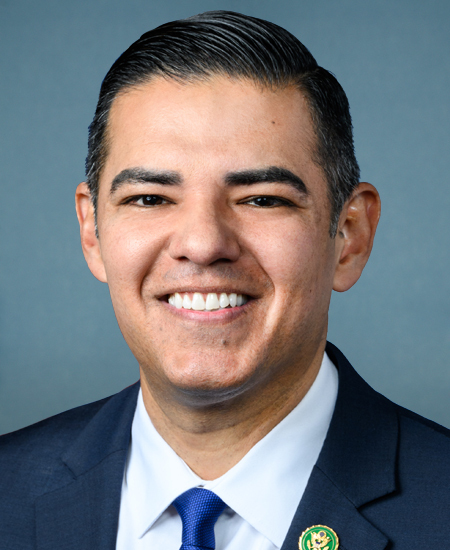
Rep. Robert Garcia
Sponsored bills
Maddy summaryHR 7503, the Health Equity for People with Disabilities Act, amends Section 330 of the Public Health Service Act to require health centers and programs serving underserved communities to explicitly include people with disabilities and provide accessible healthcare services. The bill inserts "including people with disabilities" in multiple sections and adds requirements for communication devices or services to meet accessibility needs. These changes apply to community health centers, migrant health centers, and other programs funded under Section 330, which serve medically underserved populations. The law clarifies that existing funding mechanisms remain unchanged but ensures people with disabilities are included in program eligibility and access to care.
Maddy summaryHR 7577, the CHEERS Act, creates a new tax deduction for restaurants, bars, and entertainment venues by expanding eligibility under the energy efficiency tax code (Section 179D). It defines "qualified energy-efficient draft property" as stainless steel or aluminum containers and tap equipment used for alcohol distribution in these businesses, treating them as eligible for the existing energy efficiency tax deduction. This change applies to equipment placed in service after the bill's enactment date, directly benefiting hospitality businesses that own or lease such equipment. The provision modifies existing tax code language without creating new tax rates or altering other regulations.
Young Adult Tax Credit Act This bill allows a refundable young adult tax credit and a monthly advance payment of such credit. The bill defines young adult as an individual who is at least age 18, but not yet 25, and is either a citizen, national, or resident of the United States. The amount of such credit is the sum of $500 for each taxpayer or taxpayer dependent who is a young adult in any calendar month.
Maddy summaryHR 6203 extends funding for the Emergency Food Assistance Program (EFAP) through fiscal year 2028, increasing annual commodity funding to $500 million per year for 2024-2028. It raises storage and distribution funding from $100 million to $200 million annually and creates new delivery options for geographically isolated states (Hawaii, Alaska, Puerto Rico, Northern Mariana Islands, U.S. Virgin Islands, and Guam), including allowing them to order through the Department of Defense Fresh Fruit and Vegetable Program. The bill also permits these states to use up to 20% of allocated funds to directly purchase locally grown food. Finally, it allows the Secretary to consider factors like product variety and transportation distance when awarding contracts for fresh produce packages, while maintaining nutritional goals.
Maddy summaryThe Connect the Grid Act modifies federal energy regulations to improve grid connectivity, primarily affecting ERCOT (Texas' grid) and neighboring transmission organizations like SPP and MISO. It repeals exemptions for ERCOT under the Federal Power Act and establishes minimum power transfer requirements between ERCOT and other grids (e.g., 4.3-12.6 gigawatts to SPP). The bill requires joint planning by grid operators to build or upgrade transmission facilities by 2035, prioritizing grid-enhancing technologies, existing infrastructure corridors, environmental justice communities, and renewable energy access. Projects must follow environmental reviews under NEPA and the Endangered Species Act, with mandatory community outreach to tribal, Indigenous, and low-income groups.
Maddy summaryHR 7378, the Frederick Douglass Congressional Gold Medal Act, authorizes Congress to posthumously award a gold medal to honor Frederick Douglass's legacy as a pivotal abolitionist, writer, and advocate for civil rights. The medal, designed by the Treasury Secretary, will be presented to the National Museum of African American History and Culture for display, with bronze duplicates available for sale to cover costs. This ceremonial bill does not create new laws or affect current policies - it solely commemorates Douglass's historical contributions to ending slavery and advancing equality.
Maddy summaryHR 7329, the Election Day Holiday Act of 2024, would designate November 5, 2024 (and subsequent general elections) as a federal public holiday. This change would require federal offices to close and provide federal employees a paid day off on Election Day. The bill amends Title 5 of the U.S. Code to add "Election Day" to the list of designated federal holidays, following Columbus Day. This directly affects federal employees and operations, ensuring they have a day off during general elections.
Maddy summaryThe PATH Act establishes a federal grant program to fund pre-apprenticeship programs in the building and construction trades. It provides 75% federal funding (up to $20 million annually) for nonprofit partnerships that develop training programs preparing underrepresented groups - including racial minorities, women, veterans, tribal members, and low-income individuals - from entering registered apprenticeships. Key requirements include curriculum aligned with industry standards, documented partnerships with apprenticeship sponsors, and activities like career exploration and skill assessments. Programs must track outcomes, such as participants entering registered apprenticeships, using performance metrics aligned with existing workforce laws.
Saving Local News Act This bill includes as a tax-exempt 501(c)(3) charitable organization purpose the publication (including electronic publication) of written news articles. In the case of an organization that is tax-exempt due to the publication of written news articles, the term unrelated business taxable incom e does not include any amount attributable to payments for advertisements in news publications.