

Maddy summaryThis resolution (HRES 1199) commemorates the 50th anniversary of Turkey's 1974 military invasion and ongoing occupation of northern Cyprus. It formally condemns Turkey's continued occupation, calls for the immediate withdrawal of its 35,000 troops, and demands the removal of over 200,000 Turkish settlers from the occupied territory. The resolution also urges Turkey to assist in repatriating displaced Cypriot refugees and to cooperate on resolving the fate of missing persons, including U.S. citizens. As a symbolic congressional statement, it does not create binding law but expresses the House's position on the Cyprus issue.
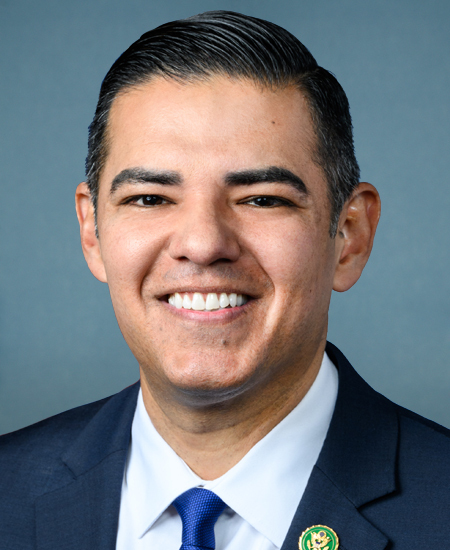
Rep. Robert Garcia
Sponsored bills
Maddy summaryThe CROWN Act of 2024 prohibits discrimination based on hair texture or style commonly associated with race or national origin, such as braids, locs, cornrows, twists, or afros. It directly affects individuals - particularly people of African descent - who face workplace, school, housing, or public accommodation discrimination due to natural or protective hairstyles. The bill expands existing federal civil rights laws (like Title VI, the Fair Housing Act, and Title VII) to explicitly include hair-based discrimination, requiring compliance in federally funded programs, housing, employment, and public spaces. It clarifies that grooming policies targeting these hairstyles violate anti-discrimination protections without creating new legal standards.
Maddy summaryHR 8080, the CARE Act, requires the Department of Health and Human Services (HHS) to establish a mandatory after-action program to review responses to public health emergencies. The program must identify solutions for issues found, improve agency collaboration, and incorporate feedback from state, local, and community partners. It also mandates an annual Inspector General evaluation and detailed reporting on areas like emergency planning, communication protocols, resource management, and infection prevention. Additionally, the bill requires HHS to create a risk communication strategy ensuring public health messages are clear, culturally sensitive, accessible, and translated into relevant languages for at-risk populations. The bill directly affects HHS operations and its agencies' emergency response processes, focusing on procedural improvements rather than new policy changes.
Maddy summaryHRES 1156 is a symbolic resolution expressing the U.S. House of Representatives' support for designating April 17, 2025, as "Cambodian Genocide Remembrance Day." It commemorates the 50th anniversary of the Khmer Rouge regime's takeover of Cambodia on April 17, 1975, which led to the deaths of nearly 2 million Cambodians. The resolution does not create new laws or affect any individuals; it solely urges the President to issue a proclamation encouraging national observance of this day to honor victims and survivors. It follows similar recognitions by cities like Lowell and Los Angeles, and the state of Massachusetts.
Maddy summaryHR 8025, the Blast Overpressure Safety Act, requires the Department of Defense to implement new protocols for monitoring and addressing blast-related brain injuries among military personnel. The bill mandates baseline and annual neurocognitive assessments for all service members, establishes detailed blast exposure logs tracking each member's cumulative exposure to weapons firing and training, and sets safety thresholds for blast overpressure exposure. It also creates a Warfighter Brain Health Initiative requiring evidence-based prevention strategies, specialized treatment programs for high-risk personnel, and regular reporting on brain injury incidents to Congress. The legislation requires the Department to document all blast exposures, track treatment outcomes, and publish annual reports on the effectiveness of these safety measures.
Maddy summaryThis bill creates a new federal tax credit for family child care providers who operate from their primary residence and hold state licenses. It allows qualifying providers to claim up to $5,000 in startup costs per year, including licensing fees, supplies, insurance, safety equipment, furniture, and required home renovations. The credit applies only once per provider (no repeat claims) and expires after 7 years. It directly benefits small-scale, licensed family child care providers serving at least two non-family children, aiming to reduce their initial business setup costs.
Maddy summaryThis bill requires federal agencies to include specific equity goals in their planning documents. Agencies must set at least one goal (or 20% of total goals, whichever is greater) focused on improving services for underserved communities and individuals, defined as groups systematically denied full participation in economic, social, and civic life. Agencies must also consult with community groups, local governments, and research partners when developing these plans. The law amends existing planning requirements under Titles 5 and 31 of the U.S. Code to implement these changes.
Maddy summaryThis bill requires each federal agency to establish an Equity Advisory Team with at least 10 specific agency roles represented, including leadership from civil rights, data, human capital, and policy teams. It creates an Equity Subcommittee within the Performance Improvement Council to coordinate equitable service delivery guidance across agencies and share best practices. The bill also mandates that Chief Data Officers ensure agencies follow equitable data collection and use standards, and establishes an Equitable Data Working Group to report quarterly on achieving equity in federal data practices. These provisions directly affect all federal agencies by requiring new internal structures and reporting on equitable operations.
Maddy summaryHRES 1111 is a symbolic resolution introduced by Rep. Robert Garcia (CA) on April 2, 2024, recognizing neurodivergent people (estimated at 50+ million in the U.S.) and their contributions. It does not create new laws but formally acknowledges neurodiversity’s value in science, technology, arts, and society. The resolution encourages efforts to raise awareness, promote inclusion, eliminate stigma, and commends advocates working to support neurodivergent individuals. It calls on all Americans to build a more inclusive society, aligning with civil rights principles without specifying policy changes.
Maddy summaryHR 7849, the Disaster Resiliency and Coverage Act of 2024, establishes a federal grant program to help homeowners in high-risk disaster areas make their homes more resilient. The program provides up to $10,000 per household (adjusted annually for inflation) for specific qualifying mitigation activities, such as reinforcing roofs, installing flood barriers, or creating fire-resistant landscaping. Homeowners must have an adjusted gross income under $250,000 ($500,000 for joint filers) and the work must meet FEMA-established standards. States and tribal governments administer the program, with funds intended to incentivize insurance companies to offer or increase coverage in vulnerable areas.