

Maddy summaryThe American Energy Worker Opportunity Act of 2024 creates a new Office of American Energy Workers within the Treasury Department to support workers displaced by coal mine or fossil fuel plant closures. It provides eligible workers (those with 12+ months of near-full-time employment at a closing facility) with 60 months of wage replacement payments (adjusted for inflation), health insurance premium assistance, retirement savings contributions, and educational benefits for them and their children. The bill requires facility operators to notify the Treasury 90 days before closure and prioritizes hiring these workers for new clean energy projects funded by federal grants. This law directly affects workers in coal and fossil fuel industries facing permanent layoffs, offering concrete financial and career transition support.
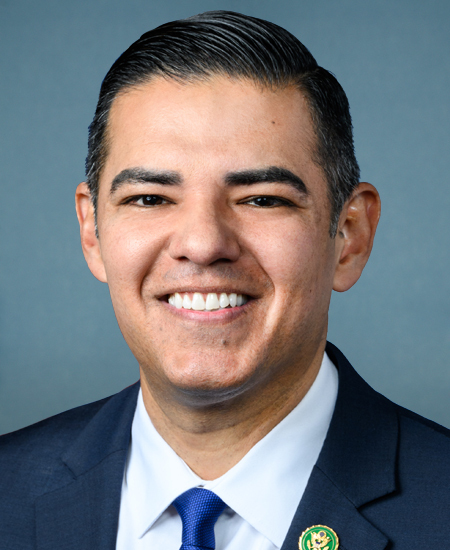
Rep. Robert Garcia
Sponsored bills
Maddy summaryHRES 1437 is a ceremonial resolution designating the week beginning September 9, 2024, as "National Hispanic-Serving Institutions Week." It recognizes Hispanic-serving institutions (HSIs) - colleges and universities with at least 25% Hispanic enrollment - and their role in educating low-income students, advancing economic mobility, and serving 31.7% of all undergraduate students. The resolution calls for the public and organizations to observe this week with ceremonies and activities during Hispanic Heritage Month. It does not create new laws, allocate funding, or change existing policies - it is purely a symbolic gesture of recognition.
Maddy summaryThis bill designates the U.S. Postal Service facility at 130 South Patterson Avenue in Santa Barbara, California, as the "Brigadier General Frederick R. Lopez Post Office Building." It updates all official U.S. government references to the building to reflect this new name, with no policy changes or funding impacts.
Maddy summaryHR 9529, the SAFER Nursing Homes Act of 2024 (despite its title referencing "Sustained Allocations" in the text), provides mandatory funding for inspections of nursing facilities participating in Medicare and Medicaid. It allocates $492 million for fiscal year 2025 specifically to support surveys and certifications of skilled nursing facilities and nursing facilities under federal programs. This funding directly affects Medicare/Medicaid-certified nursing homes by ensuring resources for required regulatory oversight. The bill does not create new rules but secures financial support for existing inspection processes, with future funding determined annually by the Health and Human Services Secretary.
Maddy summaryHR 7585, the Enhanced Cybersecurity for SNAP Act of 2024, requires states to transition all SNAP (food stamp) EBT cards to chip-enabled technology by 2029, phasing out magnetic stripes. It mandates states to provide mobile-friendly digital interfaces for managing EBT accounts, including real-time transaction alerts, fraud reporting tools, and virtual card numbers for online purchases. The bill prohibits states from using outdated password requirements inconsistent with federal cybersecurity standards and ensures no replacement fees for cards lost, stolen, or damaged due to fraud or expiration. States will receive reimbursement for costs related to upgrading cards and payment terminals, directly affecting 40 million SNAP recipients and state agencies managing the program.
Maddy summaryHR 3507, the "Yes In My Backyard Act," requires local governments receiving certain federal Community Development Block Grants (CDBG) to report on their progress toward adopting specific housing-friendly land use policies. It directly affects cities and counties that administer CDBG funds by mandating they submit plans tracking 22+ policy changes, such as allowing duplexes in single-family zones, reducing parking requirements, or streamlining permits. The bill does not require local governments to adopt these policies but requires them to document their current status and plans for implementation. This reporting mechanism aims to identify barriers to affordable housing without binding local governments to specific actions. The requirement applies to CDBG recipients starting one year after the bill's enactment.
Maddy summaryThis bill authorizes a single Congressional Gold Medal to honor Peter McGuire, a key figure in the 19th-century labor movement known as the "Father of Labor Day" and co-founder of the American Federation of Labor. The medal, designed by the Treasury and Labor Departments, will be presented by congressional leaders and permanently displayed at the Smithsonian’s National Museum of American History. Bronze duplicates may be sold to cover production costs, with proceeds going to the U.S. Mint. The bill is purely ceremonial, recognizing McGuire’s historical contributions to workers’ rights, the 8-hour workday, and labor union organization. It does not create new policy or affect current legislation.
Maddy summaryHR 9392, the Political Accountability and Transparency Act, would require greater transparency in campaign financing by expanding definitions of campaign communications to include paid digital and internet advertisements. The bill would mandate that organizations making campaign expenditures disclose the top three funders of those ads, with specific requirements for how this information is presented in digital, video, and audio formats. It would also clarify rules for coordinated expenditures between candidates and outside groups, treating certain payments as contributions. These changes would directly affect political committees, campaign groups, and digital advertisers involved in federal elections. The bill's provisions would apply to communications made on or after January 1, 2025, with some sections taking effect immediately upon enactment.
Maddy summaryThe Elder Pride Protection Act of 2024 establishes a new federal task force (the ELDER Task Force) within the Department of Justice to address elder abuse targeting LGBTQI+ seniors. The task force, formed within 90 days of the bill's enactment, will study abuse patterns against LGBTQI+ individuals aged 60+, develop best practices for law enforcement, and create educational materials for prevention and response. It will coordinate federal, state, and local efforts and report to Congress within one year. The bill directly affects LGBTQI+ seniors facing abuse, focusing on concrete policy actions through research, resource development, and interagency coordination.
Maddy summaryThis bill creates a new program to provide emergency grants to farm worker organizations during covered disasters. It directly affects migrant and seasonal farm workers who lose income or cannot work due to events like hurricanes, wildfires, pandemics, or extreme weather. The grants fund immediate relief (including direct cash or aid), building community resilience, infrastructure support, and emergency services. Funds remain available until spent, and the program requires consultation with eligible organizations, defined as farm worker groups or qualified nonprofits with relevant experience.