

Maddy summaryHR 8057 designates the U.S. Postal Service facility at 9317 Bolsa Avenue in Westminster, California, as the "Little Saigon Vietnam War Veterans Memorial Post Office." This bill changes the official name of the post office to honor Vietnam War veterans, specifically recognizing the local Little Saigon community's connection to veterans' service. All federal references to the facility, including laws, maps, and documents, will now use the new name. The bill does not create new funding, services, or policy changes - it solely provides a commemorative designation.
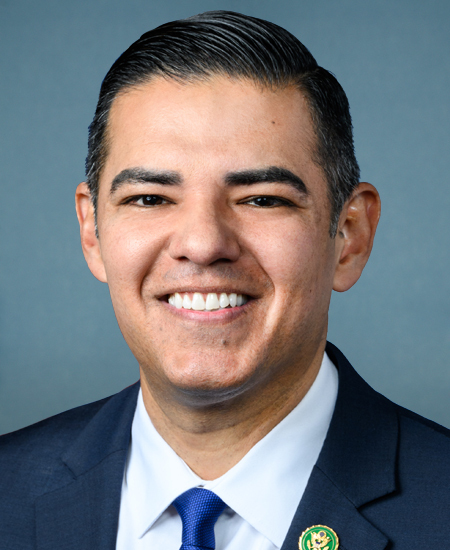
Rep. Robert Garcia
Sponsored bills
Maddy summaryThis bill designates the U.S. Postal Service facility at 201 East Battles Road in Santa Maria, California, as the "Larry Lavagnino Post Office Building." It updates all official references in federal laws, documents, and records to use this new name for the building. The change affects only the postal facility’s official designation and has no impact on postal operations or services. The bill was enacted on January 4, 2025, following approval by both chambers of Congress.
Maddy summaryHR 40 would establish a 15-member commission to study the legacy of slavery and systemic discrimination against African Americans in the United States, and develop proposals for reparations. The commission would examine historical and ongoing effects of slavery, discriminatory policies (including redlining and educational disparities), and recommend remedies through education and potential reparations. Composed of members appointed by the President, House Speaker, and Senate President pro tempore, the commission would have 18 months to submit a report to Congress, with $20 million authorized for its work. This legislation creates a study process but does not provide reparations directly.
Washington, D.C. Admission Act This bill provides for the establishment of the State of Washington, Douglass Commonwealth, and its admission into the United States. The state is composed of most of the territory of the District of Columbia (DC), excluding a specified area that encompasses the U.S. Capitol, the White House, the U.S. Supreme Court building, federal monuments, and federal office buildings adjacent to the National Mall and the U.S. Capitol. The excluded territory shall be known as the Capital and serve as the seat of the government of the United States, as provided for in Article I of the Constitution. The state may not impose taxes on federal property except as Congress permits. The bill provides for the DC Mayor to issue a proclamation for the first elections to Congress of two Senators and one Representative of the state. The bill eliminates the office of Delegate to the House of Representatives. The bill applies current DC laws to the state. DC judicial proceedings and contractual obligations shall continue under the state’s authority. The bill also provides for specified federal obligations to transfer to the state upon its certification that it has funds and laws in place to assume the obligations. These include maintaining a retirement fund for judges and operating public defender services. The bill establishes a commission that is generally comprised of members who are appointed by DC and federal government officials to advise on an orderly transition to statehood.
Maddy summaryThis bill (HR 1555, Public Law 118-211) designates the U.S. Postal Service facility at 2300 Sylvan Avenue in Modesto, California, as the "Corporal Michael D. Anderson Jr. Post Office Building." It directly affects the postal facility and all official references to it, requiring future documents to use the new name. The bill has no policy provisions - its sole purpose is to honor Corporal Michael D. Anderson Jr. through this commemorative naming. It was passed by Congress and signed into law on January 2, 2025.
Maddy summaryThe Eliminate Useless Reports Act of 2024 requires federal agencies to identify outdated or duplicative reports they submit to Congress as part of their annual budget justifications. Agencies must list all recurring reports, determine which are outdated or duplicative, and recommend actions like sunsetting, modifying, consolidating, or reducing frequency. For each report, agencies must cite the legal basis for the requirement, explain their recommendation, and estimate resources spent preparing the report. This bill directly affects all federal agencies that submit recurring reports to Congress. The goal is to reduce unnecessary reporting burdens while maintaining necessary congressional oversight.
Maddy summaryThis bill, HR 1097 (Everett Alvarez, Jr. Congressional Gold Medal Act of 2023), authorizes the award of a Congressional Gold Medal to Everett Alvarez, Jr., in recognition of his service as a U.S. Navy pilot and Vietnam War prisoner of war. It directly honors Alvarez, who was the first U.S. pilot shot down in the Vietnam War, spent over 8.5 years in captivity, and later served in the Peace Corps and Veterans Administration. The bill’s key mechanism is directing the U.S. Mint to strike a gold medal bearing his name and image, with bronze duplicates available for sale to cover costs. It does not create new policies or affect any group beyond the honoree.
Maddy summaryThis bill creates a task force within Homeland Security to reunite children separated from parents or guardians at the U.S.-Mexico border between January 20, 2017, and January 20, 2021, under the Zero-Tolerance Policy. The task force must identify all affected children, recommend legal pathways for reunification (including parole, visas, or services like mental health support), and consult with affected families and organizations. It must report to Congress every 60 days and will sunset within 120 days of all reunifications or by January 20, 2039, whichever comes first. The bill directly affects children separated during that specific policy period and requires federal agencies to coordinate on practical solutions.
Maddy summaryThis bill (HR 10237) requires U.S. Customs and Border Protection (CBP) to create new guidelines within 180 days for handling personal belongings of individuals arrested, restrained, or confined by CBP. The guidelines must ensure detainees can keep as much property as operationally feasible, return all stored items upon release, and specify essential categories like medical devices, IDs, phones, and legal documents that must remain with or be returned to the individual. CBP must also provide written receipts for stored items, detail circumstances for discarding property, and track compliance through annual reports to Congress. The bill mandates consultation with advocacy groups and includes oversight by the Comptroller General to review implementation and effects on CBP operations.
Maddy summaryHR 9896, the ICE Security Reform Act of 2024, restructures U.S. Immigration and Customs Enforcement (ICE) by transferring its Homeland Security Investigations (HSI) division to become a separate entity within the Department of Homeland Security (DHS). The bill requires the Secretary of DHS to complete this transfer within two years of enactment, establishes a new Director for HSI appointed by the President with Senate approval, and renames the remaining ICE entity "U.S. Immigration Compliance Enforcement." It mandates updated investigative guidelines for HSI within two years, covering surveillance technology use, data protection, and alignment with national priorities, while preserving existing legal matters and ongoing cases. This bill directly affects DHS operational structure and internal agency responsibilities, not public-facing policies or enforcement targets.