

Save America's Forgotten Equines Act of 2025 or the SAFE Act of 2025 This bill permanently prohibits the slaughter of equines (e.g., horses and mules) for human consumption. (Current law prohibits the slaughter of dogs and cats for human consumption. This bill extends the prohibition to equines.) Specifically, this bill prohibits a person from knowingly (1) slaughtering an equine for human consumption; or (2) shipping, transporting, possessing, purchasing, selling, or donating an equine to be slaughtered for human consumption or equine parts for human consumption. The bill subjects a violator to a fine. The bill applies to conduct in or affecting interstate or foreign commerce or within the special maritime and territorial jurisdiction of the United States. However, it does not apply to an activity carried out by an Indian for a religious ceremony. As background, in recent years, the appropriations acts have prohibited the Department of Agriculture (USDA) from using federal funds to inspect horses before they are slaughtered for human consumption. Therefore, there are currently no USDA-inspected horse slaughter facilities in the United States.
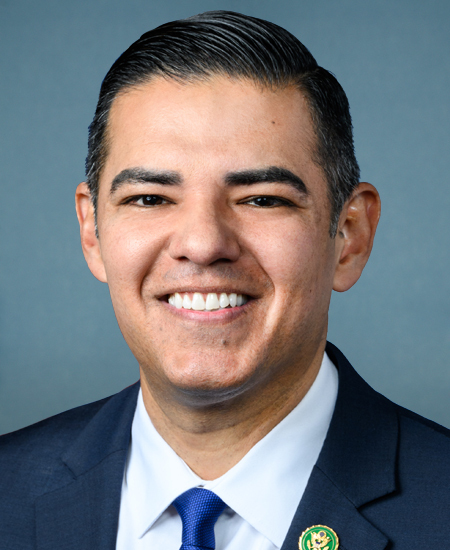
Rep. Robert Garcia
Sponsored bills
Maddy summaryHRES 261 is a symbolic resolution recognizing the heritage, culture, and contributions of Latinas in the United States. It celebrates Latinas' historical and ongoing roles in fields like business, military service, science, arts, and public office, while acknowledging persistent challenges like wage gaps and systemic barriers. The resolution specifically highlights that Latinas make up approximately 1 in 6 U.S. women (31 million people) and emphasizes their economic impact (contributing $1.3 billion to GDP in 2021) and cultural achievements. It does not create new policies or allocate funds but formally honors these contributions and calls for continued efforts to address inequities. This resolution directly affects Latinas as a recognized demographic group within U.S. society.
Maddy summaryHouse Resolution HRES 267 formally recognizes the 10th anniversary of Educators Rising (rebranded in 2015) and its work preparing high school students for teaching careers. The resolution commends the program for addressing teacher shortages through local "Grow Your Own" initiatives that connect students to teaching pathways. It highlights Educators Rising’s national reach (1,400+ chapters) and role in fostering educator diversity, but contains no new policies, funding, or direct impacts on individuals or schools. As a symbolic resolution, it does not create legal obligations or alter existing programs.
Maddy summaryHR 2475 establishes a 3-year pilot program providing direct cash payments and supportive services to homeless youth and young adults aged 18-30 living in low-income geographic areas. The program would randomly select up to 105,000 participants to receive monthly payments of at least $1,400 or the adjusted fair market rent for a 2-bedroom apartment, along with housing navigation, financial coaching, and workforce development services. Participants must consent to sharing tax information but the program is designed not to affect eligibility for other benefits or public charge status. The program includes a study to evaluate its impact on housing outcomes, economic mobility, and health for participants, with the goal of determining if direct cash payments could help reduce homelessness among young people.
Maddy summaryThe COST of Relocations Act (HR 2470) requires federal agencies to conduct a detailed benefit-cost analysis before relocating more than 5% or 100 employees (whichever is smaller) outside their current commuting area. Agencies must submit an unredacted report to their Inspector General, covering expected outcomes, stakeholder impacts, risk assessments, and how the move affects the agency's mission. The Inspector General then reviews the report and submits findings to Congress within 90 days, including an assessment of whether the relocation complies with existing OMB guidance. This law applies specifically to significant relocations of federal operations, ensuring transparency without overriding other legal requirements for such moves.
Maddy summaryThis bill, HR 2411, directs the U.S. government to immediately resume funding for the United Nations Relief and Works Agency for Palestine Refugees (UNRWA) by repealing two prior funding restrictions. It requires the State Department to restart payments to UNRWA under existing authorities and mandates the President to rescind a 2025 executive order ending UNRWA support. The bill affects Palestinian refugees in Gaza, Jordan, Lebanon, Syria, and the West Bank who rely on UNRWA for humanitarian aid, as well as U.S. funding mechanisms. It also requires quarterly reports through 2028 on UNRWA’s progress implementing accountability reforms from an independent review led by Catherine Colonna.
Maddy summaryThis bill, titled "Abolish Super PACs Act" but actually regulating them, would impose contribution limits on super PACs by redefining them as "independent expenditure committees" under federal election law. It sets a $5,000 annual threshold for activities qualifying a committee as a super PAC, capping individual contributions to these entities to reduce corruption risks from unlimited donations. The legislation targets the top contributors who gave over 96% of super PAC funds in 2024, aiming to limit the appearance of quid pro quo arrangements. It would apply to all qualifying committees starting in the first full calendar year after enactment.
Maddy summaryThis bill would require federal firearms licensees to prohibit sales of specific high-capacity rifles and shotguns to people under 21. It targets semiautomatic centerfire rifles and shotguns capable of holding more than 5 rounds in their magazines, raising the age limit from 18 to 21 for these weapons. Exceptions apply for active military members and certain government employees authorized to carry firearms. The law directly affects gun retailers and individuals under 21 seeking to purchase these specific firearms. It modifies existing federal gun sale rules without changing age requirements for other firearms.
Maddy summaryThe Paycheck Fairness Act strengthens equal pay protections by expanding the definition of "sex" to include pregnancy, childbirth, sexual orientation, gender identity, and sex characteristics. It modifies employer defenses for pay disparities to require proof that any pay difference is job-related, not based on sex, and accounts for the entire pay gap. The bill prohibits employers from asking about salary history, enhances penalties for violations, and requires employers with 100+ employees to collect and report detailed pay data by race, sex, and job category. It also establishes training programs for employers on eliminating pay bias and creates a National Equal Pay Enforcement Task Force to coordinate enforcement efforts. This legislation directly affects employers, particularly those with 100+ employees, and aims to address pay disparities impacting women, people of color, and other underrepresented groups.
Maddy summaryH.J. Res. 80 would declare the Equal Rights Amendment (ERA) part of the U.S. Constitution, asserting it has been ratified by 38 states (three-fourths of the states) despite the original 1972 deadline. If passed, this resolution would formally establish the ERA as a constitutional amendment, requiring all federal and state laws to align with its gender equality protections. The bill does not create new laws but confirms the ERA's status as part of the Constitution, affecting how laws are interpreted and enforced. It is a procedural step to resolve the legal dispute over the ERA's validity after decades of debate.