

Maddy summaryHR 4627 amends the Foreign Assistance Act of 1961 to update U.S. foreign aid programs combating HIV/AIDS. It specifically adds funding for HIV pre-exposure prophylaxis (PrEP) medications as a covered activity and designates all HIV prevention efforts - including those targeting at-risk populations identified by the World Health Organization - as "core life-saving humanitarian assistance." This change ensures such prevention activities receive priority funding under U.S. foreign aid programs. The bill directly affects how U.S. government agencies allocate resources for global HIV/AIDS prevention initiatives.
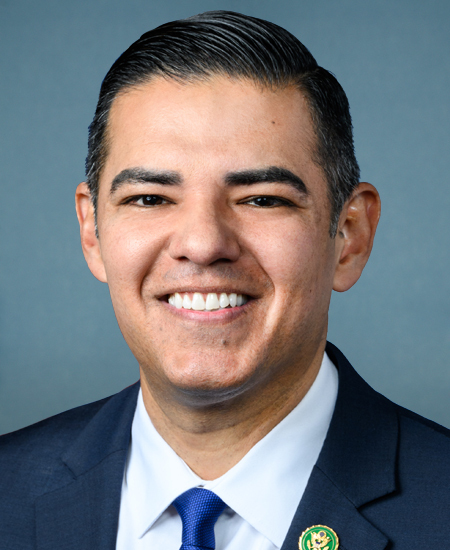
Rep. Robert Garcia
Sponsored bills
Maddy summaryHR 4696 amends Section 249 of the Immigration and Nationality Act to update eligibility for a registry program that provides a pathway to legal status for long-term residents. It changes the requirement from entering the U.S. before January 1, 1972, to entering at least 7 years before the application date. This adjustment bases eligibility on a rolling 7-year window instead of a fixed historical cutoff, allowing more recent long-term residents to qualify. The bill directly affects individuals who entered the U.S. after 1972 but maintained continuous residence for at least seven years prior to applying.
Maddy summaryHR 4702, the National Fire Academy Reporting Act, requires the National Fire Academy Administrator to submit an annual report to Congress by November 30 each year. The report must detail specific data about courses, programs, and funding from the previous fiscal year, including the number of fire departments and personnel (categorized as career or volunteer) that attended, the total courses offered and cancelled, and how funds were distributed to state/local training programs and student participants. This bill does not change funding levels or program requirements but mandates standardized reporting to Congress. The requirement begins after the bill's enactment, with the first report due November 30 of the first full year following enactment.
Maddy summaryThe End Polluter Welfare Act of 2025 eliminates federal subsidies for fossil fuel production by repealing tax incentives, increasing royalty rates, and prohibiting federal funding for fossil fuel projects. It directly affects oil, gas, and coal companies by terminating tax credits like the enhanced oil recovery credit (Section 43), ending special tax treatments for fossil fuel activities, and increasing offshore royalty rates to 18 3/4 percent. The bill prohibits U.S. International Development Finance Corporation and Export-Import Bank funding for fossil fuel projects, ends interest payments on royalty overpayments, and terminates tax provisions allowing accelerated depreciation for fossil fuel infrastructure. These changes apply to taxable years beginning after the bill's enactment date, with specific provisions targeting coal, petroleum, and natural gas production.
Maddy summaryH.J. Res. 108 proposes a constitutional amendment to remove legal immunity for federal officials, including the President, from criminal prosecution for actions taken while performing official duties. It would prohibit the President from granting pardons to themselves and eliminate the defense that "official authority" excuses violations of federal or state law (with limited exceptions for certain congressional actions). If ratified, this amendment would require Congress to pass implementing laws to enforce these changes. The proposal is currently in the House Judiciary Committee and requires approval by three-fourths of state legislatures to become part of the Constitution.
Maddy summaryThe SEEK HELP Act provides legal protections for individuals responding to opioid overdoses. It shields people who administer reversal drugs (like naloxone) in good faith from civil lawsuits, and protects those who call for help (e.g., 911) from drug possession charges related to the overdose. States can use federal funds to run public awareness campaigns about these protections and train law enforcement and healthcare workers. The bill also requires a federal report to assess how well these protections are working across states and their impact on overdose outcomes.
Maddy summaryThis bill prohibits life, disability, and long-term care insurers from denying coverage, canceling policies, or increasing premiums based solely on a person's status as a living organ donor. It directly protects living organ donors by preventing insurance discrimination unrelated to actual health risks. The bill also requires the Health and Human Services Secretary to update public educational materials about organ donation benefits, risks, and insurance impacts within six months of enactment. These materials will include information on the new insurance protections established by the bill. The law relies on state insurance regulators for enforcement of the insurance provisions.
Maddy summaryThis bill amends a provision of U.S. law (5 U.S. Code § 413) to remove a specific exception that previously limited Inspector General (IG) investigations of Department of Justice (DOJ) personnel. It eliminates language requiring DOJ to restrict IG probes into allegations described under a certain subsection (previously referenced as "(b)(3)"). The change directly affects DOJ staff and IGs conducting investigations, streamlining the process by removing this procedural barrier. The bill makes a technical adjustment to existing law without creating new programs or altering substantive policy.
Maddy summaryThis bill amends the Family and Medical Leave Act (FMLA) and federal employee leave rules to clarify that recovery from organ donation surgery qualifies as a "serious health condition." It directly affects private-sector workers covered by the FMLA and federal civil service employees. The key change adds "including recovery from surgery related to organ donation" to the definitions of serious health conditions in both the FMLA and federal leave statutes. This ensures eligible employees can use their existing family and medical leave benefits to recover after donating an organ, without requiring new leave entitlements.
Maddy summaryThis bill amends federal transit grant rules to incentivize local housing policies near transit. It defines "pro-housing policies" as actions removing regulatory barriers (like eliminating parking minimums or streamlining approvals for multi-family housing) and adds a 1-point scoring boost in grant evaluations for projects demonstrating such policies within walking distance of transit. Local governments and developers seeking federal transit capital grants can earn this boost by documenting these policies, with HUD consulted to assess expected housing outcomes. The policy directly affects how transit projects are scored for funding, aiming to align housing production with transit access.