

Fair Pay for Federal Contractors Act of 2025 This bill provides back pay to employees of federal contractors who lost pay due to a lapse in appropriations (i.e., government shutdown) in FY2026. Specifically, the bill provides appropriations for federal agencies that are subject to a lapse in appropriations in FY2026 to adjust the price of contracts to compensate federal contractors for providing back pay to employees who were affected by the lapse in appropriations. The agencies must adjust the price of any contract for which the contractor stopped, suspended, delayed, or interrupted all or part of the work under the contract due to the lapse in appropriations. The price adjustment must compensate the contractor for reasonable costs incurred to (1) compensate employees who were furloughed or laid off, were not working, or experienced a reduction of hours or compensation due to the lapse in appropriations; or (2) restore paid leave taken by employees during the lapse in appropriations if the contractor required or permitted employees to use paid leave as a result of the lapse in appropriations. The maximum amount of weekly compensation of an employee for which an adjustment may be made under this bill may not exceed the lesser of (1) the employee's actual weekly compensation, or (2) $1,442 (or a lesser amount pro-rated for an employee who works less than 40 hours per week). The bill also requires the Office of Federal Procurement Policy to submit a report to Congress on the adjustments made under this bill.
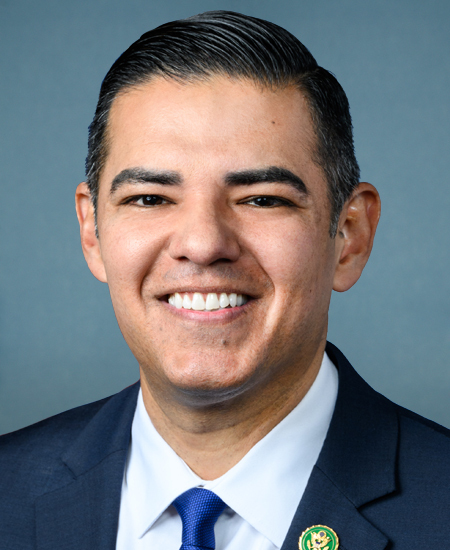
Rep. Robert Garcia
Sponsored bills
Maddy summaryHR 5655, the "No Shame at School Act of 2025," requires schools to eliminate stigma around unpaid meal fees for students. It mandates that school districts automatically certify eligible students for free/reduced meals (replacing "may" with "shall"), prohibits physical segregation or public identification of students with unpaid fees (like special tokens or name lists), and bans withholding grades or activities due to meal debt. The bill also prevents schools from using debt collectors for meal fees and requires adjustments to past meal claims when eligibility is later confirmed. This directly affects schools, local educational agencies, and students from households with outstanding meal fees.
Maddy summaryThis bill prevents federal agencies from terminating employees during a government shutdown caused by a lapse in discretionary funding. It prohibits removals of civil service employees at any agency affected by a funding gap, and if an employee is wrongfully removed, they can return to their job with back pay once funding resumes. The law directly protects all federal employees covered by the civil service system during shutdowns. It applies automatically to any funding lapse, requiring automatic reinstatement without needing separate legal action.
Maddy summaryThe Emergency Responder Protection Act (HR 5603) prohibits U.S. Immigration and Customs Enforcement (ICE) and U.S. Customs and Border Protection (CBP) officers from conducting immigration enforcement actions within 1,000 feet of protected emergency response locations - such as hospitals, shelters, disaster relief sites, or evacuation routes - except in clear cases of immediate danger to life or national security. It requires officers to consult supervisors in real-time if circumstances are unclear, mandates detailed annual reports to Congress on any enforcement near these sites, and creates penalties for violations, including barring evidence from removal proceedings. The law specifically exempts rare, premeditated arrests of terrorism suspects or individuals posing extraordinary public safety threats, with prior written approval. This directly affects ICE and CBP officers, requiring them to adjust operations near active emergency scenes.
Maddy summaryThe Mental Health Services for Students Act of 2025 would establish a federal grant program to fund school-based mental health services for students in grades K-12, particularly those experiencing trauma, grief, suicide risk, or violence. It directly affects schools (including Bureau of Indian Education schools), students, and community mental health providers through partnerships that must include school districts and local mental health entities. Key provisions require services to be culturally appropriate, trauma-informed, and integrated with positive behavioral supports, with grants capped at $2 million per award for 5 years (renewable) and funded at $300 million annually for 2027-2028. Recipients must report annually on program outcomes, ensure equitable access across urban and rural areas, and comply with privacy laws like HIPAA and FERPA.
Maddy summaryThis resolution condemns the use of federal regulatory agencies (like the FCC) or lawsuits to suppress lawful speech critical of political parties or the President, specifically referencing concerns about tactics mirroring authoritarian practices. It does not create new laws but formally warns that such actions undermine First Amendment protections and democratic norms. The resolution directly affects media organizations, journalists, and public discourse by calling on government agencies to avoid using their power for political retaliation. It reaffirms the House’s commitment to protecting free expression and urges officials to refrain from pressuring media to silence criticism.
Maddy summaryHR 5452, the Safe Streets for All Reauthorization and Improvement Act, modifies the existing Safe Streets and Roads for All program under the Infrastructure Investment and Jobs Act. It requires at least 20% of annual program funds starting in fiscal year 2024 to support projects focused on pedestrian and cyclist safety, and extends funding authorization with $5 billion allocated for fiscal years 2027 through 2031. The bill directly affects local governments and communities applying for grants to improve street safety infrastructure. Key changes include mandating specific funding allocations for walkable/bikeable projects and securing long-term financial commitments for the program. This is a procedural funding amendment, not a new policy initiative.
Maddy summaryHRES 734 is a symbolic resolution designating the third week of September as "Latino Conservation Week." It recognizes the Latino community's longstanding engagement in outdoor recreation and conservation activities, such as hiking, stewardship events, and environmental justice efforts on public lands. The resolution affirms that including Latino voices strengthens public lands protection and climate resilience, highlighting their role as a growing force in the outdoor economy. It does not create new laws or funding but formally supports the annual observance initiated by the Hispanic Access Foundation.
Maddy summaryHRES 746 is a non-binding resolution passed by the U.S. House of Representatives condemning all political violence - including attacks on elected officials, candidates, and public figures - and rejecting rhetoric that dehumanizes opponents. It specifically urges law enforcement to investigate and prosecute such violence, calls on public officials and media to avoid inflammatory language, and references recent incidents like the 2025 assassination of activist Charlie Kirk and targeted shootings of Minnesota legislators. The resolution does not create new laws but formally expresses the House’s commitment to protecting public servants and promoting peaceful political discourse. It directly affects the House’s public stance and serves as a call to action for officials, media, and communities to foster civil engagement.
Maddy summaryThis bill strengthens rights for crime victims in federal cases by requiring the government to inform victims about their rights, including details about plea bargains, agreements, and legal assistance options. It creates a new process for victims to file complaints about rights violations with a Department of Justice Administrative Authority, which must issue decisions within 180 days. The bill also mandates trauma-informed training for DOJ staff, requires the DOJ to report on implementation, and allows victims to seek attorney's fees if they successfully assert their rights. These changes apply to all federal criminal cases where a victim has been directly harmed by an offense.