

Maddy summaryHR 2955, the Stop Institutional Child Abuse Act, establishes a Federal Work Group to improve data collection and best practices for youth in residential programs (like therapeutic schools, treatment centers, and group homes). The Work Group, composed of federal agency representatives and diverse stakeholders, must develop national data standards, create risk assessment tools, and issue biennial reports with recommendations to enhance safety, reduce restraints, and expand community-based alternatives. It directly affects youth with mental health, substance use, or disability needs placed in these facilities, as well as agencies overseeing them. The bill also mandates a National Academies study to examine funding, oversight, and barriers to community care. These mechanisms aim to standardize data tracking and promote less restrictive, trauma-informed care for youth in residential programs.
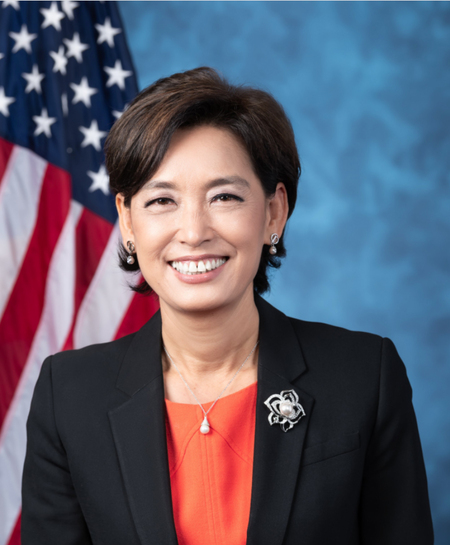
Rep. Young Kim
Sponsored bills
Maddy summaryHR 2895, the Time Is Up Act of 2023, sets strict deadlines for the President to act on foreign investment reviews under the Committee on Foreign Investment in the United States (CFIUS). It requires the President to announce any suspension or prohibition of a covered foreign investment deal within 15 days of the bill's enactment if more than 105 days (or 60 days for certain investigations) have passed since review began without a decision. For any announcement made before or after the bill's enactment, the President must complete the suspension or prohibition within 30 days of the announcement. This bill directly affects foreign entities seeking to invest in U.S. businesses and the federal process reviewing those deals for national security risks.
Cutting Paperwork for Taxpayers Act This bill excludes from the gross income of individual taxpayers and eligible small businesses, for income tax purposes, any interest allowed and paid upon a tax refund amount.
Maddy summaryHRES 325 is a symbolic resolution supporting Mathematics and Statistics Awareness Month in April. It recognizes the importance of mathematics and statistics in driving innovation across fields like medicine, cybersecurity, and education, while highlighting persistent underrepresentation of women and minorities in these fields (citing 2021 data). The resolution urges the House to support the month's goals, acknowledge math/stats as foundational to STEM, and celebrate their everyday role in American life - from technology to music. As a procedural resolution, it has no binding policy impact but formally endorses awareness efforts.
Maddy summaryHRES 90 is a resolution demanding the Chinese government immediately release Mark Swidan, a U.S. citizen from Texas who has been detained since 2012 on drug trafficking charges. The resolution cites the UN Human Rights Council Working Group finding his detention arbitrary, with no evidence of drug offenses, passport records showing he wasn’t in China during the alleged crimes, and China denying his family contact and medical care. It specifically condemns China for blocking U.S. diplomatic access and calls on the U.S. government to prioritize Swidan’s release through diplomatic channels. The resolution focuses on the case’s documented legal and humanitarian issues, not broader policy implications.
Partner with Korea Act This bill creates an E-4 treaty trader visa category for up to 15,000 nationals of South Korea each fiscal year who are coming to the United States solely to perform specialty occupation services, subject to various requirements. The 15,000 limit shall only apply to principal recipients of such visas and not their accompanying spouses or children. (A specialty occupation is one that requires the theoretical and practical application of highly specialized knowledge and a bachelor's degree or higher.)
Fostering Innovation in Global Development Assistance Act of 2023 or the FIGDA Act of 2023 This bill addresses innovation in U.S. development assistance. For example, the bill authorizes or provides statutory authority for the United States Agency for International Development (USAID) to appoint a chief innovation officer; employ innovation fellows to expand the use of innovation, technology, and research with respect to USAID development assistance authorities; provide flexible funding to support expanded use of innovation; and participate in the Global Innovation Fund and designate a USAID employee to serve on the fund's board as a representative of the United States. The bill also requires USAID to establish a program to integrate proven and rigorously demonstrated innovations into USAID programming and operating budgets.
Maddy summaryHR 1788, the "Goldie’s Act," strengthens USDA enforcement of the Animal Welfare Act. It requires annual inspections of all regulated animal businesses (like dealers, research facilities, and exhibitors) and mandates immediate, humane confiscation of animals suffering due to violations, while prohibiting owners from destroying animals during this process. The bill increases civil penalties to $10,000 per violation, requires hearing panels including veterinarians, and mandates that penalties consider business size and violation severity. It also requires USDA to share violation records with local animal control within 24 hours.
This resolution recognizes the 70th anniversary of the signing of the Mutual Defense Treaty between the United States and South Korea. Affirming the importance of the U.S.-South Korean alliance as the linchpin to safeguarding peace, security, and prosperity on the Korean peninsula, the resolution welcomes President Yoon Suk Yeol to the United States. It also supports ongoing defense and security ties, calls for continued promotion of human rights, and encourages close cooperation between the United States, South Korea, and Japan.
Maddy summaryThe Armenian Genocide Education Act (HR 2803) establishes a Library of Congress program to support U.S. schools in teaching about the Armenian Genocide of 1915-1923. The program will develop educational resources, provide teacher training, and maintain an online resource center to help schools incorporate accurate historical information into curricula. It prioritizes schools without existing Armenian Genocide education programs, with $2 million authorized annually for five years. The Librarian of Congress will report yearly on the program’s activities to Congress.