

Maddy summaryThe BRIDGE to DRC Act of 2023 requires the U.S. President to develop a national strategy within 120 days to secure critical mineral supply chains, focusing on the Democratic Republic of the Congo (DRC). The strategy must analyze China’s near-monopoly over DRC cobalt and copper mining (15 of 19 cobalt mines are PRC-linked), assess past policies like Dodd-Frank Act section 1502, and outline steps to increase U.S. investment in the DRC’s mining sector. It mandates specific assessments of human rights abuses, China’s market control, and opportunities to formalize artisanal mining while supporting DRC elections and ending conflict financing. The bill directly affects U.S. diplomatic, development, and security policies toward the DRC, aiming to reduce reliance on Chinese-controlled supply chains for minerals vital to U.S. energy and military needs.
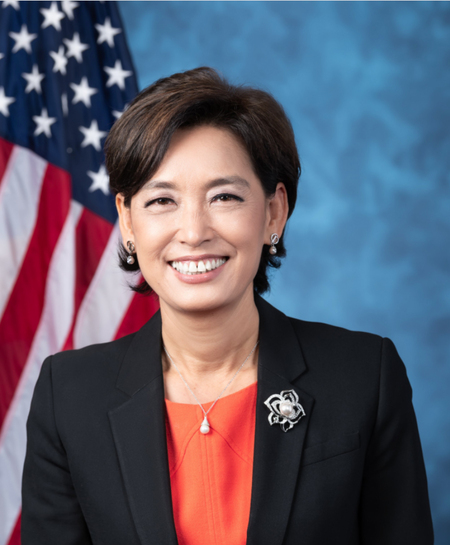
Rep. Young Kim
Sponsored bills
Maddy summaryThis House Resolution condemns the April 2023 conflict in Sudan between the Sudanese Armed Forces (SAF) and Rapid Support Forces (RSF), calling for an immediate ceasefire and adherence to prior cease-fire agreements. It urges the U.S. government to scale up humanitarian aid, prioritize support for displaced civilians and children, and apply sanctions against those obstructing Sudan’s democratic transition or violating international law. The resolution directs U.S. agencies to coordinate with local actors, ensure aid reaches civilians, and develop strategies for civilian-led negotiations. As a non-binding statement, it expresses congressional support for Sudanese civilians and democratic transition without creating new legal requirements or funding.
Maddy summaryHR 1548, the *Improving Access to Small Business Information Act*, is a procedural bill that modifies the Securities Exchange Act of 1934. It excludes actions taken by the Small Business Capital Formation Advocate from being classified as "collection of information" under the Paperwork Reduction Act (a law limiting government paperwork burdens). This change specifically affects how the Advocate’s work is regulated, not small businesses themselves. The bill does not create new policies or directly impact small business operations, but streamlines administrative processes for the Advocate’s role.
Maddy summaryThis bill requires the Federal Housing Finance Agency (FHFA) to revert mortgage guarantee fees for single-family homes to the rates in effect before May 1, 2023, effectively undoing a 2023 fee increase. It prohibits fees based on a borrower’s debt-to-income ratio and restricts future fee adjustments without following standard federal rulemaking procedures. The bill directly affects mortgage borrowers (particularly middle-class homeowners) and lenders who pay these fees, as it changes how mortgage finance agencies charge for loan guarantees. A GAO study will also examine the FHFA’s previous fee changes and their economic impact, with a report due within 14 months.
Ukraine Reconstruction Accountability and Transparency Act This bill requires the Department of the Treasury to instruct the United States Executive Directors at each international financial institution to use their voice, vote, and influence to prevent such institutions from entering into contracts for reconstruction in Ukraine with companies in countries supporting the Russian invasion of Ukraine. The international financial institutions include the International Monetary Fund, the International Bank for Reconstruction and Development, and the International Finance Corporation. Specifically, the bill requires such instructions to prevent the institutions from contracting with firms, including subcontractors, that are located or have operations in designated countries or in countries whose government has provided material or diplomatic support for the Russian invasion of Ukraine. The bill also authorizes Treasury to waive such instructions for countries specified by the bill if the government of that country (1) publicly opposes the Russian invasion of Ukraine, or (2) provides material support to Ukraine to evict Russian forces from its territory.
Healthcare Equality and Rights for Our Heroes Act or the HERO Act This bill allows claims to be brought against the United States for damages relating to the personal injury or death of a member of the Armed Forces arising out of a negligent or wrongful act or omission in providing medical, dental, or related health care functions at a military medical treatment facility. However, the bill does not apply to care provided at a medical treatment location deployed in an area of armed combat.
Maddy summaryHR 4335, the VA Loan Informed Disclosure Act of 2023, requires mortgage lenders to include specific information about VA home loan programs in standard mortgage disclosures. The bill amends the National Housing Act to mandate that lenders provide details on VA loans (guaranteed under Title 38) alongside other loan options, including assumptions about prevailing interest rates. This change directly affects lenders processing VA-guaranteed mortgages, ensuring borrowers receive clearer comparisons between VA loans and other financing. The law does not require lenders to verify borrower eligibility for VA loans, only to include the specified disclosure language.
Maddy summaryThe SAFE Act of 2023 extends a 2018 law that prohibits slaughtering animals for human consumption to include horses, donkeys, and other equine animals, such as ponies. It amends Section 12515 of the Agriculture Improvement Act of 2018 by updating the language to replace "dog or cat" with "dog, cat, or equine" in both the section title and the main prohibition. This change directly affects the livestock industry and slaughter facilities by banning the processing of equines for food. The bill modifies existing law without adding new enforcement mechanisms, closing a gap in animal protection.
Maddy summaryThe Protecting Moms and Infants Reauthorization Act of 2023 increases annual federal funding for residential treatment programs supporting pregnant and postpartum women from $29,931,000 to $38,931,000, covering fiscal years 2024 through 2028. It directly affects these treatment programs by providing higher annual funding to maintain services. The key provision is the specific funding amount change, extending the program's authorization period without altering eligibility or service requirements. This reauthorization ensures continued access to specialized care for this population through 2028.
Driving Veterans Success Act This bill requires that at least 10% of the funds under specified infrastructure programs are expended through veteran-owned small businesses.