

Maddy summaryHR 8099, the CRED Act, requires the Federal Housing Finance Agency to analyze whether mortgage companies should use two credit reports/scores instead of three when processing home loans. This analysis would evaluate potential cost savings for borrowers, changes in loan access, and impacts on lenders, servicers, and credit reporting agencies. The bill mandates publishing this analysis for 90 days of public comment before any new requirement could take effect. It directly affects home loan applicants, mortgage lenders, and the three major credit bureaus. The law does not change current practices but sets a process for future evaluation.
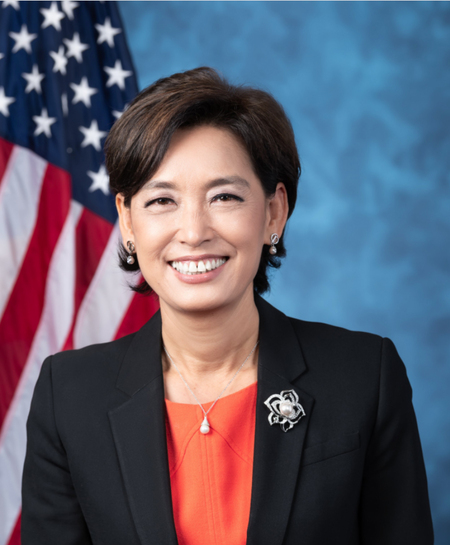
Rep. Young Kim
Sponsored bills
Maddy summaryHR 8061, the Crime Victims Fund Stabilization Act of 2024, ensures stable funding for the Crime Victims Fund by directing certain False Claims Act collections into it from 2024 through 2029. Specifically, it adds a provision requiring that amounts collected under the False Claims Act (excluding whistleblower rewards and government reimbursement for damages) be deposited into the fund during this period. This directly affects crime victims who rely on the fund for services like counseling and emergency aid, as it prevents potential shortfalls in funding. The bill makes a concrete policy change by redirecting specific federal civil penalties into the fund, rather than altering the fund's existing purposes or eligibility rules.
Maddy summaryHR 6323, the Iran Counterterrorism Act of 2023, modifies U.S. sanctions waiver authority for Iran's financial sector. It requires the President to determine Iran has "ceased to provide support for acts of international terrorism" before waiving sanctions, replacing the previous standard. The bill adds a 30-day congressional review period (extendable to 60 days) during which Congress can block a waiver through a joint resolution of disapproval, with specific timelines for legislative action. This directly affects the President's ability to lift sanctions on Iran's financial sector and increases congressional oversight of such decisions. The law applies to existing sanctions under the 2012 and 2013 National Defense Authorization Acts.
Maddy summaryHRES 1154 is a symbolic resolution supporting "Financial Literacy Month" to raise public awareness about the importance of personal financial education. It calls on the Federal Government, states, schools, businesses, and communities to observe the month with programs highlighting how financial literacy helps individuals manage money, credit, and debt. The resolution references statistics on financial challenges (like 37% of adults struggling with emergency expenses) but does not create new laws or funding. As a non-binding resolution, it has no direct effect on policy or affected individuals.
Maddy summaryHRES 1148 is a resolution passed by the U.S. House of Representatives that condemns the Iranian government for supporting terrorism, regional proxy conflicts, and internal suppression of dissent - including its crackdown on protests following Mahsa Amini's death in 2022. It specifically calls for maintaining sanctions against Iran, supporting the Iranian Resistance's Ten-Point Plan (which advocates for a democratic, secular, nonnuclear Iran), and protecting Iranian political refugees in Albania. The resolution also affirms the Iranian people's right to self-determination under international law and urges the U.S. to recognize their struggle for freedom. As a non-binding resolution, it does not create new laws but formally expresses congressional stance.
Maddy summaryThe SMASH 2.0 Act reauthorizes $100 million annually for mosquito control programs from 2024 to 2028, supporting state and local health departments managing mosquito-borne disease prevention. It requires grant recipients to consider innovative technology for mosquito control and allows up to 5% of funds for training public health workers. The bill also mandates coordination with the Strategic National Stockpile to stockpile nonperishable products for controlling disease-carrying insects during emergencies. This law directly affects public health agencies responsible for mosquito abatement and vector-borne disease response.
Maddy summaryThis resolution (HRES 1131) is a symbolic House measure celebrating Hindu Americans and condemning anti-Hindu hate. It recognizes Hinduism’s global significance and Hindu Americans’ contributions to U.S. society, including cultural, economic, and spiritual impacts like yoga and Ayurveda. The resolution specifically condemns Hinduphobia, anti-Hindu bigotry, hate crimes targeting places of worship (mandirs), and discrimination faced by Hindu Americans, referencing rising FBI-reported hate crimes. As a non-binding resolution, it does not create new laws or allocate funds but aims to affirm support for Hindu Americans through public declaration.
Maddy summaryHRES 1127 is a symbolic House resolution commemorating the 45th anniversary of the Taiwan Relations Act (TRA) and reaffirming U.S. policy toward Taiwan. It does not create new law but formally reiterates the U.S. commitment to Taiwan under the TRA framework, including regular defense transfers to support Taiwan's self-defense and advocacy for Taiwan's meaningful participation in international organizations. The resolution highlights longstanding U.S.-Taiwan cooperation on trade, security, education, and global challenges like public health and cybersecurity. It specifically calls on the Secretary of State to advance Taiwan's international engagement and supports existing programs like the Taiwan Fellowship Program and the American Institute in Taiwan. As a procedural resolution, it expresses congressional support for current policy without altering legal obligations.
Maddy summaryHRES 1118 is a symbolic resolution welcoming Prime Minister Fumio Kishida’s upcoming U.S. visit and reaffirming the U.S.-Japan alliance. It does not create new laws or policies but formally recognizes the alliance’s role in regional security, notes Japan’s defense spending goals, and supports trilateral cooperation with South Korea. The resolution specifically endorses Japan’s defense modernization efforts and U.S. security commitments under the 1960 treaty. It affects no specific groups or programs - it is purely a diplomatic statement expressing support for the alliance. (1 sentence, as it is a procedural resolution.)
Maddy summaryH.J.Res. 116 seeks to block a Department of Labor rule finalized on January 10, 2024, which aimed to clarify how businesses classify workers as employees or independent contractors under the Fair Labor Standards Act (FLSA). If passed, this resolution would prevent the rule from taking effect, directly affecting businesses that use independent contractors and their workers, who rely on FLSA protections for minimum wage and overtime pay. The bill uses a specific congressional process (under Chapter 8 of Title 5, U.S. Code) to disapprove the rule, rather than creating new policy. This action would maintain the existing classification standards until a new rule is established.