

Maddy summaryThe DFC Modernization and Reauthorization Act of 2024 updates the United States International Development Finance Corporation (DFC) framework by redefining country classifications (including "less developed country" and "wealthy country"), prioritizing support for less developed countries, and increasing the DFC's maximum contingent liability from $60 billion to $120 billion. The bill allows the DFC to accept subordinate creditor status (meaning it would be a lower priority for repayment than other creditors), reduces the board size from 5 to 3 members, and creates a new Vice President for Foreign Policy and National Security position. It also repeals the European Energy Security and Diversification Act of 2019. These changes aim to modernize the DFC's operations to better align development financing with U.S. foreign policy goals. The bill directly affects how the DFC operates and where it provides financing for development projects.
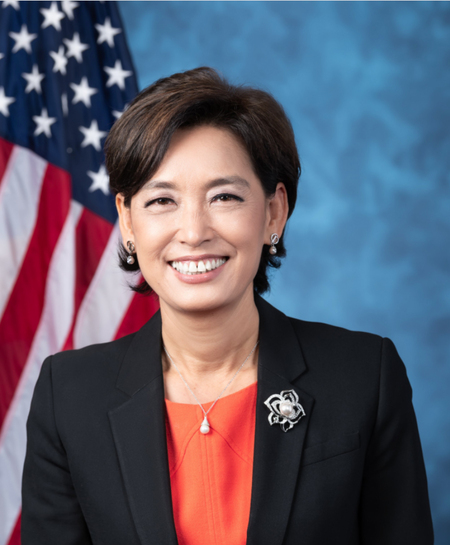
Rep. Young Kim
Sponsored bills
Maddy summaryHR 3042 updates the eligibility rules for countries seeking to become "candidate countries" under the Millennium Challenge Corporation (MCC) program. It revises the income threshold to align with World Bank graduation standards and clarifies that U.S. waivers or suspensions of foreign aid restrictions no longer disqualify countries. The bill specifies that the MCC Board will make the final determination on candidate country status. This directly affects countries aiming to qualify for U.S. economic aid through the MCC program.
Maddy summaryThis bill creates a national registry to help Korean American families separated from relatives in North Korea after the 1953 Korean War Armistice reunite. The Secretary of State must identify eligible families and collect their information (including deceased members) to support future in-person or video reunions. It authorizes $1 million for this registry and requires the State Department to push for family reunions during U.S.-North Korea talks, while consulting South Korea. The State Department must also report annually to Congress on the registry's status, reunion progress, and North Korea's policies affecting family reunions.
Maddy summaryThis bill (HR 2365, Public Law 118-66) directs the U.S. Department of Health and Human Services (HHS) to establish the National Parkinson’s Project. It requires HHS to create and update a coordinated national plan for preventing, diagnosing, treating, and researching Parkinson’s disease and related disorders (including multiple system atrophy and progressive supranuclear palsy), while coordinating federal research and care efforts across agencies like the NIH, CDC, and VA. The law mandates annual progress assessments, an advisory council with patient advocates and diverse experts, and annual reports to Congress on federal Parkinson’s programs and recommendations for improvement. It affects federal agencies managing Parkinson’s-related programs and aims to improve care coordination and research efficiency for patients and caregivers, with the law sunsetting in 2035.
Maddy summaryThis bill extends the sunset period for certain Burma sanctions from 8 to 10 years and modifies reporting requirements. It mandates annual assessments (for 7 years) by the President to determine if specific Burmese state-owned enterprises, the Myanma Economic Bank, and jet fuel sector entities meet sanctions criteria, requiring reports to Congress. The bill also limits U.S. support for increasing Burma's International Monetary Fund shareholding if the military-led State Administration Council governs, with limited waiver authority. Additionally, it creates a U.S. Special Coordinator at the State Department to coordinate diplomatic efforts promoting human rights and democratic restoration in Burma, including multilateral sanctions and engagement with Burmese civil society. The bill directly affects U.S. sanctions enforcement, Burma's military leadership, and entities operating in Burma's economy.
Maddy summaryHRES 901 is a U.S. House resolution expressing support for democracy and human rights in Pakistan. It calls on the U.S. President and Secretary of State to collaborate with Pakistan to uphold democratic processes, human rights, and the rule of law. The resolution urges Pakistan to protect freedoms of speech, assembly, and press, and to avoid arbitrary detention or suppression of political participation. It also condemns efforts to undermine Pakistan's electoral or judicial systems, including harassment of citizens during protests or interference with elections.
Maddy summaryHR 8821, the HOPE with Fertility Services Act, requires group health plans and health insurance issuers that cover obstetrical services to provide comprehensive coverage for infertility treatments and fertility preservation when medical treatments (like cancer therapy) cause or risk iatrogenic infertility. It defines infertility broadly and mandates coverage for procedures like IVF, egg freezing, and ovulation induction, while allowing standard cost-sharing but prohibiting insurers from discouraging or penalizing these services. Insurers must annually submit analyses of their coverage rules for these treatments to the Secretary of Labor for 5 years after enactment, with potential civil penalties for noncompliance. The law applies to all applicable plans starting January 1, 2026.
Maddy summaryHR 8740, the Financial Inclusion in Banking Act of 2024, creates a new "Office of Community Affairs" within the Consumer Financial Protection Bureau (CFPB). This office directly serves underbanked, unbanked, and underserved consumers - particularly low- and moderate-income individuals and communities - by leading research on barriers to banking access and developing strategies to improve it. Key mechanisms include coordinating with federal agencies, consulting community groups and experts, and identifying regulatory or structural barriers preventing sustainable banking relationships. The office must submit biennial reports to Congress detailing these barriers and recommending solutions to increase participation in the banking system. The bill focuses on concrete policy changes within the CFPB’s structure, not on specific financial products or outcomes.
Maddy summaryThe NEST Act (HR 8715) creates a federal pilot program to provide newborn supply kits to mothers in underserved communities. The kits, containing essentials like diapers, postpartum supplies, blood pressure monitors, and health resources, are distributed through grants to community organizations or hospitals. Priority goes to mothers in areas with limited maternal care access (e.g., rural regions or high-mortality "Delta" communities) and those earning under 185% of the poverty line. The program, funded at $5 million annually through 2029, requires annual reports tracking distribution demographics and health outcomes to Congress.
Maddy summaryThe No Hidden FEES Act of 2023 requires hotels, motels, short-term rentals (like Airbnb), and online booking platforms to display the total price of a stay - including all required fees - before a reservation is made. It prohibits advertising a base price that excludes mandatory fees, though providers may still list individual fees if the total price is clearly shown. The law excludes corporate, government, or institutional travel bookings from these requirements. It applies to new reservations made one year after enactment and is enforced by the Federal Trade Commission and state attorneys general.