

Maddy summaryThe JUDGES Act of 2024 authorizes new federal district court judgeships across multiple states to address rising case backlogs in the federal judiciary. It specifies new permanent judgeships for districts including California (multiple districts), Florida, Texas, Delaware, Indiana, Iowa, New Jersey, and New York, with implementation phased through 2035, and creates temporary judgeships for Oklahoma districts with specific vacancy rules. The bill authorizes funding for these positions and requires reports on judicial caseloads and detention space needs, while mandating public access to the Judicial Conference's judgeship recommendations. The bill directly affects federal district courts in the specified locations by increasing judicial staffing to handle growing case volumes.
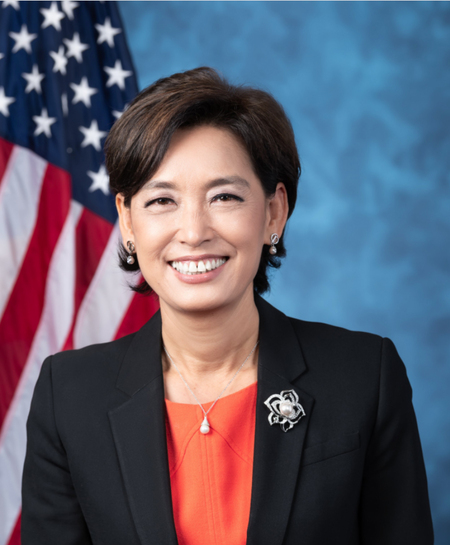
Rep. Young Kim
Sponsored bills
Maddy summaryHRES 1444 designates the week of September 14-20, 2024, as "National Birth Center Week" to symbolically recognize birth centers across the U.S. The resolution acknowledges these facilities for providing midwifery-led, family-centered care that supports safe childbirth and postpartum health. It encourages healthcare providers, policymakers, and communities to learn about birth centers' documented safety and cost-effectiveness, without creating new laws or funding. The resolution directly addresses birth centers (over 400 nationwide) and their role in perinatal care, based on existing data showing their value for diverse patient groups.
Maddy summaryHRES 1447 is a non-binding resolution expressing support for designating the week of September 22-28, 2024, as "Gold Star Families Remembrance Week." It directly honors families who lost loved ones while serving in the U.S. military (referred to as "Gold Star Families") and families of veterans. The resolution encourages Americans to observe the week by performing community service and celebrating the sacrifices of fallen service members, without creating new laws or obligations. It aligns with existing recognition of Gold Star Mother’s Day (the last Sunday in September) but expands the focus to all affected families.
Maddy summaryHR 9568, the SAW Act, makes it illegal to intentionally use a motor vehicle to run over, strike, or kill wolves or coyotes on U.S. public lands (excluding tribal trust lands). The law prohibits this action except when avoiding personal injury, protecting property, or conducting authorized wildlife management. Violators face fines up to $5,000, up to one year in prison, or both. The Secretary of the Interior is responsible for investigating violations and can collaborate with state and local law enforcement. This bill specifically targets motor vehicle use against wolves and coyotes on federal lands, with no broader wildlife protections.
Maddy summaryThis bill designates the U.S. Postal Service facility at 130 South Patterson Avenue in Santa Barbara, California, as the "Brigadier General Frederick R. Lopez Post Office Building." It updates all official U.S. government references to the building to reflect this new name, with no policy changes or funding impacts.
Maddy summaryHR 4741, the Securing Global Telecommunications Act, requires the U.S. State Department to develop a strategy within 90 days to promote secure telecommunications infrastructure globally, focusing on countering security risks from untrusted vendors like Huawei. The strategy must address mobile networks, data centers, 6G technology, and satellite systems, emphasizing collaboration with allies and developing nations to encourage the use of "trusted" equipment providers. It also mandates reports on Chinese and Russian influence at the International Telecommunication Union (ITU) and opportunities for multilateral financing to support secure telecom projects. The bill directly affects U.S. government agencies (State Department, FCC, development finance entities) and foreign countries selecting telecom infrastructure providers. It does not impose direct restrictions but outlines U.S. policy actions to strengthen global telecom security and market leadership for allied vendors.
Maddy summaryHR 554, the Taiwan Conflict Deterrence Act of 2023, requires the U.S. Treasury to report annually for three years on financial assets held by specific Chinese Communist Party officials involved with Taiwan, including Politburo members and certain Central Committee members. It mandates that U.S. financial institutions cannot engage in significant transactions with these officials or their immediate family (spouses, children, parents) if the Treasury finds they benefit from funds detailed in the reports. The prohibition on financial transactions expires either 30 days after the President certifies the threat to U.S. interests has ended or 25 years after the final report is submitted. The law aims to deter actions by China that threaten Taiwan by targeting financial ties of high-level officials.
Maddy summaryHRES 1056 is a non-binding House resolution recognizing recent trilateral cooperation among the United States, Japan, and South Korea. It formally acknowledges specific collaborative efforts, including resumed summitry, joint military exercises, shared missile warning systems, economic partnerships, and coordinated responses to regional challenges like North Korea and crises in Sudan and Israel. The resolution does not create new policies or funding but expresses congressional support for strengthening this alliance framework. It highlights the importance of continued cooperation across diplomatic, security, and economic domains to promote stability in the Western Pacific. The resolution was introduced by multiple House members and referred to the Foreign Affairs Committee.
Maddy summaryHR 8312, the Combat Veterans Pre-Enrollment Act of 2024, creates a 3-year pilot program allowing eligible combat veterans to pre-enroll in the VA healthcare system before separating from active duty. It directly affects service members who would qualify for VA healthcare upon separation and meet specific combat-related service criteria under existing law. The bill establishes a mechanism during the 180 days before separation, requiring coordination between VA, Defense, and Homeland Security to facilitate pre-enrollment. The program includes reporting requirements for participation rates, demographics, and a GAO evaluation of effectiveness after the pilot ends in 2027.
Maddy summaryHRES 1421 is a symbolic House resolution designating September as Blood Cancer Awareness Month and urging the public to support related efforts. It does not create new laws or allocate funding but formally recognizes blood cancer as a significant health issue affecting over 1.6 million people in the U.S. and highlights research advances like immunotherapy. The resolution encourages Americans to educate themselves about blood cancer, advocate for research and care, and support those affected. It directly affects no specific group through policy changes, serving only as a non-binding expression of support.