

Maddy summaryHR 430, the SALT Deductibility Act, repeals the $10,000 cap on deducting state and local taxes (SALT) for federal income tax filers who itemize deductions. This change directly affects taxpayers in high-tax states who currently face the $10,000 limit on deducting their state income taxes, property taxes, and sales taxes. The bill amends the Internal Revenue Code to remove the specific deduction limit (Section 164(b)(6)), allowing these taxpayers to deduct their full state and local tax payments. The repeal applies to tax returns filed for taxable years beginning after December 31, 2024.
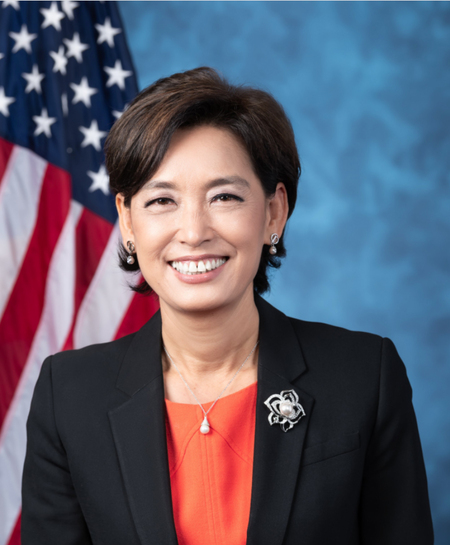
Rep. Young Kim
Sponsored bills
Maddy summaryHR 436 prohibits U.S. federal funds from being used to support Russia's participation in the Group of Seven (G7) or to reconstitute a Group of Eight (G8) including Russia. The bill blocks any federal spending for actions facilitating Russia's involvement in G7 meetings or the return of Russia to a G8 format. This directly affects U.S. government agencies and programs that manage international funding or diplomatic engagement. The policy change requires the U.S. to stop providing financial support for Russia's role in these international forums, without altering the G7's own rules.
Maddy summaryThe TRUST in Congress Act requires current and new Members of Congress, along with their spouses and dependent children, to place certain investments - such as stocks, commodities, and derivatives - into a blind trust within 90 to 180 days of taking office. It excludes U.S. Treasury securities and widely held mutual funds from this requirement and exempts investments tied to a spouse’s or dependent child’s primary job. Members must certify the trust’s setup to the House Clerk or Senate Secretary within 15 days, with these records posted publicly online. The act also prohibits dissolving such trusts until 180 days after a member leaves office.
Maddy summaryThis resolution expresses the House's support for Korean American Day, commemorating January 13, 1903 - the arrival of the first large wave of Korean immigrants to the U.S. It urges all Americans to observe the day to recognize Korean Americans' contributions to U.S. society, including their economic, cultural, and military service. The resolution honors the 122nd anniversary of this historical arrival, acknowledging the resilience of early Korean immigrants and their descendants. As a symbolic gesture, it does not create new laws or affect any specific group directly.
Maddy summaryThe Proxy Voting for New Parents Resolution (HRES 23) would allow U.S. House Members who have given birth or whose spouse has given birth to appoint another Member as a proxy to cast their vote or record their presence in the House and committees for up to 12 weeks after childbirth. To use this, the new parent must submit a signed letter to the Clerk detailing the birth or medical condition and naming the proxy; the proxy must vote exactly as instructed and announce the vote as "by proxy." The proxy vote does not count toward quorum, and the new parent can revoke the proxy at any time by submitting a new letter or casting their own vote. This resolution applies to all House Members, including Delegates and the Resident Commissioner, though they cannot cast votes for the House itself.
Maddy summaryThe ESCRA Act (HR 306) targets fraudulent credit repair practices by prohibiting credit repair organizations from charging upfront fees before delivering results, requiring them to provide consumers with a credit report showing successful changes at least six months after service. It bans misleading claims about services and mandates clear disclosures (e.g., "credit repair organizations don’t provide services you can’t do yourself for free") while requiring written contracts detailing all communications. The bill also sets strict rules for submitting disputes to credit bureaus, including labeling communications as "submitted by a credit repair organization" and preventing "jamming" (repeated disputes without justification). These changes directly affect credit repair companies and consumers, aiming to reduce scams in the credit repair industry.
Maddy summaryThis proposed constitutional amendment would limit Members of Congress to serving a maximum of three terms in the House of Representatives or two terms in the Senate. It directly affects current and future members by preventing those who have already served the maximum terms from seeking re-election. Key provisions include counting vacancies filled for more than a year (House) or three years (Senate) as a full term toward the limit, while excluding terms served before ratification from the count. As a constitutional amendment proposal, it requires approval by three-fourths of state legislatures to become law.
Maddy summaryHR 82, the Social Security Fairness Act of 2023, repeals two provisions that reduce Social Security benefits for certain government workers. It eliminates the Government Pension Offset (GPO), which cuts spousal or survivor benefits for people with pensions from jobs not covered by Social Security (like federal or state government roles), and the Windfall Elimination Provision (WEP), which lowers retirement benefits for those with similar pensions. The law takes effect for benefits paid after December 2023, requiring the Social Security Administration to adjust benefit calculations to remove these reductions. This change directly affects public-sector employees who previously had their Social Security benefits reduced due to their government pensions.
Maddy summaryThis bill formally names the Department of Veterans Affairs community-based outpatient clinic in Auburn, California, as the "Louis A. Conter VA Clinic." The legislation honors Lou Conter, a Navy veteran and the last surviving member of the USS Arizona crew at Pearl Harbor, for his decades of military service and post-retirement contributions to veterans' education.
Maddy summaryThis bill (HR 8641) renames a U.S. Postal Service facility at 401 Main Street in Brawley, California, as the "Walter Francis Ulloa Memorial Post Office Building." It directly affects the postal facility and all federal references to it, changing them to the new name. The bill contains no policy changes or funding provisions - it is solely a commemorative naming resolution honoring Walter Francis Ulloa. The designation became effective upon enactment on January 4, 2025.