

Maddy summaryHR 1102 establishes a commission to study the feasibility of creating a National Museum of Italian American History and Culture in Washington, D.C. The commission, composed of 8 members appointed by congressional leaders, will examine factors like location options, costs, fundraising potential, and impacts on existing museums, and must report back within 18 months. It will not create the museum itself but will develop recommendations for Congress on whether to proceed, with all funding coming from private sources - no federal funds may be used for the commission’s work. The bill focuses solely on the study process, not on building or operating the museum.
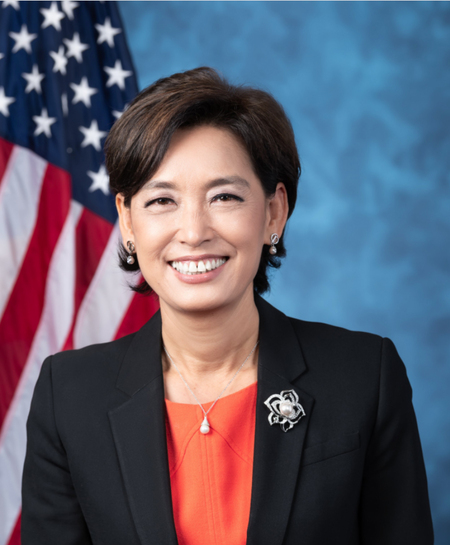
Rep. Young Kim
Sponsored bills
Maddy summaryHRES 110 prohibits the distribution of Chinese Communist Party-controlled publications, such as *China Daily*, within House facilities like the Capitol building and House office buildings. It requires the Chief Administrative Officer to immediately stop accepting, distributing, or using internal mail systems for these materials, which are defined as publications registered under the Foreign Agents Registration Act and controlled by the CCP. The resolution does not restrict private receipt of such publications by Members or staff, access through public libraries, or the Library of Congress’s collection. This policy change applies immediately to all House-owned or operated facilities.
Maddy summaryHR 1012, the Spent Fuel Prioritization Act of 2025, amends the Nuclear Waste Policy Act to change how the federal government prioritizes accepting spent nuclear fuel and high-level radioactive waste from civilian power plants. The bill requires the Secretary to prioritize waste based on four specific factors: whether the reactor is decommissioned (highest priority), the population size of the surrounding area, the earthquake hazard level in the area, and national security risks related to local storage. This directly affects nuclear power plant operators and communities near reactors, as waste from plants meeting these criteria would be processed faster for disposal or storage. The law does not create new waste generation but changes the order in which existing waste is managed.
Maddy summaryHR 1007, the Antisemitism Awareness Act of 2025, clarifies how the Department of Education enforces Title VI of the Civil Rights Act of 1964 to address discrimination against Jewish individuals. It requires the Department to consider the International Holocaust Remembrance Alliance (IHRA) definition of antisemitism when investigating complaints involving discrimination based on actual or perceived Jewish ancestry or ethnic characteristics. This affects Jewish students and communities in K-12 schools and colleges receiving federal funding, as it ensures antisemitism is assessed under existing civil rights protections. The bill does not create new laws but specifies that the IHRA definition - already used by the Department since 2018 - must be applied in Title VI enforcement cases.
Maddy summaryHR 942, the "Banning SPR Oil Exports to Foreign Adversaries Act," prohibits the export of petroleum products drawn from the U.S. Strategic Petroleum Reserve to China, North Korea, Russia, Iran, and any entity owned or controlled by these countries or the Chinese Communist Party. The Secretary of Energy may grant a waiver for such exports if certified as serving U.S. national security interests, but must issue implementing rules within 60 days of enactment. This policy directly affects U.S. energy exports and entities seeking to purchase SPR oil from the listed adversaries.
Maddy summaryHR 833 creates a federal tax credit for individuals and corporations that contribute to scholarship granting organizations (SGOs) providing scholarships for elementary and secondary education. The credit allows taxpayers to deduct up to 10% of their adjusted gross income or $5,000 (whichever is less) for contributions to SGOs serving students from households with income up to 300% of the area median income. The bill establishes a $10 billion annual cap on the tax credit program, requires SGOs to verify student eligibility and maintain separate accounts, and prohibits government control over SGOs or private schools. It ensures scholarships can be used at public, private, or religious schools without discrimination based on religious character. The tax credit would be available for contributions made after December 31, 2025, with annual volume cap increases based on usage.
Maddy summaryHCONRES 4 is a symbolic resolution expressing Congress's support for tax-exempt fraternal benefit societies (like mutual aid organizations). It recognizes these groups, which have over 7 million members nationwide, as historically and currently providing critical community benefits - including life/health insurance, charitable work, and volunteer services - valued at over $3.8 billion annually. The resolution affirms that their tax-exempt status under Section 501(c)(8) of the Internal Revenue Code remains beneficial and should continue to be promoted. This is a non-binding expression of congressional sentiment, not a policy change.
Maddy summaryHRES 75 is a symbolic resolution recognizing the cultural and historical significance of Lunar New Year (celebrated as the Year of the Snake in 2025). It acknowledges Lunar New Year's origins in China over 4,000 years ago, its global celebration as Seollal (Korea) and Tết (Vietnam), and its importance to Asian American communities in the U.S. The resolution expresses respect for Asian Americans and others celebrating the holiday and wishes them a happy new year, but it creates no new laws, funding, or obligations. As a ceremonial resolution, it has no direct policy impact.
Maddy summaryHR 768, the Holocaust Education and Antisemitism Lessons Act, requires the U.S. Holocaust Memorial Museum Director to study how states and school districts currently teach about the Holocaust and antisemitism in K-12 schools. The study will examine curriculum requirements, teacher training, educational materials used, and assessment methods across all states and a representative sample of school districts and schools. It specifically aims to identify gaps, resources needed, and how schools address antisemitism and genocide prevention in their teaching. The Museum must submit a report to Congress within three years of the bill's enactment, detailing findings on current practices and challenges. This bill does not mandate new teaching requirements but seeks to understand existing approaches to Holocaust education.
Maddy summaryThis bill authorizes the posthumous presentation of a Congressional Gold Medal to honor Colonel Young Oak Kim, a Korean American military leader and community advocate who died in 1994. It directs the Treasury Secretary to design and strike the medal, which will be displayed at the Smithsonian Institution, particularly at the National Portrait Gallery. The bill does not create new policies or affect any legal rights; it is purely a commemorative gesture recognizing Kim’s military service (including the Distinguished Service Cross and leadership in the 100th Infantry Battalion/442nd Regimental Combat Team) and his civic work founding community centers in Los Angeles. The medal is symbolic, with no financial or legal impact on any individuals or programs.