

Maddy summaryThis bill expands access to employee ownership by modifying the Small Business Act to allow S corporations owned by employee stock ownership plans (ESOPs) to retain small business status, even when an ESOP owns over 49% of the company. It creates a new Treasury Department office to provide education and technical assistance for S corporations establishing ESOPs, and establishes a Labor Department Advocate for Employee Ownership to coordinate outreach and resolve disputes. These changes directly affect S corporations transitioning to ESOP ownership and their employees, who gain retirement benefits through ESOP accounts. The bill aims to increase employee ownership by removing eligibility barriers and improving support for businesses adopting this model.
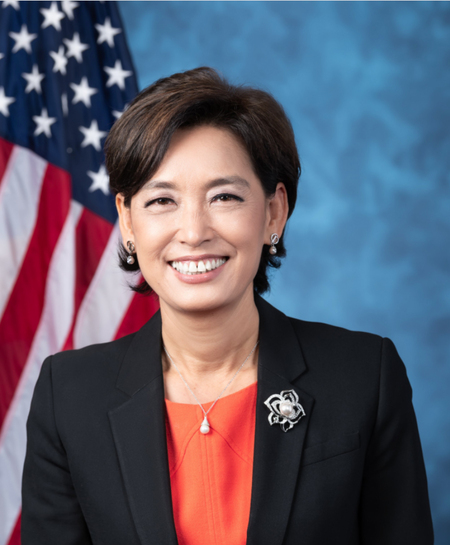
Rep. Young Kim
Sponsored bills
Hotel Fees Transparency Act of 2025 This bill requires providers of short-term lodging (e.g., hotels, short-term rentals, and third-party online sellers) to include certain price information when displaying, advertising, or marketing reservations for lodging. Specifically, such providers must (1) display the total services price, including the base price and any service fees, if a price is displayed in an advertisement. marketing material, or a price list; (2) disclose the total services price at the time the services are first displayed to an individual seeking to purchase such services and anytime thereafter during the purchasing process; and (3) disclose, prior to the final purchase, any tax, fee, or assessment imposed by any government entity (or quasi-government entity) on the sale of such services. The bill provides for enforcement by the Federal Trade Commission and state attorneys general (or other authorized state officials).
Maddy summaryThis bill requires most private health insurance plans to cover diagnostic and supplemental breast exams with no out-of-pocket costs (like deductibles or copays) for enrolled patients. It specifically covers exams used to evaluate abnormalities found in screenings (diagnostic) or for high-risk screening without abnormalities (supplemental), based on medical guidelines. Plans can still require prior authorization for these exams, and state laws offering stronger protections remain in effect. The rule takes effect for plan years starting January 1, 2026.
Maddy summaryThis resolution designates April as Mathematics and Statistics Awareness Month to recognize the importance of math and statistics in STEM fields and everyday life. It supports efforts to increase public appreciation for these disciplines, highlights their role in innovation (including in AI, cybersecurity, and health), and notes ongoing diversity gaps in mathematical sciences PhD programs. The resolution has no binding policy changes - it is purely symbolic, celebrating the field without creating new requirements or funding. It was introduced by representatives in the U.S. House of Representatives with no further legislative action specified.
Maddy summaryThe Fight Fentanyl Act increases annual funding for fentanyl-related law enforcement efforts to $333 million from 2025 through 2030. It requires the Office of National Drug Control Policy to report annually on how HIDTA (High Intensity Drug Trafficking Area) funds target fentanyl trafficking, including seizure data and threat assessments. The bill also mandates the Attorney General to prioritize fentanyl prosecutions by temporarily reassigning U.S. attorneys to these cases. These provisions directly affect federal, state, local, and tribal law enforcement agencies working on fentanyl interdiction and prosecution.
Maddy summaryThis bill amends the Elementary and Secondary Education Act to explicitly include accounting education as part of a well-rounded K-12 curriculum. It requires schools to develop and strengthen programs teaching accounting, including increasing access to high-quality accounting courses for students from groups historically underrepresented in accounting careers. The key provision inserts specific language into existing law, directing schools to promote accounting career awareness and expand course availability through grade 12. This directly affects K-12 students, particularly those from underrepresented backgrounds, by making accounting education a recognized component of career-focused learning.
Maddy summaryHR 2831, the Small Business Energy Loan Enhancement Act, doubles the maximum loan amounts for certain small business energy projects under the Small Business Investment Act of 1958, raising the cap from $5.5 million to $10 million for two specific loan categories. This directly affects small businesses seeking financing for energy-related investments, such as efficiency upgrades or renewable energy installations. The bill requires the Small Business Administration (SBA) to annually report to Congress on which industries and geographic areas receive these loans. These changes aim to increase access to capital for qualifying energy projects without altering eligibility criteria.
Maddy summaryHR 2809, the Fair College Admissions for Students Act, prohibits colleges and universities receiving federal funding under the Higher Education Act from giving preferential treatment in admissions based on applicants' relationships to donors or alumni. This directly affects all eligible institutions by requiring them to eliminate legacy preferences (for alumni relatives) and donor-based advantages from their admissions processes. The bill amends Section 487(a) of the Higher Education Act to add this ban, effective for the second award year following its enactment. The policy change mandates that admissions decisions must be based solely on applicant qualifications, not family connections to the institution.
Maddy summaryHR 2890, the Financial Inclusion in Banking Act of 2025, creates a new "Office of Community Affairs" within the Consumer Financial Protection Bureau (CFPB). This office must research why individuals and households avoid or leave traditional banks (particularly low- and moderate-income people, minorities, and rural communities), consult with relevant groups like community advocates and minority banks, and develop strategies to improve financial education and access. The office is required to report to Congress every two years on barriers to banking access and recommend solutions. The bill directly affects under-banked, un-banked, and underserved consumers by mandating federal action to address systemic barriers in banking relationships.
Maddy summaryThis bill amends the Wild Free-Roaming Horses and Burros Act to change how the Bureau of Land Management manages horse and burro populations. It requires using fertility control vaccines as the first priority method for population management, replacing previous steps. Crucially, it directs the Secretary to prioritize recruiting and training military veterans for these fertility control tasks, including through the PZP applicator certification program, with veterans receiving appropriate compensation. This directly affects wild horse and burro populations through new management methods and military veterans through new training and contracting opportunities under the program.