

Emergency Infant Formula Act This bill addresses the shortage of infant formula in the United States, including by authorizing the President to take certain actions to expedite the importation of such formula. Specifically, the bill authorizes the President to declare through an executive order that a shortage of infant formula exists in the United States. Additionally, the President may authorize the importation, distribution, and sale of any covered infant formula if the applicable brand, manufacturer, manufacturing plant, or the specific infant formula product is included in the executive order. Covered infant formula generally refers to any infant formula that is lawfully marketed in the European Union, Canada, Japan, the United Kingdom, or any country the President determines has sufficient health and safety standards with respect to infant formula. The bill exempts imported infant formula from U.S. labeling requirements. The Food and Drug Administration (FDA) must require retailers of imported infant formula to place a label on the product indicating it has not been approved by the FDA. The bill also authorizes the President to reduce or suspend any duties on the importation of covered infant formula or articles used in the production of infant formula. U.S. Customs and Border Protection must give the highest priority and take steps as necessary to expedite the processing of all entries of covered infant formula and articles used in the production of infant formula.
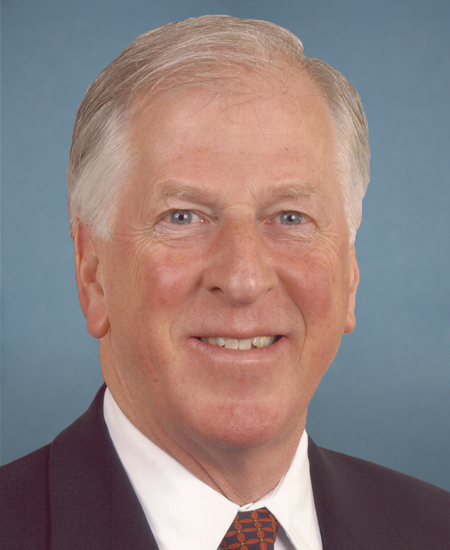
Rep. Mike Thompson
Sponsored bills
Violence Against Women Reauthorization Act of 2021 This bill modifies and reauthorizes through FY2026 programs and activities under the Violence Against Women Act that seek to prevent and respond to domestic violence, sexual assault, dating violence, and stalking. The bill also authorizes new programs, makes changes to federal firearms laws, and establishes new protections to promote housing stability and economic security for victims of domestic violence, sexual assault, dating violence, and stalking.
Access to Baby Formula Act of 2022 This bill authorizes the Department of Agriculture (USDA) to take certain actions to address emergencies, disasters, and supply chain disruptions (particularly the shortage of infant formula in the United States) affecting participants of the Special Supplemental Nutrition Program for Women, Infants, and Children (WIC). The bill directs USDA to require each infant formula cost containment contract to include remedies in the event of an infant formula recall, including how an infant formula manufacturer would protect against disruption to WIC participants in the state. USDA must, within 30 days, ensure there is a memorandum of understanding with the Department of Health and Human Services that includes procedures for coordination and information sharing regarding any supply chain disruption, including a supplemental food recall. The bill also authorizes USDA to waive or modify any WIC qualified administrative requirement during emergencies, disasters, and supply chain disruptions. Specifically, USDA may waive or modify such a requirement for one or more state agencies if (1) the requirement cannot be met by state agencies during the emergency, disaster, or disruption; and (2) the modification or waiver is necessary to provide assistance to WIC participants and does not substantially weaken the nutritional quality of supplemental foods. For example, USDA may waive the maximum monthly allowance for infant formula. The bill establishes notification requirements for USDA and state agencies related to supply chain disruptions.
This bill makes permanent the authority for the military departments to reimburse a member of the uniformed services for qualified relicensing costs for the profession of the spouse of the member when the member is reassigned and the movement of the member's dependents is authorized at the expense of the United States. Under current law, such reimbursement may not exceed $1,000 in connection with each reassignment.
Health Care Providers Safety Act of 2022 This bill authorizes the Department of Health and Human Services to award grants to health care providers for security services and other expenses related to physical security and cybersecurity.
Student Veteran Work Study Modernization Act This bill requires the Department of Veterans Affairs (VA) to implement a five-year pilot program to expand eligibility for the work-study allowance program to individuals who are pursuing programs of rehabilitation, education, or training at a rate equal to at least half of that required of a full-time student. To offset the cost of the program, the bill extends from January 14, 2031, to January 23, 2031, the end of the period for certain VA housing loan fee rates under the VA home loan program.
Multinational Species Conservation Funds Semipostal Stamp Reauthorization Act of 2021 This bill directs the U.S. Postal Service to sell each copy of the Multinational Species Conservation Fund Semipostal Stamp and notify Congress when all copies have been sold.
Community Services Block Grant Modernization Act of 2022 This bill reauthorizes the Community Services Block Grant program through FY2032 and otherwise modifies the program. The program supports various antipoverty activities, primarily through formula-based allotments to states, Indian tribes, and territories. In particular, the bill makes changes to the program's administration and leadership; performance measurement; and allotments to states and territories. The bill also expands eligibility for services and activities funded by the program to 200% of the federal poverty line (FPL). Under current law, eligibility is generally set at the FPL.
Rights for the Transportation Security Administration Workforce Act of 2022 or the Rights for the TSA Workforce Act of 2022 This bill modifies the workplace rights, protections, and benefits applicable to Transportation Security Administration (TSA) personnel. Specifically, the bill by December 31, 2022, eliminates personnel authorities of the Department of Homeland Security (DHS) and the Department of Transportation governing the conditions of employment for TSA employees, thus making TSA employees subject to the personnel management system applicable to other federal employees; sets forth transition rules that protect the pay rates, leave rights, and other rights of TSA employees; and requires DHS to consult with the exclusive representative of TSA screening employees to carry out the conversion of those positions. The bill also permits the TSA to consult with organizations representing federal air marshals to address concerns, including mental health and suicide rates; directs the TSA to ensure its employees are provided proper guidance regarding prevention and protections against COVID-19; requires the TSA to provide a one-time bonus payment of $3,000 to each TSA employee carrying out duties that require substantial contact with the public during the COVID-19 national emergency; and requires the Government Accountability Office to report on implementation of the bill, TSA recruitment efforts, and specified TSA personnel policies.
Commonsense Reporting Act of 2022 This bill addresses the eligibility verification process for the premium assistance tax credit and cost-sharing subsidy under the Patient Protection and Affordable Care Act (PPACA). It requires the Department of the Treasury to develop and implement a reporting system that allows employers to voluntarily report information about their health plans for the current plan year prior to the beginning of open enrollment. The bill also allows electronic transmission of employee and enrollee statements and permits Treasury to accept full names and dates of birth in lieu of dependents' and spouses' Social Security account numbers. The bill also allows certain large employers who do not offer their employees minimum health care coverage 90 days to appeal an assessment for not providing such coverage. The Government Accountability Office must evaluate (1) for the period beginning on January 1, 2015, and ending on December 31, 2020, the notification of employers by PPACA exchanges of the eligibility of employees for advance payments of the premium assistance tax credit or cost-sharing subsidies; and (2) for calendar year 2023, the functionality of the prospective reporting system established by this bill, including the accuracy of information collected.