Maddy summaryHRES 437 is a symbolic House resolution designating June 4, 2021, as "National Gun Violence Awareness Day" and June 2021 as "National Gun Violence Awareness Month." It does not create new laws or policies but calls on the public to wear orange, increase awareness of gun violence, and focus on community safety efforts during summer months. The resolution references statistics on gun deaths and honors Hadiya Pendleton, a 15-year-old victim of gun violence, to highlight the issue. It has no direct legal effect on individuals or communities but aims to promote public discussion.
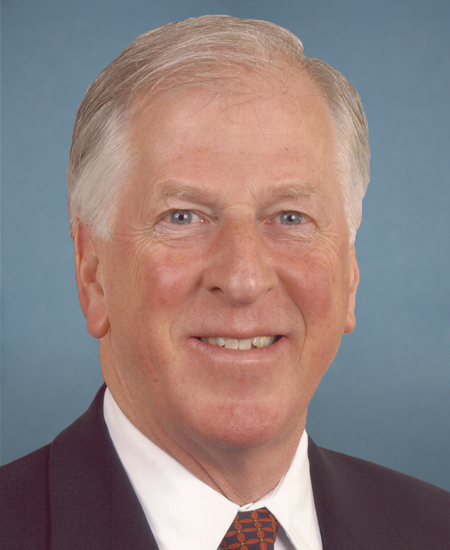
Rep. Mike Thompson
Sponsored bills
Afghan Adjustment Act This bill expands eligibility for special immigrant visas to certain Afghan nationals (and accompanying spouse and children) and addresses related issues. The Department of Homeland Security may provide such visas to Afghan nationals who provided qualifying service as a member of the Afghan Air Force or other specified entities and meet eligibility requirements, such as passing a background check. Currently, special immigrant visas for Afghan nationals are generally only available to those who were employed by or on behalf of the U.S. government in Afghanistan. Such visas shall also be available to an Afghan national who is a qualifying relative of a veteran or member of the U.S. Armed Forces. The bill also modifies procedures for providing lawful permanent resident status to certain classes of Afghan nationals, such as by (1) providing a streamlined process with specified vetting requirements for certain individuals, including those who provided support to the U.S. government in Afghanistan; and (2) preserving the eligibility of certain battered spouses whose eligibility for such status stemmed from a marriage that has terminated. Furthermore, the Department of State (1) must respond to inquiries from Members of Congress about specific applications from Afghan nationals seeking special immigrant or refugee status; and (2) establish an office in Afghanistan to perform certain tasks, such as issuing visas, if no U.S. embassies are operational in Afghanistan. The President must establish a task force to develop and implement a strategy to assist Afghan nationals who qualify for admission to the United States.
Supporting the Health and Safety of Law Enforcement Act of 2022 This bill establishes a pilot program to promote coordination between community mental health centers and law enforcement agencies. Specifically, it directs the Department of Justice to award grants for community mental health centers to place social workers with law enforcement agencies. The purpose of the placement is to facilitate coordination on law enforcement cases with an underlying mental health component.
Safety From Violence for Healthcare Employees Act or the SAVE Act This bill establishes a new criminal offense for knowingly assaulting or intimidating hospital personnel during the performance of their official duties in a manner that interferes with their performance of the duties or limits their ability to perform the duties. Additionally, the bill authorizes grants to reduce the incidence of violence at hospitals, including violence or intimidation against hospital personnel in the performance of their duties.
Ensuring Security for Military Spouses Act This bill waives for certain military spouses a residency requirement pertaining to naturalization, specifically the requirement that the applicant must have resided for at least three months in the state or service district where the naturalization application is filed. Under the bill, this residency requirement shall not apply to an applicant who is (1) a lawful permanent resident, and (2) the spouse of a member of the Armed Forces serving on active duty in the United States.
Stopping Harmful Image Exploitation and Limiting Distribution Act of 2022 or the SHIELD Act of 2022 This bill establishes a new criminal offense related to the distribution of intimate visual depictions. Specifically, it makes it a crime to knowingly distribute (or intentionally threaten to distribute) an intimate visual depiction of an individual (1) with knowledge of or reckless disregard for the individual's lack of consent and reasonable expectation of privacy, and (2) without a reasonable belief that distributing the depiction touches a matter of public concern. A violator is subject to criminal penalties—a fine, a prison term of up to two years for each individual victim depicted, or both.
Latonya Reeves Freedom Act of 2022 This bill prohibits government entities and insurance providers from denying community-based services to individuals with disabilities that require long-term service or support that would enable such individuals to live in the community and lead an independent life. Specifically, these entities may not discriminate against such individuals in the provision of community-based services by such actions as imposing prohibited eligibility criteria, cost caps, or waiting lists or failing to provide a specific community-based service. Additionally, community-based services must be offered to individuals with such disabilities prior to institutionalization. Institutionalized individuals must be notified regularly of community-based alternatives. The bill requires the Department of Justice to issue regulations requiring government entities and insurance providers to offer community-based long-term services to individuals with such disabilities who would otherwise qualify for institutional placement. Government entities must ensure sufficient availability of affordable, accessible, and integrated housing that is not a disability-specific residential setting or a setting where services are tied to tenancy. Regulations shall also (1) require government entities and insurance providers to perform self-evaluation on current services, policies, and practices and concerning compliance with requirements of this bill; and (2) require government entities to submit a transition plan. The bill provides funds for FY2022 for the Department of Health and Human Services to provide technical assistance with respect to transition plans. The bill allows civil actions by individuals subjected to, or about to be subjected to, a violation of its requirements.

Russian Travel Sanctions for a Democratic Ukraine Act This bill imposes visa-blocking sanctions on certain citizens of Russia. Specifically, the President must impose such sanctions on citizens of Russia who are (1) Russian oligarchs, (2) employees of Russia's government, or (3) employees of companies that are owned by or receive funding from Russia's government. The President must also impose the sanctions on family members of such individuals. The President must coordinate with allies, including NATO member states, on the imposition of such sanctions. The President may waive the application of such sanctions in certain instances.
Porch Pirates Act of 2022 This bill extends federal criminal penalties for obstruction of correspondence and theft of stolen mail matter (which apply to U.S. Postal Service mail) to matter (e.g., packages) sent or delivered by private or commercial interstate carriers.
This bill authorizes the President to impose asset- and visa-blocking sanctions on any member of Russia's parliament who voted on February 15, 2022, to appeal to Russian President Vladimir Putin to recognize the Donetsk and Luhansk regions of Ukraine as one or more independent states.