

Scientific Integrity Act This bill revises provisions regarding the release of scientific research results by federal agencies. Each agency that funds, conducts, or oversees scientific research must (1) adopt and enforce a scientific integrity policy that includes requirements such as that scientific conclusions are not based on political considerations, and (2) submit such policy to the Office of Science and Technology Policy (OSTP) for approval. Each agency must make such policy available to the public and submit such policy to Congress. Agencies and the OSTP must periodically review the policies. The Government Accountability Office shall review implementation of the policies. Each agency shall (1) appoint a Scientific Integrity Officer, (2) establish a process for dispute resolution consistent with the scientific integrity policy, and (3) establish a specified training program for current and new employees.
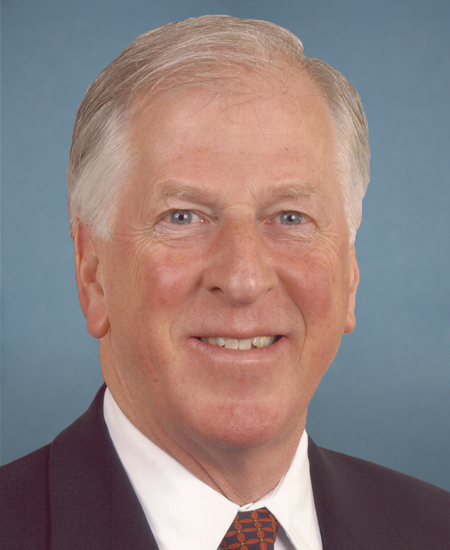
Rep. Mike Thompson
Sponsored bills
FEMA Empowering Essential Deliveries Act or the FEED Act This bill authorizes the Federal Emergency Management Agency (FEMA) to approve state, local, and Indian tribal government plans to partner with small and mid-size restaurants and nonprofit organizations to provide nutritious meals to individuals in need. Specifically, during the period following the President's emergency declaration of March 13, 2020, and under any subsequent major disaster declaration that supersedes it, FEMA may approve plans from state, local, and Indian tribal governments that (1) establish contracts with small and mid-sized restaurants and nonprofits, including faith-based organizations and soup kitchens, to prepare healthy meals for people in need; and (2) provide for partnerships with nonprofit organizations to purchase directly from food producers and farmers. FEMA shall waive federal matching requirements under the Robert T. Stafford Disaster Relief and Emergency Assistance Act during such period.
USPS Fairness Act This bill repeals the requirement that the U.S. Postal Service annually prepay future retirement health benefits.
Ally's Act This bill requires private health insurance plans to cover certain hearing devices and systems (e.g., bone-anchored auditory implants) and related items and services. The bill also imposes limits on cost sharing.
Mental Health Access Improvement Act of 2021 This bill provides for coverage of marriage and family therapist services and mental health counselor services under Medicare. It also excludes such services from the skilled nursing facility prospective payment system, and authorizes marriage and family therapists and mental health counselors to develop discharge plans for post-hospital services.
Protecting Access to Post-COVID-19 Telehealth Act of 2021 This bill makes permanent several telehealth flexibilities that were initially authorized during the public health emergency relating to COVID-19 (i.e., coronavirus disease 2019), particularly with respect to Medicare coverage of telehealth services. For example, the bill permanently allows federally qualified health centers and rural health clinics to serve as the distant site (i.e., the location of the health care practitioner) for telehealth services under Medicare. Payment must be made in the same manner as for non-telehealth services, rather than in accordance with a separate methodology determined by the Centers for Medicare & Medicaid Services (CMS). The bill also permanently allows beneficiaries to receive Medicare telehealth services at any site, regardless of type or location, and grants the CMS general authority to waive any other requirements during any emergency period.
This resolution mourns the death of U.S. Capitol Police Officer Brian D. Sicknick, and it honors his lifelong commitment to service and his selfless acts of heroism on January 6, 2021.
This resolution expresses the gratitude of the House of Representatives to the members of the National Guard and law enforcement agencies who were deployed to the District of Columbia to ensure a safe and secure environment for the 59th inauguration.
Keeping the Lights On Act of 2021 This bill allows an eligible employer a payroll tax credit equal to 50% of a limited amount of qualified fixed expenses paid by such employer in a calendar quarter. Qualified fixed expenses include a mortgage, rent, or a utility payment. An employer is eligible for such payroll credit if the employer was carrying on a trade or business that had not more than 1,500 full-time employees or not more than $41.5 million in gross receipts in 2019. The employer's business must have been suspended in a calendar quarter due to COVID-19 (i.e., coronavirus disease 2019) and have experienced a significant decline in gross receipts due to that pandemic. The credit may not be claimed by the federal government or by any state or tribal government, or by U.S. possessions, but may be claimed by tax-exempt organizations.
Global Health, Empowerment and Rights Act This bill establishes that a foreign nongovernmental organization shall not be disqualified from receiving certain U.S. international development assistance solely because the organization provides medical services using non-U.S. government funds if the medical services are legal in both the United States and the country in which they are being provided. Such foreign organizations shall not be subject to requirements relating to their use of non-U.S. funds for advocacy or lobbying activities, other than those that apply to U.S. nongovernmental organizations. Current U.S. policy prohibits various foreign assistance from going to a foreign nongovernmental organization unless it agrees to not perform or actively promote abortions.