

Israel Relations Normalization Act of 2021 This bill requires the Department of State to take certain actions promoting the normalization of relations between Israel, Arab states, and other relevant countries and regions. Specifically, the State Department must develop a strategy on expanding and strengthening the Abraham Accords (the term used to refer collectively to agreements between Israel and the United Arab Emirates and between Israel and Bahrain marking the public normalization of relations between the two Arab countries and Israel). The strategy must include a description of how the U.S. government will encourage further normalization of relations with Israel. In addition, the State Department must report on options for U.S. international efforts to promote the strengthening of ties between Israel, Arab states, and other relevant countries and regions. The State Department must also report on the status of the normalization of relations with Israel, including information on (1) laws that punish individuals for people-to-people relations with Israelis (i.e., anti-normalization laws), and (2) evidence of steps taken by Arab governments toward permitting or encouraging normalized relations between their citizens or residents and Israeli citizens.
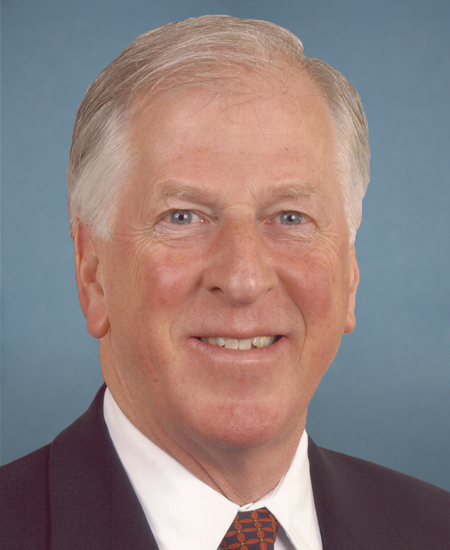
Rep. Mike Thompson
Sponsored bills
Save our Stages Extension Act This bill extends to March 11, 2023, the time frame during which Shuttered Venue Operators Grant recipients may use grant funds to cover their expenses. These grants provide funds to certain types of entities in the arts and entertainment industry affected by the COVID-19 pandemic. Currently, a recipient may use such funds to cover expenses incurred between March 1, 2020, and December 31, 2021.
This resolution supports the designation of National Voter Registration Day.
Agricultural Fairs Rescue Act This bill directs the Agricultural Marketing Service of the Department of Agriculture to establish a program to award grants to states or state departments of agriculture to provide support to agricultural fairs for losses sustained by such fairs due to COVID-19. As a condition of receiving a grant, recipients shall agree to (1) prioritize supporting agricultural fairs in the state facing the greatest financial hardship, and (2) use not more than 5% of grant funds for administrative costs incurred in providing support to agricultural fairs.
Medically Tailored Home-Delivered Meals Demonstration Pilot Act of 2021 This bill requires the Centers for Medicare & Medicaid Services to establish a demonstration program to allow hospitals to provide medically tailored, home-delivered meals to Medicare beneficiaries who have a diet-impacted disease (e.g., kidney disease) and have daily living limitations. Participating hospitals must (1) retain a physician, registered dietitian or nutrition professional, or clinical social worker to screen, monitor, and coordinate services for individuals who receive meals through the program; and (2) contract with experienced organizations for meal delivery. Hospitals may choose to also provide meals to an individual's primary caregiver or to a dependent under the age of 18 who resides in the same household.
Two-State Solution Act This bill addresses U.S. policy and related activities to preserve conditions for a two-state solution to resolve territorial disputes between Israel and Palestine. The bill prohibits the United States from providing support for projects in geographic regions that came under Israeli control after June 5, 1967. It also prohibits the use of any U.S. security assistance, defense articles, or defense services provided to Israel for efforts to annex or exercise permanent control over any part of the West Bank or Gaza. Current law designates the Palestine Liberation Organization (PLO) as a terrorist organization and restricts its activities (e.g., prohibiting it from maintaining an office in the United States). The President may waive for up to six months some of these restrictions to serve U.S. national security or diplomatic interests. If the President certifies that the PLO has ceased supporting terrorist actions and met other conditions, the bill automatically terminates the terrorist organization designation. Goods produced in the West Bank or Gaza that are imported into the United States must indicate those areas as the country of origin on their labels. The bill expands the scope of certain foreign and development assistance to foster initiatives, including shared educational opportunities and youth activities, that connect Israelis and Palestinians. Additionally, the Department of State and the U.S. Agency for International Development may jointly award grants to private, nonprofit organizations to promote human rights and democracy, strengthen civil society, and otherwise address the needs of the Palestinian people.
Commonsense Reporting Act of 2021 This bill addresses the eligibility verification process for the premium assistance tax credit and cost-sharing subsidy under the Patient Protection and Affordable Care Act (PPACA). It requires the Department of the Treasury to develop and implement a reporting system that allows employers to voluntarily report information about their health plans for the current plan year prior to the beginning of open enrollment. The bill also allows electronic transmission of employee and enrollee statements and permits Treasury to accept full names and dates of birth in lieu of dependents' and spouses' Social Security numbers. The bill also allows certain large employers who do not offer their employees minimum health care coverage 90 days to appeal an assessment for not providing such coverage. The Government Accountability Office must evaluate (1) for the period beginning on January 1, 2015, and ending on December 31, 2020, the notification of employers by PPACA exchanges of the eligibility of employees for advance payments of the premium assistance tax credit or cost-sharing subsidies; and (2) for calendar year 2022, the functionality of the prospective reporting system established by this bill, including the accuracy of information collected.
This resolution recognizes the harm caused to members of the Armed Forces by the Don't Ask, Don't Tell, Don't Pursue policy and commemorates the repeal of the policy as a day in which service members were free to serve openly and be honored for such service without caveat. The resolution also reaffirms the commitment to honor the service of all members and former members of the military, regardless of gender identity or sexual orientation.
2020 WHIP+ Reauthorization Act This bill expands disaster indemnity programs through which the Department of Agriculture provides payments to agricultural producers for crop and milk losses resulting from hurricanes, wildfires, and other qualifying natural disasters. In particular, the bill extends the Wildfire and Hurricane Indemnity Program Plus (WHIP+), the On-Farm Storage Loss Program, and the Milk Loss Program to make losses that occurred in the 2021 and 2022 calendar years eligible for payments. Under current law, these programs provide disaster payments to agricultural producers with crop and milk losses resulting from qualifying natural disasters that occurred in the 2018 and 2019 calendar years.
Expediting Assistance to Renters and Landlords Act of 2021 This bill modifies the Department of the Treasury's Emergency Rental Assistance program by extending time limits on payments, allowing landlords to seek rents and arrears from the program without renter consent, and allowing renters to prove eligibility through attestation. The program provides grants to state and local governments to assist eligible households in paying rent and utility costs and other expenses related to housing incurred due to the COVID-19 pandemic. The bill extends the availability of program assistance from 18 to 24 months for eligible households. The bill also relaxes requirements for proof of eligibility by requiring only that households attest that they meet eligibility requirements instead of requiring proof of eligibility. It also allows for direct payment of funds to eligible households where the landlord refuses direct payment. Additionally, the bill allows a landlord to apply for program funds without the consent of a renter if the landlord agrees to certain terms, including a 120-day bar on evicting the renter for nonpayment. This bill also expands the stable housing services available under the program to additional low-income households. Further, the bill requires Treasury and state and local governments to increase outreach to renters and landlords and allows for coordination with public entities to provide application assistance services.