

Maddy summaryThis bill expands access to family and medical leave under the FMLA by reducing the required employment period from 12 months to 90 days for most workers. It also lowers the employer size threshold from "50 or more employees" to "1 or more employees," requiring nearly all employers to provide this leave. The changes specifically apply to private-sector workers, federal employees (covered under Title 5), and congressional staff, removing previous eligibility barriers. Key provisions include updating definitions in the FMLA and modifying federal employee leave rules to align with the 90-day requirement. This directly affects millions of workers who previously had to wait a full year for leave eligibility.
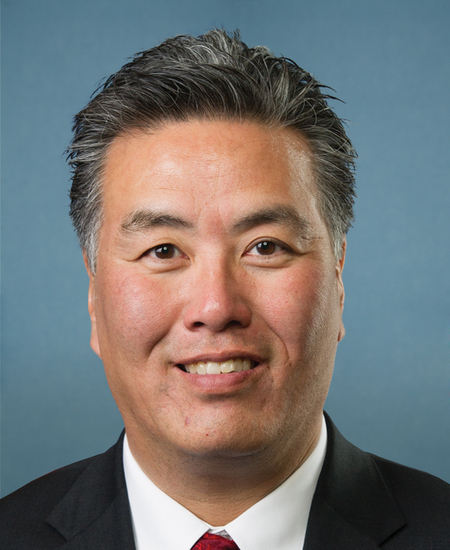
Rep. Mark Takano
Sponsored bills
Maddy summaryThis bill modifies corporate tax rules to prevent companies from avoiding US taxes by moving operations overseas. It targets tax breaks that companies currently use when they outsource work to foreign countries or reorganize as foreign entities (so-called "inverted corporations"). The bill requires companies to pay tax on foreign profits based on each country where they operate, limits tax deductions for interest by multinational corporations, and treats foreign corporations managed in the US as domestic for tax purposes. These changes aim to close loopholes that allow companies to reduce their US tax burden through foreign operations.
Maddy summaryThis bill establishes a federal right to access contraception, protecting individuals' ability to obtain contraceptives and health care providers' ability to offer them without government interference. It prohibits states from banning or restricting contraceptive services, products, or information, including laws that force providers to deny care based on personal beliefs or limit access to specific methods. The law immediately overrides conflicting state regulations and ensures that contraception remains available regardless of factors like race, income, disability, or location. It applies to all individuals and providers, building on existing federal protections like the Affordable Care Act's coverage requirements.
This resolution supports federal investment in public K-12 schools, affirms that the Department of Education (ED) plays a vital role in the public education system, and states that public education funding should not be diverted (e.g., through the use of vouchers) to privately run K-12 schools. The resolution also rejects any claim that the executive branch has the legal authority to (1) dismantle or relocate ED or any of its major offices; or (2) reduce federal funding for public education, block federal grants for education, or transfer funding burdens for education to state and local governments.
Stop the Wait Act of 2025 This bill phases out the initial waiting period for Social Security Disability Insurance (SSDI) benefits and eliminates the waiting period for certain disabled individuals to become eligible for Medicare. Under current law, individuals generally must wait five months after the onset of disability to begin receiving SSDI benefits. The bill would gradually reduce this waiting period before eliminating it entirely in the year 2030. Further, the bill would eliminate the 24-month waiting period for certain disabled workers and other individuals to become eligible for Medicare. Under current law, individuals under the age of 65 may generally enroll in Medicare after they have been eligible for SSDI or Social Security child’s, widow’s, or widower’s benefits by reason of disability for 24 months. The bill would eliminate this waiting period for individuals for whom the annual cost of certain medical insurance would exceed a specified percentage of their household income (i.e., those who cannot afford minimum essential coverage). Medicare eligibility for these individuals must be available retroactively to the first month that an individual qualified for SSDI or Social Security child’s, widow’s, or widower’s benefits by reason of disability.
Maddy summaryThis resolution expresses the House of Representatives' position that Congress should take steps to prevent the privatization of the United States Postal Service (USPS), ensuring it remains a federal independent agency. It highlights USPS’s constitutional role, self-sustaining nature (relying on service revenue, not taxpayer funds), and critical functions - serving 168 million addresses daily, supporting rural communities, and underpinning e-commerce. The resolution opposes privatization, noting it would raise prices, reduce services, and harm the $1.9 trillion mailing industry. As a non-binding resolution, it reflects the House’s stance but does not create new law or policy.
Maddy summaryHRES 75 is a symbolic resolution recognizing the cultural and historical significance of Lunar New Year (celebrated as the Year of the Snake in 2025). It acknowledges Lunar New Year's origins in China over 4,000 years ago, its global celebration as Seollal (Korea) and Tết (Vietnam), and its importance to Asian American communities in the U.S. The resolution expresses respect for Asian Americans and others celebrating the holiday and wishes them a happy new year, but it creates no new laws, funding, or obligations. As a ceremonial resolution, it has no direct policy impact.
Maddy summaryThis resolution (HRES 77) supports designating January 30, 2025, as "Fred Korematsu Day of Civil Liberties and the Constitution" to honor Japanese American civil rights advocate Fred Korematsu. It commemorates his 1944 legal challenge to the WWII internment of Japanese Americans under Executive Order 9066, which was later overturned after evidence revealed government misconduct. The resolution encourages public reflection on preserving civil liberties during national emergencies, referencing Korematsu's later warnings about post-9/11 civil liberties threats. It is a symbolic gesture with no binding legal effect, building on existing state designations in seven states.
Maddy summaryHR 794, the Lunar New Year Day Act, would designate the Lunar New Year as a federal holiday by adding it to the list of official federal holidays under Title 5 of the U.S. Code. This change would directly affect federal government operations and employees, who would observe the holiday on the date of the Lunar New Year each year. The bill’s sole mechanism is amending the existing holiday schedule to include "Lunar New Year Day" following the Birthday of Martin Luther King, Jr. It does not create new programs, allocate funding, or impact non-federal entities.
Maddy summaryThis bill authorizes a posthumous Congressional Gold Medal for Fred Korematsu, a Japanese American civil rights advocate who challenged the World War II internment of Japanese Americans. It recognizes his legal fight against Executive Order 9066, which led to the unjust incarceration of over 120,000 people, and his lifelong advocacy against racial discrimination. The medal, designed by the Treasury Secretary, will be displayed at the Smithsonian Institution. The bill is purely commemorative and does not create new legal rights or funding requirements.