

Maddy summaryEthan's Law requires gun owners to store firearms securely in homes where minors live or where residents are legally prohibited from owning guns. It makes it unlawful to leave firearms unsecured if a minor or ineligible person could access them, with fines of $500 per violation and harsher penalties if injury or death occurs. The bill creates a federal grant program to help states implement similar secure storage laws and treats unsafe storage as negligence in legal cases. It directly affects households with children or residents who cannot legally possess firearms, aiming to reduce accidental shootings and unauthorized access.
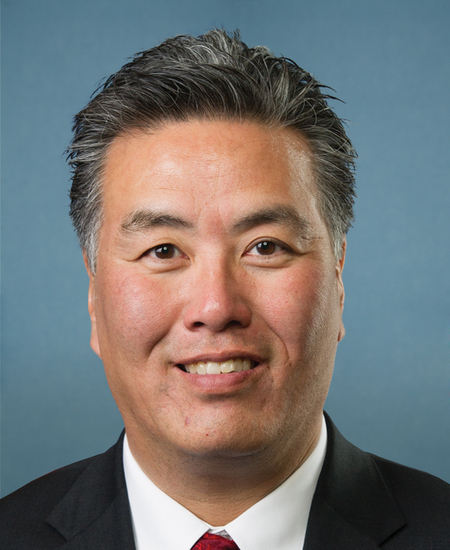
Rep. Mark Takano
Sponsored bills
Maddy summaryHR 1457, the "IDs for an Inclusive Democracy Act," requires the Social Security Administration to issue free federal identification cards within three years. These cards would be accepted as valid ID for the same purposes as state driver's licenses, including gender identity options (male, female, or X) chosen by the applicant. The bill establishes a process for applying via the U.S. Postal Service, with options for in-person service, online, or mail-in applications. It also mandates a public education campaign and special validity rules for minors (under 18) and seniors (65+), ensuring the ID remains valid without renewal after age 65.
Maddy summaryHR 1502 authorizes the creation of a Congressional Gold Medal to honor the volunteers and communities (primarily from Nebraska, Colorado, and Kansas) who supported the North Platte Canteen during World War II. The bill directs the Treasury Secretary to design and strike the medal, which will be presented to the individuals who contributed to the canteen’s operations and then permanently displayed at the Lincoln County Historical Museum in North Platte, Nebraska. It also permits the sale of bronze duplicates to cover production costs, with proceeds going to the U.S. Mint. This is a commemorative measure recognizing historical service, not a policy change affecting current laws or programs.
Maddy summaryHR 1410 expands access to mental health care for 9/11 responders and survivors by allowing licensed mental health providers (not just physicians) to conduct initial health evaluations and certifications under the World Trade Center Health Program. It adjusts the program’s funding formula to account for changing enrollment numbers by linking annual funding to the previous year’s enrollment ratio, and clarifies that deceased individuals are excluded from enrollment counts. The bill also extends the timeframe for adding new health conditions to the program’s list and requires a 2028 report assessing long-term funding needs through 2090. These changes aim to streamline eligibility, improve care access, and ensure sustainable funding for the program.
Maddy summaryHR 1439, the Korematsu-Takai Civil Liberties Protection Act of 2025, prohibits the U.S. government from detaining individuals solely based on protected characteristics. It amends federal law to ban imprisonment or detention due to race, ethnicity, national origin, religion, sex, gender identity, sexual orientation, disability, or any characteristic the Attorney General later adds. The bill directly affects anyone subject to federal detention, ensuring government actions cannot target people based on these specific traits. Key provisions include a clear definition of protected characteristics and a rule preventing the Attorney General from removing existing categories from the list. This creates a concrete legal barrier against discriminatory detention practices.
Maddy summaryThe Food Deserts Act (HR 484) creates a federal grant program to help establish grocery stores in underserved communities by providing capitalization grants to states. States would use these grants to build revolving funds that make low-interest loans to grocery stores meeting specific criteria, such as offering unprocessed foods, affordable pricing, and local hiring. The program prioritizes stores that source from local farms, provide nutrition education, and commit to keeping healthy foods in stock, while requiring applicants to contribute 20% of loan costs from non-federal funds. It authorizes $150 million for fiscal year 2026 to support these loans, which must be repaid over up to 30 years to replenish the revolving fund for future use.
Maddy summaryThis bill creates a new federal tax credit for family child care providers who operate from their primary residence. It allows eligible providers to claim up to $5,000 annually toward specific startup costs like licensing fees, supplies (diapers, toys), insurance, fencing, playground equipment, and required renovations. To qualify, providers must be licensed/registered, serve at least two non-family children, and operate from their home. The credit is limited to one year per provider (no repeat claims) and expires after seven years. It directly affects small-scale home-based child care operators seeking to establish or improve their licensed services.
Maddy summaryHR 1356, the Mudslide Recovery Act, creates a federal grant program to help communities repair damage from mudslides that occur after wildland fires. The program provides competitive grants to eligible recipients - including states, tribes, local governments, fire departments, and community non-profits in fire-risk areas - to fund innovative repair solutions. It authorizes $5 million annually from fiscal years 2026 through 2032 for the Secretaries of the Interior and Homeland Security (via FEMA) to administer the program. This bill directly affects communities impacted by post-wildfire mudslides by providing targeted funding for recovery efforts.
Maddy summaryThe Office of Gun Violence Prevention Act of 2025 would create a new office within the Department of Justice to coordinate federal efforts on reducing gun violence. The office, led by a Director appointed by the Attorney General, would integrate existing DOJ programs, evaluate data gaps, and develop evidence-based recommendations for Congress and the President. It would also establish an advisory council including survivors of gun violence, public health officials, and community representatives to guide its work. The office would produce annual reports detailing gun violence trends and policy proposals, while collaborating with agencies like Health and Human Services and the FBI.
Maddy summaryHR 1251, the All Access Act of 2025, requires Members of Congress (House members and Senators) to present official identification to enter federal public buildings during regular business hours. For access outside these hours, Members must notify the building head at least 12 hours in advance. The bill establishes clear, procedural access rules for congressional members but does not create new policies or affect the public. It is a straightforward procedural measure governing Member access to federal facilities.