

Maddy summaryHR 3045, the West Bank Violence Prevention Act of 2025, imposes U.S. sanctions on foreign individuals and entities responsible for violence, displacement, or property destruction in the West Bank. It targets those directly involved in attacks on civilians, forced displacement, or property seizures, including settler leaders or officials of groups engaged in such activities. Key provisions require freezing assets of sanctioned individuals within U.S. jurisdiction and blocking their entry into the United States via visa restrictions. The law applies to foreign nationals meeting specific criteria outlined in the bill, not U.S. citizens or entities.
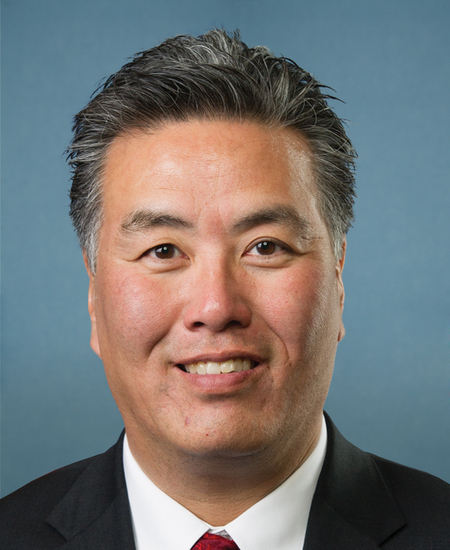
Rep. Mark Takano
Sponsored bills
Maddy summaryHRES 344 is a congressional resolution requesting documents related to potential changes at the Administration for Community Living (ACL). It directs the President and Health and Human Services Secretary to provide unredacted records - including communications, legal opinions, and meeting notes - within 14 days about: (1) proposed ACL elimination, (2) downsizing or staff dismissals, (3) HHS’s March 2025 "Transformation" plan affecting ACL, and (4) whether reduced staff could still enforce key laws like the Older Americans Act. This resolution serves as an oversight tool for Congress to review the process, not as a policy change. It does not alter ACL’s structure or affect any constituents directly.
Maddy summaryHR 3025, the Expanding Access to Fertility Care for Servicemembers and Dependents Act, requires TRICARE to cover fertility treatments for active-duty service members (including reserves) and their dependents without restrictions based on service-connected disabilities, serious illness, fertility capacity, or personal characteristics like marital status, gender, or sexual orientation. The bill mandates coverage for services including in-vitro fertilization, artificial insemination, and embryo/sperm preservation as part of standard TRICARE medical care. This directly affects military families seeking fertility care under TRICARE by removing existing eligibility barriers. The law amends Title 10, U.S. Code, to ensure these services are provided without prior authorization based on the specified prohibited factors.
Maddy summaryHRES 340 is a ceremonial resolution recognizing April 2025 as "Community College Month" to celebrate the role of over 1,000 U.S. community colleges. It highlights these institutions' work in providing affordable higher education, workforce training, and economic support - serving 10.2 million students annually and contributing significantly to national economic growth (e.g., generating $898 billion in alumni income in 2020). The resolution emphasizes community colleges' accessibility (average $3,990 tuition for in-district students, 10-mile average student commute) and their role in workforce development across sectors like healthcare and manufacturing. As a non-binding recognition, it does not create new laws or funding.
Hot Foods Act of 2025 This bill expands the Supplemental Nutrition Assistance Program (SNAP) to permit the use of SNAP benefits to purchase hot foods or hot food products ready for immediate consumption.
Maddy summaryHR 2947, the Deafblind DATA Act, requires the U.S. Census Bureau to publish an annual data table starting in 2026 showing individuals who reported both hearing and vision loss in the American Community Survey. The table will include demographic details (sex, race, age) and economic factors (employment, education, income, poverty status) for people in each state, without revealing personal identifiers. This bill directly addresses the lack of centralized data on the deafblind population (estimated at 10,000 children and 40,000 adults by the National Center on Deafblindness), which currently prevents accurate service planning. The Census Bureau must also report to Congress within 180 days on feasibility of expanding such data collection. The Act does not change existing services but aims to improve understanding of this population's needs through better data.
Maddy summaryHR 2882 prohibits the U.S. Secretary of the Interior from issuing oil or gas leases for exploration, development, or production in the Central California Planning Area. This bill directly affects federal leasing decisions in that specific coastal region, preventing new fossil fuel extraction activities. The key provision amends the Outer Continental Shelf Lands Act to permanently ban such leasing in the defined area. The bill creates a clear policy change by eliminating future oil and gas development opportunities on federal waters along California's central coast.
Maddy summaryHR 2884 establishes a National Center on Antiracism and Health within the CDC to address structural racism as a public health crisis. The center will research how racism impacts health outcomes, collect disaggregated data by race, ethnicity, and other factors, and develop antiracist interventions for public health systems. It requires CDC to create regional centers in minority communities, build a public data clearinghouse, and train health professionals on racism's health effects. The bill also directs the CDC to research police violence's public health impacts and develop prevention strategies, requiring annual reports to Congress on these efforts.
Maddy summaryHR 2862 prohibits the federal government from leasing offshore areas in Southern California for oil and gas exploration or production. It directly affects oil and gas companies seeking permits in the Southern California Planning Area, as defined in the federal 2024-2029 Outer Continental Shelf leasing program. The bill amends the Outer Continental Shelf Lands Act to block all future leases in this region, preventing new drilling projects in the specified offshore waters. This is a concrete policy change that halts federal leasing decisions in the area without altering existing leases or operations.
Maddy summaryThe PROTECT Students Act of 2025 establishes new financial transparency requirements for higher education programs, measuring debt-to-earnings ratios and earnings premiums to help students evaluate program value and financial outcomes. It strengthens borrower defense mechanisms allowing students to seek loan forgiveness for misleading practices by institutions and prohibits schools from restricting students' legal rights through arbitration agreements. The bill requires institutions to spend at least 30% of tuition revenue on instruction and student services, with annual reporting to the Department of Education. It creates an enforcement unit within the Office of Federal Student Aid to investigate misconduct and increases transparency by requiring public disclosure of complaint data, financial information, and oversight activities.