

Maddy summaryHR 6114 prohibits using federal funds from previous appropriations to the Department of Health and Human Services for any activity that automatically enrolls Medicare beneficiaries in Medicare Advantage (MA) plans without their active choice. Specifically, it blocks the use of these funds to implement a system where individuals who fail to select a plan are deemed enrolled in MA by default. This directly affects Medicare beneficiaries who might otherwise be automatically enrolled in MA plans without actively choosing them. The bill’s key mechanism is a funding restriction that prevents HHS from using appropriated money to operate this default enrollment process under Medicare Part C. The policy change ensures beneficiaries must actively elect an MA plan to enroll, rather than being enrolled automatically.
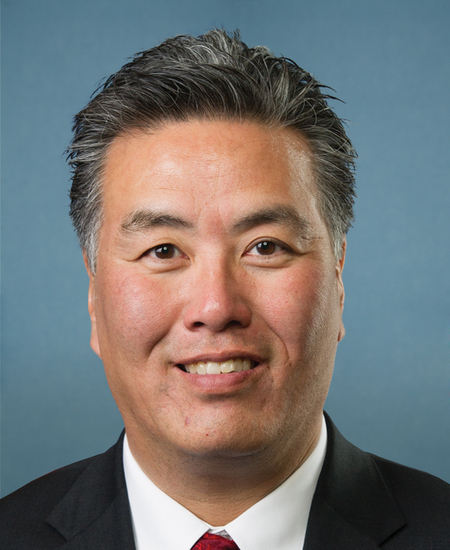
Rep. Mark Takano
Sponsored bills
Maddy summaryThis bill requires Medicare Advantage plans to have average monthly payments from the government that don't exceed the average cost of original Medicare (Parts A and B) for the same year. If a plan's payments exceed this cost, the government cannot allow new enrollments or re-enrollments in that plan for the following year. It directly affects Medicare Advantage plans and their enrollees, creating a financial check on plan pricing. An exception applies to specialized Medicare Advantage plans designed for individuals with specific health needs. The provision takes effect one year after the bill's enactment.
Maddy summaryThis bill (HR 6115) requires the U.S. Department of Health and Human Services to create and maintain a website for Medicare beneficiaries. The website would allow current and prospective Medicare users to search for healthcare providers participating in either Medicare Advantage (MA) plans or traditional Medicare (Parts A and B). Key features include searching for providers by name or location and identifying which providers are in each plan's network. The website must be operational within one year of the bill's enactment. This directly affects millions of Medicare beneficiaries seeking clear information about provider availability.
Maddy summaryHR 6056, the International Human Rights Defense Act of 2025, establishes a permanent Special Envoy at the State Department to lead U.S. foreign policy efforts addressing discrimination and violence against LGBTQI+ people globally. The bill requires the U.S. government to develop and update a biannual global strategy to prevent criminalization and violence against LGBTQI+ individuals, mandate detailed reporting on such abuses in annual country reports, and ensure all U.S. foreign assistance programs include inclusive nondiscrimination policies. This legislation directly affects U.S. foreign policy implementation, federal agencies receiving funding, and LGBTQI+ communities facing persecution worldwide. The bill aims to coordinate U.S. government efforts across departments and with international partners to advance LGBTQI+ rights globally through concrete policy mechanisms.
Maddy summaryHR 6014, the Right to Representation for Department of Veterans Affairs Workers Act of 2025, gives most VA employees the right to have a chosen representative present during examinations that could lead to disciplinary action. This applies to non-exempt VA workers (excluding senior executives, certain appointed staff, and political appointees) and requires the VA to allow representation during work hours if requested. The bill inserts a new section into VA employment law, mandating that employees be informed of this right and permitting representation at any examination where disciplinary action might result. It directly affects VA employees facing potential disciplinary proceedings, ensuring they can have support during these reviews.
Maddy summaryThis bill, HR 5973, requires federal immigration enforcement personnel to follow strict limits on force use, including proportional application, mandatory de-escalation efforts, and prohibitions on equipment like flash bangs or rubber bullets except for specific public safety threats. It mandates body-worn and vehicle cameras for all operations, with footage retained for one year (three years for force incidents or complaints), and grants affected individuals the right to inspect recordings. The law also requires annual training on force policies, First Amendment compliance, and racial bias avoidance, while demanding detailed quarterly reports to Congress on force usage, assaults on agents, and equipment approvals. These provisions directly affect all federal immigration agents conducting enforcement actions, aiming to increase transparency and accountability during operations.
Maddy summaryThis bill prohibits the Department of Veterans Affairs (VA) from requiring veterans to pay copayments for hospital care or medical services under specific circumstances. It bans copayments for all veterans receiving care, prevents retroactive billing for care received within two years if the VA failed to process claims on time, and caps copayments at $2,000 for errors caused by VA staff or systems. Veterans affected by VA processing errors or billing mistakes would no longer face these charges. The bill also grants the VA authority to waive copayments without requiring veterans to submit a formal request.
Maddy summaryThe American Energy Independence and Affordability Act extends multiple clean energy tax credits that were set to expire between 2025 and 2026. It specifically extends residential clean energy credits through 2034, clean electricity investment credits for wind and solar through 2032, and clean vehicle credits for electric vehicles through 2032. The bill also reinstates special rates for sustainable aviation fuel and modifies requirements for energy-efficient home improvements. These provisions directly affect homeowners installing solar panels, businesses investing in clean energy infrastructure, and manufacturers producing clean energy equipment.
Maddy summaryThis resolution expresses the U.S. House of Representatives' support for recognizing October 26, 2025, as Intersex Awareness Day, which honors intersex individuals - those with natural variations in physical sex characteristics (such as anatomy, hormones, or chromosomes) that differ from typical male or female bodies. It affirms the day’s goals of promoting bodily autonomy and addressing issues like nonconsensual medical procedures on intersex children. The resolution encourages federal agencies, schools, and organizations to observe the day through educational activities that increase public awareness and support for the intersex community. It does not create new laws or policies but symbolically aligns with existing federal actions promoting nondiscrimination and health equity for intersex people.
Maddy summaryThis bill requires congressional and White House approval before any corporate or individual name, logo, or advertisement can be displayed on the White House grounds or in its buildings. It blocks permanent or semi-permanent displays (like plaques or signage) without consent from the House Speaker, Minority Leader, and White House Curator. The law applies to all White House grounds and structures, preventing unsanctioned commercial endorsements or sponsorships. Existing rules for commemorative monuments (under the Commemorative Works Act) would still govern approved displays.