

Alice Cogswell and Anne Sullivan Macy Act This bill expands special education and related services for students who are deaf or hard of hearing, students with visual disabilities, and children and youth who are deaf-blind. The individualized education program for each child who is visually and/or hearing impaired must include specified components and must provide the child with instruction that meets the child's unique learning needs. In addition, a state's closure of a special school serving deaf or blind children shall count as a reduction of its financial support for special education and related services. Among other provisions, the bill authorizes support, including grants for training special education personnel, to be used in preparing individuals to become qualified teachers and early intervention specialists for children with hearing disabilities. The bill establishes within the Department of Education the Anne Sullivan Macy Center on Visual Disability and Educational Excellence to better support students with visual disabilities.
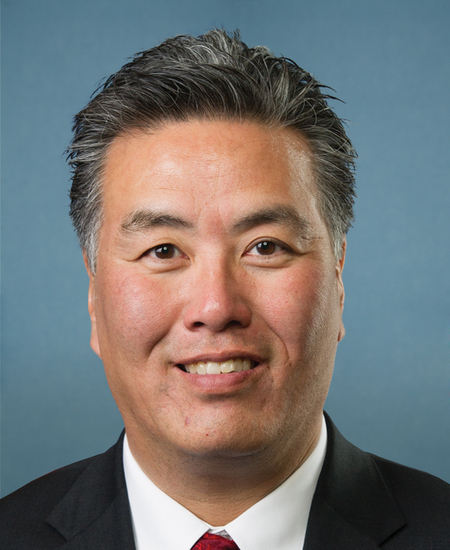
Rep. Mark Takano
Sponsored bills
This bill directs the Speaker of the House and the President pro tempore of the Senate to arrange for the award of three Congressional Gold Medals to the U.S. Capitol Police (USCP) and other law enforcement agencies that protected the U.S. Capitol on January 6, 2021. Following the award of these medals, one medal shall be given to the USCP, one medal shall be given to the Metropolitan Police Department of the District of Columbia, and one medal shall be given to the Smithsonian Institution and displayed with a plaque listing all law enforcement agencies that participated in protecting the Capitol on January 6, 2021.
Global War on Terrorism Memorial Location Act This bill authorizes the establishment of a National Global War on Terrorism Memorial in the area of the National Mall.
Equality Act This bill prohibits discrimination based on sex, sexual orientation, and gender identity in areas including public accommodations and facilities, education, federal funding, employment, housing, credit, and the jury system. Specifically, the bill defines and includes sex, sexual orientation, and gender identity among the prohibited categories of discrimination or segregation. The bill expands the definition of public accommodations to include places or establishments that provide (1) exhibitions, recreation, exercise, amusement, gatherings, or displays; (2) goods, services, or programs; and (3) transportation services. The bill allows the Department of Justice to intervene in equal protection actions in federal court on account of sexual orientation or gender identity. The bill prohibits an individual from being denied access to a shared facility, including a restroom, a locker room, and a dressing room, that is in accordance with the individual's gender identity.
Stronger Child Abuse Prevention and Treatment Act This bill reauthorizes through FY2027 and revises the Child Abuse Prevention and Treatment Act and the Child Abuse Prevention and Treatment and Adoption Reform Act of 1978 to expand services for preventing and treating child abuse. Specifically, the bill establishes requirements concerning collecting and exchanging data about child abuse and neglect. For instance, the bill requires the Department of Health and Human Services (HHS) to (1) establish uniform national standards for tracking and reporting child fatalities and near fatalities resulting from maltreatment, and (2) develop an electronic interstate data exchange system that allows states to share information from their child abuse and neglect registries with other states. The bill also addresses child abuse and neglect related to families impacted by substance use disorders, racial bias in the child protective services system, and child sexual abuse. Further, the bill revises the community-based grants program to emphasize access to effective services for diverse populations and to promote the development of statewide strategies to scale up family strengthening services. Finally, the bill requires HHS to examine unregulated custody transfers and make recommendations for preventing, identifying, and responding to such transfers.
Improving Access to Indian Health Services Act This bill permanently extends certain Medicaid flexibilities relating to Indian health care providers. Specifically, the bill permanently expands coverage to include clinical services that are furnished outside of a clinic by an Indian Health Service (IHS) facility, a tribe or tribal organization, or an Urban Indian Organization (UIO). Current guidance from the Centers for Medicare & Medicaid Services allows IHS and tribal facilities to receive payment for clinical services provided outside of clinics through October 31, 2021; facilities are expected to work with their state Medicaid programs to transition to other, more permanent payment options for these services. The bill also permanently establishes a 100% federal matching rate, also known as the Federal Medical Assistance Percentage (FMAP), for UIO services. Current law provides a 100% FMAP for UIO services during the eight fiscal quarters after March 11, 2021.
Water Recycling Investment and Improvement Act This bill makes permanent, and otherwise revises, the Bureau of Reclamation's grant program for the funding of water recycling and reuse projects. Specifically, the bill removes priority under the program for projects in areas that, in the preceding four-year period, have been (1) identified as experiencing severe, extreme, or exceptional drought; or (2) designated as a disaster area by a state. Additionally, the bill increases through FY2025 the authorization of appropriations for the program and otherwise revises provisions related to program funding.
This bill designates the portion of U.S. Route 80 from Selma, Alabama, to Montgomery, Alabama, as the John R. Lewis Voting Rights Highway.
Public School Green Rooftop Program This bill directs the Department of Energy (DOE) to establish a grant program for installing and maintaining green roof systems on public elementary and secondary school buildings. Green roof refers to a layer of vegetation that is planted over a waterproofing system or to a waterproof management practice that is installed on a roof and may support plant growth. Specifically, DOE must award grants to public elementary and secondary schools, local educational agencies, and partnerships with nonprofit organizations to (1) pay the costs of planning assistance for green roof systems on school buildings (e.g., assessing structures, conducting financial and engineering analyses, and receiving cost estimates), and (2) install green roof systems on these buildings. Additionally, a grant recipient must complete the installation of a green roof system within four years of receiving the grant. A grant recipient that completes this installation requirement shall receive additional funding for maintenance activities, such as conducting routine inspections to monitor the condition of the green roof.
No Tax Breaks for Outsourcing Act This bill modifies the tax treatment of the foreign source income of domestic corporations. The bill includes provisions that modify calculations of the gross income of U.S. shareholders to include net CFC tested income in the current taxable year, apply limitations on the foreign tax credit on a country-by-country basis, limit the tax deduction for the interest expense of a U.S. corporation that is a member of a financial reporting group (i.e., a group that prepares consolidated financial statements according to generally accepted accounting principles or international financial reporting standards), modify the rules for the taxation of inverted corporations (i.e., U.S. corporations that acquire foreign companies to reincorporate in a foreign jurisdiction with income tax rates lower than the United States), and treat certain foreign corporations managed and controlled primarily in the United States as domestic corporations for tax purposes.