

Maddy summaryHCONRES 59 is a non-binding congressional resolution urging all countries to ban the dog and cat meat trade and enforce existing anti-trade laws. It directly affects foreign governments, not U.S. citizens, as it calls on them to adopt legal prohibitions and strengthen enforcement. The resolution cites animal cruelty concerns (including reports of stolen pets and inhumane slaughter) and public health risks (such as rabies and trichinellosis transmission linked to the trade). It does not change U.S. law, as domestic prohibition already exists under the 2018 Agriculture Act. The resolution affirms U.S. support for global animal welfare but has no legal force.
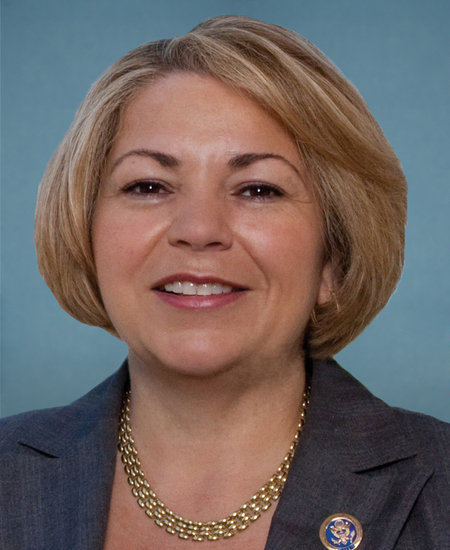
Rep. Linda T. Sánchez
Sponsored bills
Maddy summaryHRES 645 is a non-binding House resolution recognizing August as "Chicano Heritage Month" to celebrate the contributions of Mexican Americans to U.S. history. It highlights historical figures like labor leaders Cesar Chavez and Dolores Huerta, landmark court cases (e.g., *Mendez v. Westminster* ending school segregation), and cultural impacts such as Selena's influence on music. The resolution does not create new laws or policies but serves as a symbolic acknowledgment by the House to honor this heritage. It encourages the public and institutions to observe the month with events celebrating Mexican American contributions.
Maddy summaryThe Strengthening America's Families Act of 2023 establishes a federal program to create infant-toddler court teams that coordinate courts, child welfare agencies, and community services to support infants, toddlers, and their families experiencing or at risk of maltreatment. The bill authorizes $25 million annually for grants to states to establish or enhance these teams, requiring them to meet specific criteria including trauma-informed practices, preventing foster care placements, and addressing developmental needs. States receiving grants must work with a National Infant-Toddler Court Team Resource Center that provides technical assistance and collects data on program effectiveness. This program directly affects young children in the child welfare system, their families, and state child welfare systems by promoting coordinated, community-based support to improve outcomes.
Providing Essential Temporary Shelter Assistance For Emergencies Act of 2023 or the PETSAFE Act of 2023 This bill directs the Federal Emergency Management Agency (FEMA) to establish a pilot program to provide grants for mobile pet shelters during emergencies and major disasters. FEMA may provide funds to state, local, and tribal governments to establish a new pet shelter site that is a mobile unit, which may be a companion animal mobile equipment trailer, to be used in case of evacuation due to emergencies and major disasters. FEMA's authority to approve projects under this bill shall cease on January 1, 2029.
Maddy summaryThis bill approves and implements a new trade agreement between the United States and Taiwan, negotiated by the American Institute in Taiwan and Taiwan's Taipei Economic and Cultural Representative Office. The agreement aims to strengthen economic ties by addressing areas like supply chain security, investment screening, health, science, technology, and the digital economy. The bill establishes requirements for the President to consult with Congress before implementation, submit reports on how the agreement benefits US workers and businesses, and provide transparency about future trade negotiations. It also clarifies that the agreement doesn't override US or state laws and requires any future agreements to follow a similar approval process with congressional review.
Maddy summaryThis bill authorizes increased federal funding for early childhood special education programs under the Individuals with Disabilities Education Act (IDEA). It specifically restores funding for Part C (services for infants and toddlers with disabilities) and Section 619 (preschool programs for children with disabilities ages 3-5) by setting annual appropriations from $503 million to $1.22 billion for Section 619 and $932 million to $1.73 billion for Part C through 2028. These funds would directly support states in delivering high-quality early intervention and preschool services to children with disabilities and their families. The bill aims to reverse decades of reduced per-child funding, which had fallen significantly from historical highs.
Maddy summaryHJRES 84 designates August 20 as "Slavery Remembrance Day" to commemorate the arrival of the first enslaved Africans in what is now Virginia on August 20, 1619. The resolution urges the President to issue an annual proclamation encouraging Americans to observe the day with ceremonies and activities reflecting on slavery's history. It specifically honors 21 Black Congress members from the Reconstruction Era as honorary cosponsors and calls for acknowledging the enduring impacts of slavery. As a symbolic resolution, it does not create new laws or directly affect any group beyond establishing an annual observance.
Maddy summary# Summary of the "Protecting Our Democracy Act" This comprehensive legislation aims to strengthen democratic processes, increase government transparency, and prevent foreign interference in elections. Key provisions include: ## Ethics and Transparency - **Ethics Pledge**: Requires all appointees to sign an ethics pledge committing to: - Ban on gifts from registered lobbyists - 2-year revolving door ban (prohibiting participation in matters related to former employers) - Golden parachute ban (no special payments from former employers) - Commitment to decision-making based on public interest - **Tax Transparency**: Requires presidential and vice presidential candidates to disclose 10 years of tax returns, with sitting presidents submitting returns within 30 days of enactment ## Campaign Finance and Foreign Interference - **Foreign Contact Reporting**: Requires political committees to report any contact with "covered foreign nationals" within 1 week - **Enhanced Penalties**: Criminal penalties of up to $1 million and 5 years in prison for violations - **Online Advertising Rules** ("Honest Ads Act"): - Requires clear disclosure of who paid for political ads online - Mandates machine-readable public databases of political ads - Requires visible sponsor identification that remains when ads are shared - Defines "qualified political advertisements" to include various online formats ## Preventing Patronage Systems - Limits exceptions to competitive service for federal positions - Restricts transferring positions between competitive and excepted service - Requires employee consent for position transfers ## Use of Federal Property - Prohibits holding national political conventions on federal property - Requires publicly available visitor records at White House and other official locations (with privacy exceptions) The legislation establishes detailed definitions, reporting requirements, and enforcement mechanisms across multiple agencies, with the goal of increasing transparency, preventing foreign interference, and ensuring ethical conduct in government service.
Maddy summaryHR 5010, the "Recognizing Gun Violence as a Public Health Emergency Act," requires the Secretary of Health and Human Services and CDC to produce annual reports on gun violence impacts. These reports must include detailed data broken down by age, race, location, and incident type (like homicide, suicide, or unintentional shootings), as well as information on community prevention programs and research funding. The bill directly affects federal agencies (HHS and CDC) by mandating this data collection, and indirectly affects communities by creating a standardized public health data source on gun violence. It does not change existing laws or fund new programs but aims to inform future prevention efforts through comprehensive reporting. The reports must supplement, not replace, existing federal health research.
Providing Access to Treatment and Housing Act of 2023 or the PATH Act of 2023 This bill establishes a specific office and authorizes grants to support the provision of mental and behavioral health services for unhoused individuals. Specifically, the bill establishes the Center for Unhoused Individuals in the Substance Abuse and Mental Health Services Administration (SAMHSA). The center must develop policies and coordinate federal, state, and local action to expand unhoused individuals' access to mental, behavioral health, and housing services. The center may award grants to public and nonprofit entities to support these activities. SAMHSA must also award grants to state, local, and tribal governments to improve these services for unhoused individuals, with priority given to areas with high rates of housing instability and above-average housing costs.