

Maddy summaryThis bill creates a new federal tax credit for family child care providers who operate from their primary residence and hold state licenses. It allows qualifying providers to claim up to $5,000 in startup costs per year, including licensing fees, supplies, insurance, safety equipment, furniture, and required home renovations. The credit applies only once per provider (no repeat claims) and expires after 7 years. It directly benefits small-scale, licensed family child care providers serving at least two non-family children, aiming to reduce their initial business setup costs.
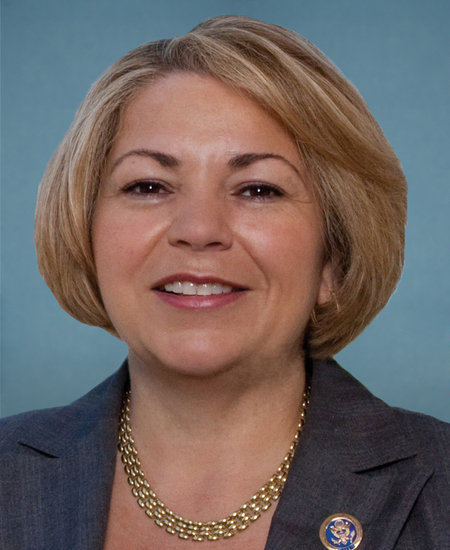
Rep. Linda T. Sánchez
Sponsored bills
Maddy summaryHRES 1135 is a non-binding resolution supporting the "Rise Up for LGBTQI+ Youth in Schools" initiative. It calls for communities to demand equal educational opportunities, civil rights protections, and an end to exclusion for LGBTQI+ students in K-12 schools, particularly transgender, nonbinary, Black, Indigenous, and disabled youth. The resolution encourages states and school districts to adopt policies prohibiting bias-based bullying, harassment, and erasure - such as inclusive sports participation, bathroom access, and curriculum inclusion - without creating new legal requirements. It references growing state-level restrictions targeting LGBTQI+ students, including sports bans and curriculum censorship, as context for the call to action. The resolution itself does not enact new laws but formally recognizes efforts to foster safer, affirming school environments.
Maddy summaryHR 7826, the Tribal Community Protection Act of 2024, amends the Edward Byrne Memorial Justice Assistance Grant Program to require written notification about restraining orders issued on tribal lands. It directly affects federally recognized Indian tribes and tribal lands by mandating that law enforcement send certified mail notifications to tribes and the Bureau of Indian Affairs regarding such orders. The key provision specifies that written notification must be sent via registered or certified mail with return receipt, ensuring tribes receive official notice of restraining orders affecting their communities. This change applies to programs funded under the Justice Assistance Grant Program and uses existing definitions for "tribal lands" and "Indian tribe" from federal law.
Maddy summaryHR 7801, the Sultana Steamboat Disaster Commemorative Coin Act of 2024, authorizes the U.S. Mint to produce commemorative coins honoring the 1865 Sultana steamboat disaster - the worst maritime disaster in U.S. history, which killed nearly 1,200 people. The bill specifies three coin types ($5 gold, $1 silver, and half-dollar clad) to be minted between January 1, 2027, and December 31, 2027, with surcharges from sales directed to the Sultana Historical Preservation Society for museum development and artifact preservation. The coins will be sold at face value plus surcharges ($5-$35 per coin), and the funds must support constructing a museum, exhibits, and preserving disaster-related history. This bill does not create new laws but enables commemorative coin sales to fund a specific historical preservation effort.
Maddy summaryHR 7812, the National Parent and Youth Helpline Act, creates a federal grant program to establish a 24/7 national toll-free helpline for parents, caregivers, and youth facing personal challenges like emotional distress, substance abuse, or educational concerns. The grant, worth $20 million annually from 2025-2030, will fund one nonprofit to operate the helpline (via phone, text, and chat), host weekly evidence-based support groups, and maintain a resource website. It specifically prioritizes serving diverse groups, including LGBTQ+ individuals, and requires annual performance reports to the Secretary and a congressional report after three years. The bill directly affects millions of parents and youth by providing accessible, trauma-informed support to strengthen families and prevent issues like child maltreatment.
Maddy summaryThis bill would provide federal grants to public housing agencies to modernize public housing through energy efficiency upgrades, infrastructure improvements, and renewable energy systems. It requires all public housing to become "zero-carbon homes" that produce enough renewable energy to meet their own consumption within 10 years. The bill includes specific requirements for workforce development, hiring from low- and very low-income communities (40% in year 1, 50% in year 2, 90% after that), and contracting with resident-owned businesses (20% in year 1, 30% in year 2, 50% after that). It also mandates resident and community engagement in planning, and requires public housing agencies to meet specific energy efficiency and water quality standards. The bill directly affects all public housing agencies managing housing for low- and very low-income residents across the United States, including tribal housing entities.
Maddy summaryHR 7770, the Rosie the Riveter Commemorative Coin Act, authorizes the U.S. Mint to produce and sell three commemorative coins honoring women who worked on the U.S. home front during World War II. It specifies $5 gold coins (max 50,000), $1 silver coins (max 400,000), and half-dollar coins (max 750,000), all to be issued between January 1, 2025, and December 31, 2025. Each coin sale includes a surcharge ($35 for gold, $10 for silver, $5 for half-dollar), with all surcharge funds directed to the Rosie the Riveter Trust for maintaining the Rosie the Riveter WWII Home Front National Historical Park and educational programs. The coins will feature designs reflecting the legacy of diverse women workers and must meet specific weight, diameter, and composition standards.
Maddy summaryThe PTO Act establishes a standard for paid annual leave, requiring most employers to provide employees with 1 hour of paid leave for every 25 hours worked, up to a maximum of 80 hours per 12-month period. It directly affects private sector employees and certain government workers, including those at the Government Accountability Office, Library of Congress, and federal agencies covered under the Congressional Accountability Act. The bill prohibits employers from interfering with employees' use of leave for any reason, requires clear notice of leave policies, and protects employees from retaliation for taking leave. It includes enforcement mechanisms through the Department of Labor, allowing employees to file complaints or lawsuits for violations of their leave rights. The Act takes effect 180 days after enactment, with specific provisions for collective bargaining agreements.
Maddy summaryHR 7634, the Plastic Pellet Free Waters Act, prohibits plastic pellets and pre-production plastic materials from being discharged into water through wastewater, spills, or runoff from specific facilities. It directly affects plastic polymer production facilities, plastic molding and forming facilities, and any point source (like packaging or transport operations) handling plastic pellets. The bill requires the EPA to issue a final rule within 60 days of enactment banning these discharges and updating all relevant wastewater, stormwater, and performance standards in permits and regulations. This creates a legal requirement for facilities to prevent plastic pellet pollution in waterways, targeting a major source of ocean plastic pollution.
Maddy summaryThis concurrent resolution (HCONRES 97) recognizes the gender wage gap, noting that women working full-time earn 84 cents for every dollar earned by men. It highlights racial disparities (e.g., Latinas earn 57 cents, Black women 69 cents) and the economic impact of the gap, including $965 billion in annual lost wages for women. As a symbolic resolution, it does not create new laws or policies but formally acknowledges the issue and reaffirms Congress’s commitment to addressing wage inequality.