

Stop the Wait Act of 2025 This bill phases out the initial waiting period for Social Security Disability Insurance (SSDI) benefits and eliminates the waiting period for certain disabled individuals to become eligible for Medicare. Under current law, individuals generally must wait five months after the onset of disability to begin receiving SSDI benefits. The bill would gradually reduce this waiting period before eliminating it entirely in the year 2030. Further, the bill would eliminate the 24-month waiting period for certain disabled workers and other individuals to become eligible for Medicare. Under current law, individuals under the age of 65 may generally enroll in Medicare after they have been eligible for SSDI or Social Security child’s, widow’s, or widower’s benefits by reason of disability for 24 months. The bill would eliminate this waiting period for individuals for whom the annual cost of certain medical insurance would exceed a specified percentage of their household income (i.e., those who cannot afford minimum essential coverage). Medicare eligibility for these individuals must be available retroactively to the first month that an individual qualified for SSDI or Social Security child’s, widow’s, or widower’s benefits by reason of disability.
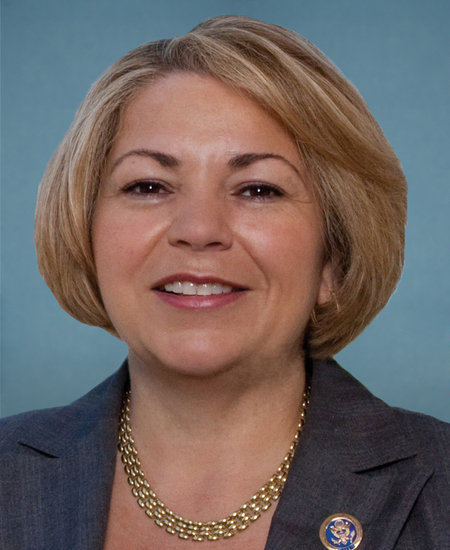
Rep. Linda T. Sánchez
Sponsored bills
Maddy summaryHR 959 creates a new Office within the U.S. Department of State to monitor and address Islamophobia abroad. The bill requires the State Department to include specific, detailed reports on Islamophobia in its annual human rights and religious freedom reports. These reports must describe incidents like violence against Muslims or mosques, government propaganda promoting hatred, and how foreign governments respond to such issues. The law directly affects how the U.S. government documents religious discrimination in foreign countries, mandating new reporting requirements for the State Department starting 180 days after enactment.
Maddy summaryHR 944, the Access to Counsel Act, requires U.S. immigration officials to provide certain immigrants a meaningful opportunity to consult with legal counsel during key immigration processes. It directly affects U.S. nationals, lawful permanent residents returning from travel, visa holders, refugees, asylees, and parolees subject to secondary or deferred inspection at ports of entry. The bill mandates that officials ensure access to counsel (including via phone) within one hour of inspection starting, allow counsel to present evidence, and accommodate in-person meetings when possible. It also requires officials to provide counsel access before accepting Form I-407 abandonment forms from lawful permanent residents, unless waived in writing. The law takes effect 180 days after enactment and preserves existing rights to counsel under other immigration laws.
Maddy summaryHJRES 32 is a symbolic congressional resolution expressing support for designating February 3-7, 2025, as "National School Counseling Week." It does not create new laws or funding but honors school counselors' roles in supporting students' academic, social-emotional, and career development. The resolution encourages public recognition of counselors' contributions, including helping students navigate challenges like mental health, bullying, and college readiness. It specifically references the American School Counselor Association's designation of this week and aims to raise awareness about the importance of school counseling services. The resolution has no binding effect on schools or budgets.
Medicare Patient Access and Practice Stabilization Act of 2025 This bill increases certain payment adjustments under the Medicare physician fee schedule for services furnished between April 1, 2025, and January 1, 2026.
Maddy summaryThe Keeping Drugs Out of Schools Act of 2025 establishes a federal grant program to fund partnerships between community coalitions and local schools for evidence-based drug prevention programs. Eligible entities - community coalitions with existing federal grants and formal agreements with at least one school - can receive up to $75,000 annually per school partnership to implement tailored prevention strategies. Funds must supplement, not replace, existing school drug prevention funding, and grantees must submit detailed implementation plans. The program authorizes $7 million annually from 2026 through 2031 to support these school-community partnerships.
Maddy summaryHCONRES 4 is a symbolic resolution expressing Congress's support for tax-exempt fraternal benefit societies (like mutual aid organizations). It recognizes these groups, which have over 7 million members nationwide, as historically and currently providing critical community benefits - including life/health insurance, charitable work, and volunteer services - valued at over $3.8 billion annually. The resolution affirms that their tax-exempt status under Section 501(c)(8) of the Internal Revenue Code remains beneficial and should continue to be promoted. This is a non-binding expression of congressional sentiment, not a policy change.
Maddy summaryThis resolution expresses the House of Representatives' position that Congress should take steps to prevent the privatization of the United States Postal Service (USPS), ensuring it remains a federal independent agency. It highlights USPS’s constitutional role, self-sustaining nature (relying on service revenue, not taxpayer funds), and critical functions - serving 168 million addresses daily, supporting rural communities, and underpinning e-commerce. The resolution opposes privatization, noting it would raise prices, reduce services, and harm the $1.9 trillion mailing industry. As a non-binding resolution, it reflects the House’s stance but does not create new law or policy.
Maddy summaryHRES 75 is a symbolic resolution recognizing the cultural and historical significance of Lunar New Year (celebrated as the Year of the Snake in 2025). It acknowledges Lunar New Year's origins in China over 4,000 years ago, its global celebration as Seollal (Korea) and Tết (Vietnam), and its importance to Asian American communities in the U.S. The resolution expresses respect for Asian Americans and others celebrating the holiday and wishes them a happy new year, but it creates no new laws, funding, or obligations. As a ceremonial resolution, it has no direct policy impact.
Maddy summaryHR 794, the Lunar New Year Day Act, would designate the Lunar New Year as a federal holiday by adding it to the list of official federal holidays under Title 5 of the U.S. Code. This change would directly affect federal government operations and employees, who would observe the holiday on the date of the Lunar New Year each year. The bill’s sole mechanism is amending the existing holiday schedule to include "Lunar New Year Day" following the Birthday of Martin Luther King, Jr. It does not create new programs, allocate funding, or impact non-federal entities.