

Maddy summaryThis resolution asks the President and the Secretary of Health and Human Services to provide the House of Representatives with specific documents regarding a freeze on federal payments to five states. The requested materials include communications about how the payment freeze was decided, records of the tweet that announced it, and details on funding drawdowns, disciplinary actions, and data sharing plans related to those states. The bill specifically targets documents concerning Temporary Assistance for Needy Families, Child Care, and Social Services Block Grant programs in California, Colorado, Illinois, Minnesota, and New York. If the agencies possess the records, they must submit them to Congress within 14 days of the resolution's adoption.
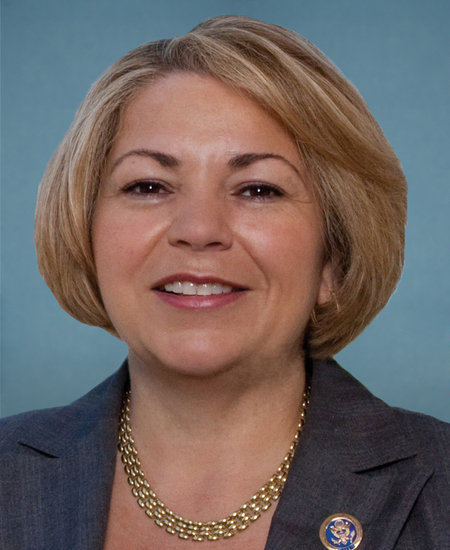
Rep. Linda T. Sánchez
Sponsored bills
Maddy summaryThis bill requires Medicare Advantage plans to implement electronic pre-approval systems for medical services by 2028 and meet transparency reporting standards starting in 2027. Plans must publicly report data on approval/denial rates, appeal outcomes, response times, and technology use for pre-approval requests, including details on how denials relate to clinical criteria. It establishes a 24-hour response timeframe for certain requests and mandates annual reviews of pre-approval requirements based on data and input from seniors and providers. The law directly affects Medicare Advantage plans, seniors enrolled in these plans, and healthcare providers who submit pre-approval requests. These changes aim to make the pre-approval process faster, more transparent, and more accountable for seniors seeking covered medical services.
Maddy summaryThe High Court Gift Ban Act prohibits federal judicial officers from accepting gifts from sources likely to appear before them, unless the gift is under $50, the total annual value from that source remains $100 or less, or it falls under specific exceptions like gifts from relatives or public events. The law defines a "gift" broadly to include items, services, and reimbursements, while allowing exceptions for personal hospitality within IRS limits and certain professional benefits available to the general public. Enforcement mechanisms include referrals to the Attorney General for violations, which can result in civil or criminal penalties similar to those for other federal ethics breaches. The bill requires the Supreme Court and the Judicial Conference to create implementing regulations within 180 days of enactment to ensure compliance.
Maddy summaryThis resolution expresses support for designating July 10th as Journeyman Lineworkers Recognition Day to honor the workers who maintain the nation's electrical grid. The bill specifically recognizes the dangerous conditions these employees face, such as working at heights near live power lines and responding to disasters like hurricanes and wildfires. It also commemorates Henry Miller, the first president of the International Brotherhood of Electrical Workers, who died on July 10, 1896, while performing his duties. Ultimately, the measure encourages the public to observe this day with reflection on the contributions of lineworkers.
Maddy summaryThis bill imposes new taxes on large investment firms, known as hedge funds, that own multiple single-family homes to discourage them from holding properties as long-term investments. Under the tax provisions, these firms would face a 50 percent charge on the value of any new homes they buy and an annual penalty of $50,000 for every home they hold beyond a specific limit that decreases over time. The legislation also creates a Housing Downpayment Trust Fund financed by these taxes to provide grants for down payments and closing costs to low-to-moderate-income buyers. Additionally, the bill disallows mortgage interest and depreciation tax deductions for owners subject to these new taxes and bars federal mortgage agencies like Fannie Mae and Freddie Mac from lending to or buying mortgages from these large investors.
Maddy summaryThis resolution expresses the House of Representatives' support for the goals of Alzheimer's and Brain Awareness Month, which takes place in June. It aims to raise public awareness about Alzheimer's disease and other forms of dementia while encouraging individuals to educate themselves and advocate for better research and care services. The document highlights the significant impact of these conditions on millions of Americans and calls for increased support for patients, their families, and caregivers.
Maddy summaryThe LIFT the BAR Act aims to restore access to federal benefits for lawfully present noncitizens by repealing several restrictions imposed by the 1996 welfare reform law and a 2024 reconciliation bill. Specifically, it would allow eligible noncitizens to receive SNAP food assistance, Medicaid, CHIP, and child nutrition programs, while also updating legal terminology to refer to "noncitizens" rather than "aliens" in relevant statutes. The legislation includes provisions to ensure these individuals can qualify for premium tax credits and would require federal agencies to issue implementation guidance within 180 days of enactment.
Maddy summaryThe Pell Grant Preservation and Expansion Act of 2026 aims to increase financial aid for college students by raising the maximum Pell Grant amount to $15,000 by the 2031-2032 award year and ensuring the program is fully funded through mandatory spending rather than annual appropriations. The bill also expands eligibility for students who receive means-tested government benefits by automatically assigning them a lower financial need score, while simultaneously allowing Dreamer students - undocumented immigrants who meet specific criteria such as graduating high school or serving in the military - to qualify for federal aid. Additional provisions restore the total number of semesters a student can receive Pell Grants from 12 to 18 and adjust the rules for satisfactory academic progress to reduce penalties for students who struggle to meet grade requirements. Finally, the legislation restores Pell Grant eligibility for some students who previously received outside scholarships and sets the law's effective date for July 1, 2026.
Maddy summaryThis bill strengthens child labor protections by expanding the definition of hazardous work for minors, particularly in dangerous industries like mining and explosives, and requires the government to update these regulations every five years. It imposes strict rules on companies with federal contracts, prohibiting them from using child labor in their supply chains and holding them jointly liable if their subcontractors violate these rules. The legislation also increases penalties for violations, including higher fines for serious injuries or deaths, allows for stop-work orders, and enables victims to seek significant compensatory and punitive damages. Additionally, the bill mandates training programs to help identify and prevent child labor abuses and requires the Department of Labor to report annually on work-related injuries and deaths.
Maddy summaryThis resolution commemorates the 30th anniversary of Taiwan's first direct presidential election in 1996 and expresses support for the preservation of its democratic institutions. It acknowledges Taiwan's history of free elections and peaceful transfers of power while reaffirming U.S. policy commitments under the Taiwan Relations Act and previous agreements. The text explicitly states that it does not authorize the use of military force, serving as a symbolic statement rather than a legislative action that changes laws or policy.