

Maddy summaryThis bill prevents juvenile offenders and their families from being jailed or forced to pay court fees, fines, or child support as a condition of probation. States must certify they prohibit these fees (including costs for attorneys, prosecution, or detention) to qualify for federal grants. The grants fund evidence-based mental health services and diversion programs for at-risk youth in detention, aiming to reduce reliance on incarceration. A national report will track how fees impact different demographic groups and incarceration rates.
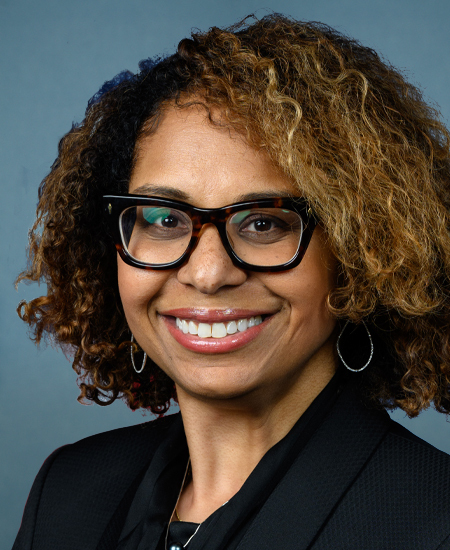
Rep. Sydney Kamlager-Dove
Sponsored bills
Maddy summaryThe Youth, Peace, and Security Act of 2023 requires U.S. foreign assistance programs to meaningfully engage youth (ages 10-29) in peacebuilding, conflict prevention, and security efforts globally. It establishes a $5.5 million Youth, Peace, and Security Fund to provide grants to youth-led organizations working on peacebuilding, conflict resolution, and community violence intervention. The bill mandates the development of a U.S. Foreign Assistance Youth, Peace, and Security Action Plan that prioritizes inclusive engagement of diverse youth, including girls, LGBTQI+ youth, indigenous youth, and youth with disabilities. The legislation requires USAID to coordinate across U.S. government agencies and report annually on implementation progress, including disaggregated data on youth engagement and funding. This represents a policy shift toward ensuring youth voices are incorporated in U.S. international peace and security programming.
Chyna Gibson Stop the Transgender Murder Epidemic Act of 2023 or the Chyna Gibson STME Act of 2023 This bill establishes a commission to address various issues facing gender-nonconforming, gender-expansive, and transgender women of color. The commission must be comprised of 13 members who are qualified based on their education, training, activism, or experience, particularly in the field of transgender studies and human rights. The commission may hold hearings and must report its findings and recommendations to Congress no later than 18 months after its first meeting.
Maddy summaryHR 4973, the Community-Based Gang Intervention Act, creates a new federal grant program to fund nonprofit organizations with expertise in gang intervention. These agencies receive funding to directly reduce gang violence by providing street mediation, negotiating truces between rival gangs, offering 24/7 crisis intervention, and delivering mental health services, job training, and victim support to gang-involved youth, their families, and affected communities. The bill mandates that grant recipients must provide services without discrimination based on race, gender, or criminal history. It specifically targets reducing gang-related violence through community-level engagement and specialized support, rather than punitive measures. The program applies to all communities experiencing gang violence, with services designed for youth under 18 (or the maximum age for juvenile jurisdiction in their state).
Maddy summaryThis federal bill (HR 4976) requires law enforcement to notify a minor’s parent, guardian, or legal custodian within 24 hours of arresting them for a crime and mandates that minors under 18 must consult with a lawyer in person before waiving their right to remain silent or request legal counsel during police questioning. It prohibits temporary substitute lawyers from representing minors during interrogation and makes any statement obtained in violation of these rules inadmissible in U.S. criminal prosecutions. An exception allows questioning without these protections only if police need immediate information to prevent an imminent threat to life. The law applies specifically to federal criminal cases involving minors under 18.
Maddy summaryThe Break the Cycle of Violence Act establishes federal grants to fund community-based violence intervention programs in areas disproportionately affected by gun violence, particularly communities of color. It authorizes $300 million for 2024, increasing to $700 million annually through 2031, for evidence-informed strategies including trauma-responsive care, violence interruption, and economic opportunities for opportunity youth (ages 16-25 not in school or employment). The bill requires grantees to implement culturally competent services targeting individuals at high risk of violence or victimization, with a focus on reducing gun violence without contributing to mass incarceration. It creates a National Community Violence Response Center to coordinate data collection, research, and best practices for community violence prevention. The legislation also includes provisions for job training and workforce development programs through the Department of Labor to connect opportunity youth with in-demand occupations.
Maddy summaryHR 4965, the Kimberly Vaughan Firearm Safe Storage Act, requires the Attorney General to create voluntary best practices for safe firearm storage in homes, businesses, vehicles, and other locations within 180 days of enactment, with public input. Starting January 1, 2025, firearm manufacturers must include a "SAFE STORAGE SAVES LIVES" notice with each new handgun, rifle, or shotgun, directing buyers to the public website with these guidelines. The bill also establishes a $10 million annual grant program for states and tribes to fund public programs distributing safe firearm storage devices (like locked containers) and requires grantees to use at least 75% of funds for these programs. It does not mandate storage for individuals but provides resources and information to promote safer practices.
Maddy summaryThis resolution (HRES 618) is a ceremonial recognition of hip-hop's 50th anniversary, marking August 11, 1973, as the date when DJ Kool Herc's Back to School Jam in the Bronx is credited with originating the culture. It acknowledges hip-hop's foundational role in American art, music, fashion, and its $1 billion+ annual economic impact, while highlighting its roots in Black creativity and evolution across regions. The resolution encourages House members to organize commemorative activities and urges local governments to partner with hip-hop entities to celebrate its cultural significance. As a symbolic gesture, it has no legal effect or direct impact on individuals or policy.
Maddy summaryHRES 578 is a non-binding House resolution calling for the immediate release of Eyvin Hernandez, a U.S. citizen and Los Angeles County public defender wrongfully detained by Venezuela since March 2022. The resolution urges U.S. officials, including the President and Secretary of State, to press Venezuela for his release and condemns Venezuela’s practice of detaining U.S. citizens for political purposes. It specifically references Hernandez’s wrongful detention without evidence or fair trial, noting his status as a Department of State-designated wrongfully detained individual. The resolution expresses support for Hernandez and other Americans detained abroad, without creating new legal requirements or funding.
Nonrestrictive Offshore Wind Act or the NOW Act This bill repeals certain requirements that the Department of the Interior must meet before issuing a lease for offshore wind development. Under the Inflation Reduction Act of 2022, Interior may not issue a lease unless (1) an offshore oil and gas lease sale has been held in the year prior to issuing the lease, and (2) Interior offers a specified minimum acreage for offshore lease sales in the previous year. The bill repeals those requirements.