

Maddy summaryHR 2485, the Arts Education for All Act, requires states and school districts to integrate arts education into K-12 curricula and report on its availability. It mandates states to describe how they will support arts courses, increase certified arts educators (especially in high-need schools), and use arts to enhance teaching in core subjects like math and science (Section 202). Schools must track and report on arts course offerings, teacher qualifications, and student access - including disaggregated data by school poverty levels (Section 203). The bill also expands arts access in juvenile justice programs (Section 301) and funds research on effective arts education methods (Section 401). It directly affects public schools, arts educators, and youth in after-school and correctional settings.
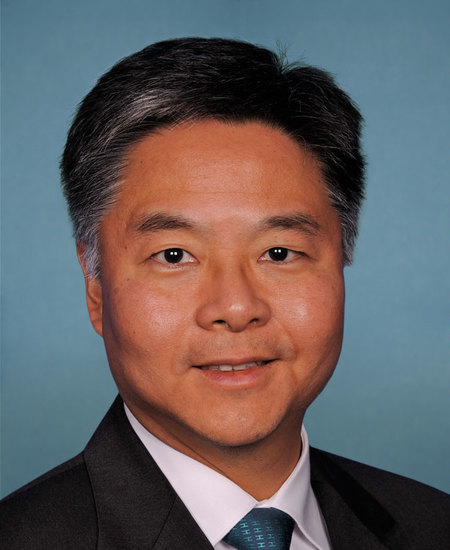
Rep. Ted Lieu
Sponsored bills
Maddy summaryThis bill directs the U.S. Department of Health and Human Services to launch a national public education campaign about abortion access. The campaign must provide medically accurate information on where to obtain abortion services (including medication abortion), legal rights for out-of-state care, identifying misleading anti-abortion centers, spotting disinformation, and protecting personal health data. It specifically targets underserved communities like people of color, immigrants, LGBTQ+ individuals, rural residents, and those with low incomes, while prohibiting the promotion of misinformation or abstinence-only programs.
Maddy summaryHR 2487, the Transgender Health Care Access Act, aims to improve access to gender-affirming care for transgender individuals by funding training and education for healthcare providers. The bill provides $10 million annually for medical schools to develop curricula on gender-affirming care and culturally competent treatment, and $15 million annually for grants to train medical residents, nurse practitioners, and community health centers serving transgender patients. It specifically targets rural providers through $5 million annually for collaborative networks to expand care in underserved areas. The legislation requires a report to Congress within two years detailing progress in improving health equity for transgender populations.
Save America's Forgotten Equines Act of 2025 or the SAFE Act of 2025 This bill permanently prohibits the slaughter of equines (e.g., horses and mules) for human consumption. (Current law prohibits the slaughter of dogs and cats for human consumption. This bill extends the prohibition to equines.) Specifically, this bill prohibits a person from knowingly (1) slaughtering an equine for human consumption; or (2) shipping, transporting, possessing, purchasing, selling, or donating an equine to be slaughtered for human consumption or equine parts for human consumption. The bill subjects a violator to a fine. The bill applies to conduct in or affecting interstate or foreign commerce or within the special maritime and territorial jurisdiction of the United States. However, it does not apply to an activity carried out by an Indian for a religious ceremony. As background, in recent years, the appropriations acts have prohibited the Department of Agriculture (USDA) from using federal funds to inspect horses before they are slaughtered for human consumption. Therefore, there are currently no USDA-inspected horse slaughter facilities in the United States.
Maddy summaryHRES 265 is a symbolic House resolution condemning the Trump administration for allegedly using the Signal messaging app to share highly sensitive or classified military information, directly affecting officials including Vice President Vance, Secretary of Defense Hegseth, and Secretary of State Rubio. The resolution cites risks to national security, noting foreign adversaries like China and Russia have previously accessed U.S. classified data. It calls for investigations into unauthorized communications, mandates review of classified information procedures, and demands accountability for any violations of federal laws governing classified data handling. The resolution does not create new laws but formally expresses disapproval of the administration's communication practices.
Maddy summaryThis bill mandates a 12-month study by the Government Accountability Office (GAO) to analyze the feasibility of a federal program that would buy properties from homeowners in high-risk wildfire areas before or after disasters. The study must examine existing buyout programs, develop definitions for terms like "disadvantaged community," and recommend how to implement such a program, including land use after buyouts and eligibility mapping. It does not create a new program or provide immediate relief but requires a report to Congress within one year detailing findings and cost analysis. The bill directly affects future policy decisions, not current homeowners.
Maddy summaryThe New Collar Jobs Act of 2025 creates tax credits for employers who fund cybersecurity training for staff, covering up to $5,000 per employee annually. It also offers student loan forgiveness of up to $25,000 for cybersecurity workers employed in economically distressed areas for 36 consecutive months. The bill expands CyberCorps scholarships for cybersecurity education and increases funding for cybersecurity programs at colleges. These provisions directly affect employers, cybersecurity workers, and educational institutions seeking to address workforce shortages in critical security roles.
Maddy summaryHR 2467, America's Red Rock Wilderness Act, would designate approximately 1.3 million acres of public land across Utah as wilderness areas, protecting them from development and managing them for conservation. The bill specifically designates 77 wilderness areas in the Great Basin and Colorado Plateau regions, including lands within existing national monuments like Grand Staircase-Escalante and Bears Ears. It includes provisions for water rights protection, allows continued livestock grazing under certain conditions, and withdraws the designated lands from mining and mineral leasing. The bill also ensures Tribal rights are protected and requires the Secretary of the Interior to administer these areas according to wilderness management standards.
Maddy summary# Northern Rockies Ecosystem Protection Act (2023) - Summary This comprehensive environmental protection bill designates and protects vast areas across the Northern Rockies region of Idaho, Montana, Wyoming, Oregon, and Washington. ## Key Provisions 1. **Wilderness Designations**: - Creates numerous new wilderness areas totaling millions of acres across the region - Includes specific designations like Yellowstone, Glacier/Northern Continental Divide, Hells Canyon, Salmon/Selway, and Cabinet-Yaak ecosystems - Includes 108 specific wilderness areas identified in the bill (from Anaconda-Pintler to McCullough Peaks) 2. **Biological Connecting Corridors**: - Designates approximately 2.9 million acres as biological corridors - These corridors connect larger ecosystem areas to facilitate wildlife migration - Prohibits timber harvesting, mining, oil/gas development, and new road construction in these corridors 3. **Wild and Scenic Rivers**: - Adds 78 new river segments to the Wild and Scenic Rivers system - Protects rivers like the South Fork Payette, Salmon River, Yaak River, and many others - Specifies exact segments for protection 4. **Wildland Restoration**: - Designates 9 recovery areas totaling approximately 1,023,000 acres - Requires restoration of damaged lands to natural conditions - Prohibits certain activities in these recovery areas 5. **Implementation**: - Requires an interagency team to monitor and evaluate implementation - Mandates geographic information system for monitoring the Northern Rockies Bioregion - Requires annual reports to Congress on implementation progress 6. **Special Protections**: - Maintains existing water rights of the United States - Protects Indian Tribe treaty rights and cultural access to protected areas - Requires consultation with Tribes regarding management plans This bill represents a comprehensive effort to protect biodiversity, maintain ecosystem connectivity, and restore damaged lands across a significant portion of the Northern Rockies region.
Maddy summaryHR 2402, the No Hungry Kids in Schools Act, creates a new option for states to implement a statewide program under the National School Lunch Act starting in 2025. States would cover costs from non-federal funds to allow all schools in the state to receive full federal reimbursement for meals served, eliminating income-based eligibility thresholds. Key provisions include setting the eligibility threshold to zero and calculating student eligibility statewide instead of by individual school district. This directly affects state education agencies (which must fund the program) and schools (which gain simplified access to full meal reimbursement), benefiting students in qualifying schools.