

Maddy summaryThis bill authorizes the placement of a memorial honoring women who supported the U.S. war effort during World War II (including those working as pilots, engineers, and in factories) on federal land in Washington, D.C. It specifies two locations: Area I on the National Mall map or the National Mall Reserve, as defined in existing law. The memorial was previously authorized by Section 702 of the 2023 Consolidated Appropriations Act (Public Law 117-328), and this bill clarifies its permitted locations.
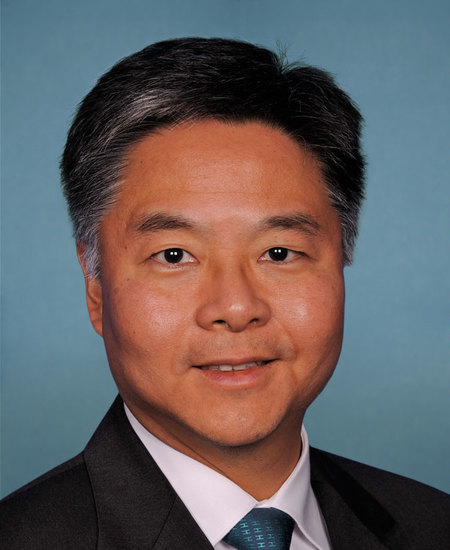
Rep. Ted Lieu
Sponsored bills
Maddy summaryThis bill prohibits Department of Homeland Security (DHS) officers from arresting or detaining immigrants at immigration court facilities during hearings or while arriving/departing for hearings, except with a judicial warrant. It applies to all pending immigration cases, appeals, and motions to reopen, covering anyone whose removal order isn't final. Exceptions allow arrests only to prevent imminent threats to life, safety, or national security. The bill also requires DHS to report scheduled check-in arrests to the Inspector General and mandates annual oversight reports to Congress on compliance.
Maddy summaryThe Military in Law Enforcement Accountability Act requires the President to submit detailed justification to Congress before the military provides support to civilian law enforcement, including specific budget, timeline, and funding details, with a 30-day limit on such support unless Congress approves a longer period through a specific joint resolution process. It prohibits Department of Defense personnel (including military members) from holding civilian law enforcement positions concurrently, with limited exceptions for reserve members who must recuse during active duty. The bill also removes the military's authorization to deploy for "civil disturbances" without the new approval process and establishes a private right for individuals or governments to sue the federal government for violations. This directly affects the Department of Defense, military support to local police agencies, and DoD personnel's dual employment policies.
Maddy summaryHR 6497, the Temporary Immigration Judge Integrity Act, establishes specific rules for appointing temporary immigration judges to handle cases while permanent judges are being hired. It limits temporary judges to 6-month terms (renewable up to four times for a maximum of 24 months), requires them to have at least 10 years of immigration law experience (e.g., former judges, DOJ attorneys, or experienced administrative law judges), and mandates 8 weeks of initial training plus weekly training unless they recently served as permanent judges. The bill also requires the Attorney General to oversee caseloads and performance, ensuring temporary judges have the same authority as permanent judges but emphasizing they should not replace permanent positions. This directly affects immigration courts and the temporary judges appointed under these new standards.
Maddy summaryThe Freedom to Heal Act of 2025 creates a new federal registration process for physicians to directly administer Schedule I investigational drugs under the "Right to Try" framework. It requires physicians to apply to the Attorney General with evidence of state compliance, manufacturer agreements, and training, and limits the amount of drugs they may possess based on approved applications. The bill mandates the Attorney General to issue interim rules within 240 days and final rules within two years covering drug delivery, storage, recordkeeping, and registration management. This affects physicians treating eligible patients with Schedule I drugs under federal Right to Try provisions, not the patients themselves.
Maddy summaryHR 6423, the HELP Copays Act, requires health insurance plans and coverage to count financial assistance from non-profits or drug manufacturers toward patient cost-sharing limits like deductibles and copayments. This directly affects patients enrolled in health insurance who receive such assistance for prescription drugs, ensuring the help they get reduces their out-of-pocket costs faster. The bill amends key health laws to mandate that these payments are included when calculating whether a patient has met their deductible or copayment threshold. The change applies to all prescription drugs, including specialty drugs and those subject to prior authorization, but does not alter how insurers manage drug access through tools like step therapy. It takes effect for plan years starting in 2026.
Maddy summaryThe Dignity for Detained Immigrants Act establishes minimum standards for detention facilities operated by the Department of Homeland Security, requiring them to follow the American Bar Association's Civil Immigration Detention Standards. It mandates annual unannounced inspections by the DHS Inspector General, with penalties including fines for noncompliant private facilities and transfers of detainees from noncompliant facilities. The bill requires DHS to publicly report on facility compliance, phase out private detention facilities over three years, and prohibit solitary confinement. It also ensures detainees have access to legal orientation, counsel, and more frequent custody review hearings. The bill directly affects all individuals detained in DHS custody, including immigrants, asylum seekers, and refugees held in facilities operated by or contracted to DHS.
Maddy summaryThis bill would protect unaccompanied children by repealing fee requirements and other provisions in the "One Big Beautiful Bill Act" that have created barriers to their access to humanitarian protections. It specifically exempts unaccompanied children from paying fees for asylum applications, employment authorization, and immigration court proceedings, and requires the government to refund fees already paid under the repealed provisions. The bill also repeals provisions allowing for summary removal of children without due process, intrusive body examinations without safeguards, and sharing of sponsor information with immigration enforcement that has led to family separations. These changes would directly affect unaccompanied children seeking asylum or other protections in the United States, ensuring they can access legal processes without financial barriers or heightened risks of exploitation. The bill aims to uphold protections for unaccompanied children established under the William Wilberforce Trafficking Victims Protection Reauthorization Act of 2008 (TVPRA).
Maddy summaryThis bill creates several tax credits to increase housing affordability for individuals and families. It establishes a first-time homebuyer credit of up to $25,000 (or $50,000 for first-generation homebuyers) for purchasing a principal residence, with income limits based on household size. It also creates a starter home construction credit for building homes under 1,200 square feet priced below 80% of local median home prices, and a renter tax credit for tenants paying more than 30% of their income in rent. Additionally, it provides a credit for converting non-residential buildings to affordable housing that meets specific income and rent restrictions. The bill includes provisions for inflation adjustments and reporting requirements for these tax credits.
Maddy summaryHR 6405, the Arms Sale Oversight Act, modifies how the House of Representatives handles arms sale resolutions under the Arms Export Control Act. It requires committees to report such resolutions within 10 days or face a limited discharge motion (only supported by proponents, with 1-hour debate). The bill restricts debate on the resolution itself to 10 total hours (split equally), prohibits amendments or reconsideration, and prevents multiple resolutions on the same sale after approval. This applies to all House arms sale resolutions introduced after the bill's enactment, streamlining the voting process without altering arms sale policy.