

Maddy summaryThe Nonprofit Sector Strength and Partnership Act of 2022 establishes a White House Office on Nonprofit Sector Partnership led by a Nonprofit Advisor to coordinate federal support for nonprofits. It creates an Interagency Council and an Advisory Board to improve data collection on nonprofits, streamline federal grant processes, and enhance coordination between government and nonprofit organizations. The bill requires agencies to collect and publish data on nonprofit employment, revenue, volunteerism, and the impact of federal funding, and aims to create a single online portal for nonprofits to meet state registration requirements. This legislation directly affects nonprofits of all sizes, particularly smaller organizations with limited resources, by seeking to make federal support more accessible and efficient.
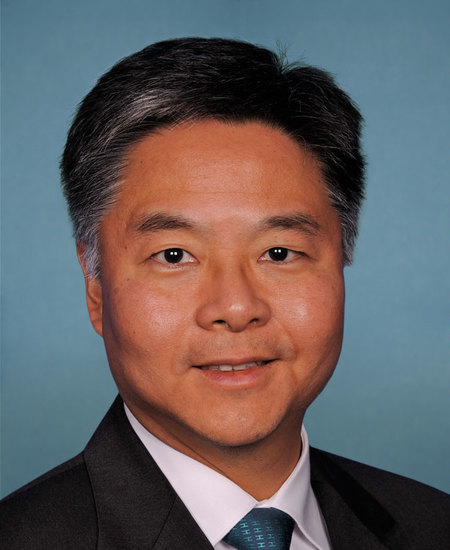
Rep. Ted Lieu
Sponsored bills
Armenian Genocide Education Act This bill requires the Library of Congress to maintain a public website and otherwise support educational initiatives to promote understanding about the Armenian Genocide.
BAH Calculation Improvement Act This bill requires the Department of Defense to submit to Congress a report on the basic allowance for housing for members of the uniformed services that includes elements related to the calculation of such allowance.
Maddy summaryHRES 1045 (2022) is a symbolic resolution supporting National Youth HIV/AIDS Awareness Day (observed April 10). It calls on federal, state, and local entities to recognize the day and encourages efforts to address HIV disparities among youth, including promoting inclusive sex education, removing outdated HIV criminalization laws, and supporting youth-friendly healthcare access. The resolution does not create new laws or allocate funding but affirms existing policies like the Ryan White HIV/AIDS Program and the Affordable Care Act's protections for young people living with HIV. It focuses on raising awareness and reducing stigma rather than mandating specific actions.
Targeting Resources for Equitable Access to Treatment for Long COVID Act or the TREAT Long COVID Act This bill requires the Department of Health and Human Services to award competitive grants to create or expand the capacity of clinics that treat patients with persistent, long-term symptoms following recovery from acute COVID-19 (i.e., Long COVID). Eligible recipients include federally qualified health centers, rural health clinics, urban Indian health centers, and state and local health departments.
Energy Security and Independence Act of 2022 This bill addresses domestic industrial base and manufacturing capabilities for specified energy-efficiency and renewable energy systems and technologies (e.g., electric transportation systems), including by establishing a program to provide financial assistance for the construction of new facilities that manufacture components of specified energy-efficiency and renewable energy systems and technologies (or to retool, retrofit, or expand such facilities).
Burma Unified through Rigorous Military Accountability Act of 2022 or the BURMA Act of 2022 This bill imposes sanctions pertaining to Burma (Myanmar) and addresses related issues. The President must impose property- and visa-blocking sanctions on certain foreign persons (i.e., an individual or entity), including those that (1) knowingly operate in Burma's defense sector, (2) are responsible for or complicit in undermining Burma's democratic processes, or (3) are senior leaders in Burma's military or government. The Department of the Treasury must prohibit or impose strict conditions on certain accounts used to facilitate transactions for such sanctioned persons. The President may impose sanctions on Myanma Oil and Gas Enterprise if such sanctions would support certain objectives, including reducing the Burmese military's ability to undermine democracy in Burma. Before removing certain foreign persons from a list of specially designated nationals and blocked persons (commonly known as the SDN list), the President must certify to Congress that the person in question has not knowingly engaged in certain activities, such as supporting terrorism. The bill authorizes Department of State and U.S. Agency for International Development activities in Burma and the surrounding region to support democracy activists, humanitarian assistance, and reconciliation efforts. The State Department may (1) continue to assist organizations supporting political prisoners in Burma, and (2) provide assistance to entities investigating crimes against humanity. The President must direct U.S. representatives to the United Nations to vote and advocate for certain actions related to Burma, such as cutting off assistance to Burma's government.
Russian Digital Asset Sanctions Compliance Act of 2022 This bill allows additional sanctions against Russia and creates specified reporting requirements regarding digital assets. Specifically, the President must periodically identify foreign persons who facilitate evasion of Russian sanctions using digital assets. The bill authorizes sanctions against such persons. The bill requires a U.S. taxpayer engaged in offshore digital asset transactions greater than $10,000 to file an annual Report of Foreign Bank and Financial Accounts with the Financial Crimes Enforcement Network. The bill allows the Department of the Treasury to prohibit U.S. digital asset trading platforms and transaction facilitators from transacting with Russian digital asset addresses. Additionally, Treasury must report on its progress in implementing the bill and must annually identify foreign digital asset trading platforms that are a high risk for sanctions evasion, money laundering, and other illicit activities.
Reporting Efficiently to Proper Officials in Response to Terrorism Act of 2021 or the REPORT Act This bill requires specified federal agencies to report to Congress concerning any act of terrorism that occurs in the United States. Whenever an act of terrorism occurs, the Department of Homeland Security (DHS), the Department of Justice (DOJ), the Federal Bureau of Investigation (FBI), and, as appropriate, the National Counterterrorism Center (NCC), must submit to the appropriate congressional committees, as specified by this bill, an unclassified report not later than one year after the completion of the investigation by the primary agency conducting the investigation concerning the terrorist act. Such report shall (1) include a statement of the facts of the act of terrorism that are known at the time of such report; (2) identify any gaps in homeland or national security that could be addressed to prevent future acts of terrorism; and (3) include any recommendations for additional measures that could be taken to improve homeland or national security, such as changes in law enforcement practices or changes in law. If DHS, DOJ, and the FBI or, as appropriate, the NCC, determines any information required to be reported could jeopardize an ongoing investigation or prosecution, such entities (1) may withhold from reporting such information, and (2) shall notify the appropriate congressional committees of that determination.
This resolution reaffirms unequivocal support for the North Atlantic Treaty Organization (NATO) as an alliance founded on democratic principles. The resolution urges NATO to continue to provide unwavering support to the people of Ukraine as they fight for their sovereignty, territorial integrity, and a democratic future. The resolution calls on the President to use the voice and vote of the United States to adopt a new Strategic Concept for NATO that is clear about its support for shared democratic values and committed to enhancing NATO's capacity to strengthen democratic institutions within NATO member, partner, and aspirant countries. Finally, the resolution calls on the President to use the voice and vote of the United States to establish a Center for Democratic Resilience within NATO headquarters.