

Peace Corps Reauthorization Act of 2022 This bill reauthorizes through FY2024 and modifies operations of the Peace Corps. Changes include increasing the readjustment allowance paid to volunteers when their service terminates and providing statutory authority for an executive order that grants returned volunteers noncompetitive eligibility for federal civil-service positions. Additionally, the bill entitles returned volunteers to sixty days of health care benefits. The Peace Corps must also provide volunteers with information about enrolling in U.S. health plans before service termination and mental health care during and after service. The bill also includes provisions to address involuntary termination of Peace Corps service in emergencies, including by expediting re-enrollment of involuntarily terminated volunteers. The Peace Corps must also adequately insure volunteers' safety and must coordinate with the Department of State to periodically update agreements concerning the security of Peace Corps volunteers and staff abroad. The bill also authorizes Peace Corps to recruit domestically based volunteers to serve in the United States at the request of another agency or to provide services in a host country virtually, modifies the Peace Corps National Advisory Council's membership and functions, expands whistleblower protections for volunteers, increases the rate of pay that applies to a volunteer's workers compensation claim, requires Peace Corps to implement a zero tolerance drug use policy regarding volunteer involvement with illegal drugs, and emphasizes the use of the internet in Peace Corps programs. Furthermore, the bill requires reporting, including on the provision of mental health services to volunteers.
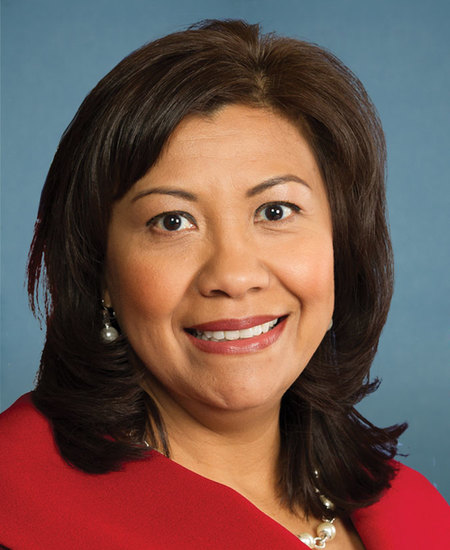
Rep. Norma J. Torres
Sponsored bills
Enhancing Questions to Understand Intentions for Pregnancy Act of 2022 or the EQUIP Act of 2022 This bill requires the Centers for Disease Control and Prevention to provide eligible health organizations with demonstration program grants to implement routine screenings about people's pregnancy intentions in order to provide better contraceptive and prepregnancy care.
Improving Seniors' Timely Access to Care Act of 2022 This bill establishes several requirements and standards relating to prior authorization processes under Medicare Advantage (MA) plans. Specifically, MA plans must (1) establish an electronic prior authorization program that meets specified standards, including the ability to provide real-time decisions in response to requests for items and services that are routinely approved; (2) annually publish specified prior authorization information, including the percentage of requests approved and the average response time; and (3) meet other standards, as set by the Centers for Medicare & Medicaid Services, relating to the quality and timeliness of prior authorization determinations.
Maddy summaryThis non-binding House resolution supports designating August 14-20, 2022, as "Warehouse Worker Recognition Week" to honor logistics workers. It highlights challenges these nearly 2 million U.S. workers face, including dangerous heat, low pay, lack of benefits, and pandemic-era supply chain pressures. The resolution encourages public awareness of their role in keeping supply chains running and acknowledges them as frontline workers during the pandemic. It also commits to reducing workplace injuries but has no legal effect, as it is a symbolic gesture.
Save Our Sequoias Act This bill provides for the conservation of giant sequoia trees ( Sequoiadendron giganteum ) in California, including by providing statutory authority for the Giant Sequoia Lands Coalition; directing the coalition to submit a Giant Sequoia Health and Resiliency Assessment; declaring an emergency on certain public lands and allowing officials to carry out protection plans during the emergency to respond to the threat of wildfires, insects, and drought; directing the Department of the Interior to develop and implement a Giant Sequoia Reforestation and Rehabilitation Strategy; and establishing a variety of programs and funds to support the conservation of giant sequoias.
Harriet Tubman Bicentennial Commemorative Coin Act This bill directs the Department of the Treasury to mint and issue 50,000 $5 gold coins, 400,000 $1 silver coins, and 750,000 half-dollar clad coins emblematic of the legacy of Harriet Tubman as an abolitionist. The Secretary may issue coins under this bill only during the period of January 1, 2024, through December 31, 2024. All surcharges received by Treasury from the sale of such coins must be paid equally to the National Underground Railroad Freedom Center in Cincinnati, Ohio, and The Harriet Tubman Home, Inc. in Auburn, New York, for the purpose of accomplishing and advancing their missions.
Assault Weapons Ban of 2022 This bill makes it a crime to knowingly import, sell, manufacture, transfer, or possess a semiautomatic assault weapon (SAW) or large capacity ammunition feeding device (LCAFD). The prohibition does not apply to a firearm that is (1) manually operated by bolt, pump, lever, or slide action, except for certain shotguns; (2) permanently inoperable; (3) an antique; (4) only capable of firing rimfire ammunition; or (5) a rifle or shotgun specifically identified by make and model. The bill also exempts from the prohibition the following, with respect to a SAW or LCAFD: importation, sale, manufacture, transfer, or possession related to certain law enforcement efforts, or authorized tests or experiments; importation, sale, transfer, or possession related to securing nuclear materials; and possession by a retired law enforcement officer. The bill permits continued possession, sale, or transfer of a grandfathered SAW, which must be securely stored. A licensed gun dealer must conduct a background check prior to the sale or transfer of a grandfathered SAW between private parties. The bill permits continued possession of, but prohibits sale or transfer of, a grandfathered LCAFD. Newly manufactured LCAFDs must display serial number identification. Newly manufactured SAWs and LCAFDs must display the date of manufacture. The bill also allows a state or local government to use Edward Byrne Memorial Justice Assistance Grant Program funds to compensate individuals who surrender a SAW or LCAFD under a buy-back program.
Advancing Telehealth Beyond COVID-19 Act of 2022 This bill modifies the extension of certain Medicare telehealth flexibilities after the end of the COVID-19 public health emergency. Specifically, the bill provides that certain flexibilities continue to apply until December 31, 2024, if the emergency period ends before that date. The bill allows beneficiaries to continue to receive telehealth services at any site, regardless of type or location (e.g., the beneficiary's home); occupational therapists, physical therapists, speech-language pathologists, and audiologists to continue to furnish telehealth services; federally qualified health centers and rural health clinics to continue to serve as the distant site (i.e., the location of the health care practitioner); evaluation and management and behavioral health services to continue to be provided via audio-only technology; and hospice physicians and nurse practitioners to continue to complete certain requirements relating to patient recertifications via telehealth. The bill also delays implementation of certain in-person evaluation requirements for mental health telehealth services until January 1, 2025, or the first day after the end of the emergency period, whichever is later.
This resolution recognizes the importance of Chicano Heritage Month and asserts that Mexican Americans enhance the diversity and strength of the United States.
Maddy summaryHRES 1256 is a procedural resolution that sets the rules for debating two separate bills on the House floor. It waives objections to considering H.R. 263 (which would amend wildlife conservation laws) and H.R. 4040 (which would extend Medicare telehealth flexibilities). The resolution specifies debate time limits, rules for amendments, and voting procedures for both bills. It does not change policy itself but governs how these bills will be processed. This resolution was adopted on July 26, 2022.