

Equal Access to Justice for Victims of Gun Violence Act of 2022 This bill removes limitations on the civil liability of gun manufacturers and the disclosure of gun trace data in civil actions. Specifically, the bill repeals the Protection of Lawful Commerce in Arms Act, which prohibits civil actions against a firearm or ammunition manufacturer, seller, importer, dealer, or trade association for damages resulting from the criminal or unlawful misuse of a firearm. Additionally, the bill states that firearms trace data maintained by the Bureau of Alcohol, Tobacco, Firearms and Explosives is not immune from legal process. Such data is subject to discovery; is admissible as evidence; and may be used, relied on, or disclosed in a civil action or administrative proceeding.
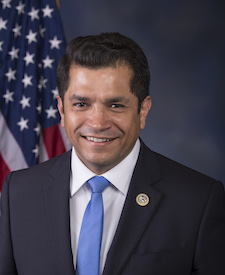
Rep. Jimmy Gomez
Sponsored bills
Maddy summaryThis resolution (HRES 1245) is a symbolic gesture expressing the House's support for designating November 22, 2022, as "Kimchi Day." It acknowledges kimchi's cultural significance in Korean cuisine (dating back over 2,000 years), its UNESCO recognition as intangible cultural heritage, and its health benefits as a probiotic food. The resolution does not create new laws or affect any individuals or policies; it simply formally supports the designation of a day to celebrate kimchi's cultural and culinary role. It was introduced by representatives with Korean-American connections and references kimchi's growing popularity in the U.S. as an example of multicultural exchange.
Right to Contraception Act This bill sets out statutory protections for an individual's right to access and a health care provider's right to provide contraception and related information. Contraception refers to an action taken to prevent pregnancy, including the use of contraceptives (i.e., a device or medication used to prevent pregnancy), fertility-awareness based methods, and sterilization procedures. Generally, the bill prohibits measures that single out and impede access to contraception and related information. However, a party may defend against a claim that a measure violates the bill's prohibitions by demonstrating, through clear and convincing evidence, that the measure significantly advances access to contraception and cannot be achieved through less restrictive means. The Department of Justice, individuals, or health care providers may bring a lawsuit to enforce this bill, and states are not immune from suits for violations.
Maddy summaryHRES 1235 is a non-binding resolution designating the third week of July as "Latino Conservation Week." It recognizes the Latino community's engagement with outdoor activities and conservation efforts, while highlighting statistics showing Latinos' strong support for protecting natural resources and public lands. The resolution does not create new policies or programs but formally supports this annual observance, which encourages community events like park cleanups and educational outings on public lands. It was introduced in the House on July 20, 2022, by Representatives Barragán, Espaillat, and others.
Reproductive Health Travel Fund Act of 2022 This bill authorizes the Department of Health and Human Services to award grants to pay for travel, childcare, and other expenses of an individual seeking access to abortion services. Eligible grant recipients must be nonprofit or community-based organizations that assist individuals seeking abortion services through programs that are unbiased and medically and factually accurate. The grants may not be used to pay for abortion procedures.
No Tax Breaks for Union Busting (NTBUB) Act This bill denies employers a tax deduction for any expenditures incurred for attempting to influence their employees with respect to labor organizations or labor organization activities, such as elections, labor disputes, and collective actions. The bill requires employers to report on their attempts to influence their employees with respect to labor organizations and their activities.
Tipped Worker Protection Act This bill increases the minimum wage for tipped employees over a phase-in period and provides a process for employers to pool and distribute tips.
Department of Veterans Affairs Continuing Professional Education Modernization Act or the VA CPE Modernization Act This bill modifies the program under which the Department of Veterans Affairs (VA) reimburses specified full-time health care professionals for continuing professional education expenses. Under current law, only board-certified physicians and dentists are eligible for such reimbursement. The bill expands the program to require reimbursement for various specified full-time health care professionals (e.g., registered nurses) and increases the amount available for a physician or dentist. Additionally, the bill removes the requirement that an individual be board-certified to receive reimbursement. The VA may adjust the amounts available based on inflation.
EPA Regulatory Authority Act of 2022 This bill provides that in identifying the best system of emission reduction for purposes of a standard performance under the Clean Air Act, the Environmental Protection Agency may include measures that apply beyond an individual stationary source or category of stationary sources. Additionally, the bill provides that each determination in the Clean Power Plan (i.e., the final rule titled Carbon Pollution Emission Guidelines for Existing Stationary Sources: Electric Utility Generating Units published in the Federal Register on October 23, 2015) with respect to a best system of emission reduction is deemed as authorized.
Rent Relief Act of 2022 This bill allows a refundable income tax credit for individuals who pay rent for a principal residence that exceeds 30% of their adjusted gross income for the taxable year. The amount of the credit ranges from 25% to 100% of the excess rent, depending on the adjusted gross income of the taxpayer. The credit is not available for taxpayers with adjusted gross incomes that exceed $100,000. Rent that exceeds 100% of the small area fair market rent (including the utility allowance) for the residence may not be taken into account in determining the amount of the credit. The Department of the Treasury must establish a program for making advance payments of the credit on a monthly basis.