

Maddy summaryThe Housing for All Act of 2023 allocates significant federal funding to address housing shortages and homelessness, with key provisions including $45 billion for the Housing Trust Fund, $40 billion for the HOME Investment Partnerships Program, and 500,000 new housing vouchers in 2024 that will increase to 1 million annually by 2027. The bill directly affects low-income families, people with disabilities, elderly individuals, communities of color, and those experiencing homelessness by expanding rental assistance, supporting permanent housing solutions, and creating new programs like Safe Parking Programs and Eviction Protection Grants. It establishes a Racial Equity Commission to examine structural racism in housing and requires coordination between housing and behavioral health services through new grant programs. The legislation also includes $500 million for converting hotels and commercial spaces into permanent housing and $800 million for legal assistance to prevent evictions. These provisions aim to increase housing stability, reduce homelessness, and address racial disparities in housing access across the United States.
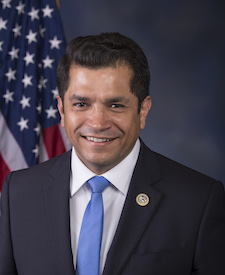
Rep. Jimmy Gomez
Sponsored bills
Maddy summaryThis bill prohibits landlords from charging renters application fees, tenant screening fees (including credit checks), and most late fees. It also bans the use of credit scores for tenant screening and requires landlords to disclose total monthly costs, past tenant litigation, ongoing maintenance issues, and 10 years of rent increases before a lease is signed. The law applies specifically to rental properties with federal housing assistance or federally backed mortgages (like FHA or VA loans). Key regulators - HUD, VA, USDA, or FHFA - will enforce these rules for covered properties.
Southeast Asian Deportation Relief Act of 2023 This bill prohibits the detention or removal of certain nationals of Vietnam, Cambodia, or Laos. Specifically, this protection from detention or removal shall apply to nationals of these countries who (1) entered the United States on or before January 1, 2008, (2) have continuously resided in the United States since entry, and (3) are subject to a final order of removal. Such individuals shall also receive employment authorization. The bill also directs the Department of Justice to grant motions to reconsider or reopen the case of any non-U.S. national who was ordered removed, deported, or excluded from the United States between April 24, 1996, and this bill's enactment and who otherwise satisfies the requirements for protection from detention or removal under this bill. For these individuals, the bill also waives certain requirements that typically apply to motions to reconsider or reopen, such as deadlines for filing such a motion. Further, the Department of Homeland Security must provide individuals covered by the bill with notice of the bill's provisions. The notice must include instructions for filing a motion to reconsider and reopen removal proceedings.
Maddy summaryHRES 645 is a non-binding House resolution recognizing August as "Chicano Heritage Month" to celebrate the contributions of Mexican Americans to U.S. history. It highlights historical figures like labor leaders Cesar Chavez and Dolores Huerta, landmark court cases (e.g., *Mendez v. Westminster* ending school segregation), and cultural impacts such as Selena's influence on music. The resolution does not create new laws or policies but serves as a symbolic acknowledgment by the House to honor this heritage. It encourages the public and institutions to observe the month with events celebrating Mexican American contributions.
Maddy summaryHR 5220, the Bayard Rustin Stamp Act, requires the U.S. Postal Service to issue a "forever stamp" featuring civil rights leader Bayard Rustin. The stamp, designed for first-class mail up to one ounce, will honor Rustin's legacy as a key organizer of the 1963 March on Washington and his advocacy for civil rights, labor rights, and LGBTQ+ equality. The bill directs the Postmaster General to produce this commemorative stamp as soon as practicable after enactment. It does not create new policy or affect any government programs beyond the postal service's stamp issuance.
Maddy summary# Summary of the "Protecting Our Democracy Act" This comprehensive legislation aims to strengthen democratic processes, increase government transparency, and prevent foreign interference in elections. Key provisions include: ## Ethics and Transparency - **Ethics Pledge**: Requires all appointees to sign an ethics pledge committing to: - Ban on gifts from registered lobbyists - 2-year revolving door ban (prohibiting participation in matters related to former employers) - Golden parachute ban (no special payments from former employers) - Commitment to decision-making based on public interest - **Tax Transparency**: Requires presidential and vice presidential candidates to disclose 10 years of tax returns, with sitting presidents submitting returns within 30 days of enactment ## Campaign Finance and Foreign Interference - **Foreign Contact Reporting**: Requires political committees to report any contact with "covered foreign nationals" within 1 week - **Enhanced Penalties**: Criminal penalties of up to $1 million and 5 years in prison for violations - **Online Advertising Rules** ("Honest Ads Act"): - Requires clear disclosure of who paid for political ads online - Mandates machine-readable public databases of political ads - Requires visible sponsor identification that remains when ads are shared - Defines "qualified political advertisements" to include various online formats ## Preventing Patronage Systems - Limits exceptions to competitive service for federal positions - Restricts transferring positions between competitive and excepted service - Requires employee consent for position transfers ## Use of Federal Property - Prohibits holding national political conventions on federal property - Requires publicly available visitor records at White House and other official locations (with privacy exceptions) The legislation establishes detailed definitions, reporting requirements, and enforcement mechanisms across multiple agencies, with the goal of increasing transparency, preventing foreign interference, and ensuring ethical conduct in government service.
Maddy summaryThis bill requires phone calls, texts, and chats to 9-8-8 (the national suicide prevention and mental health crisis hotline) to be routed to the nearest participating crisis center within 90 days of enactment, while protecting caller privacy by not revealing precise location. It mandates all phone carriers to transmit every 9-8-8 call or text - including those from prepaid or non-initialized handsets - and updates phone systems to allow direct 9-8-8 dialing without extra steps. The law affects crisis centers (by directing calls to their area), callers (through improved routing and privacy), and phone carriers (by requiring transmission compliance). These changes aim to make the 9-8-8 system more efficient and accessible for those seeking mental health support.
Maddy summaryHR 4985, the Expanding Medical Education Act, creates federal grants to help medical schools and osteopathic medicine programs open or expand campuses in areas without existing medical education options, especially in medically underserved communities. It prioritizes funding for schools in regions with no current medical schools or for minority-serving institutions in areas lacking such schools. Grants can be used to recruit students from underrepresented groups (including rural, low-income, and first-generation students), develop curricula focused on underserved care, build facilities, and hire faculty. Institutions must report annually on student demographics and program activities, with detailed congressional reports every five years tracking outcomes like workforce diversity and healthcare access in target areas.
Maddy summaryHR 4963, the Tax Fairness for Workers Act, would restore tax deductions for certain employee expenses. It creates an above-the-line deduction for union dues and expenses paid by wage-earning employees, and allows miscellaneous itemized deductions for other work-related expenses (like uniforms or supplies) that were previously disallowed after 2017 tax law changes. These provisions directly affect employees who pay union dues or incur qualifying job-related costs. The bill amends specific sections of the Internal Revenue Code to make these deductions available for taxable years beginning after December 31, 2022. It does not change tax rates or provide new benefits, only reinstating previously eliminated deductions for eligible workers.
Maddy summaryHR 5025 establishes the National Office of New Americans within the Executive Office of the President to coordinate federal efforts supporting immigrant and refugee integration. The Office, led by a presidentially appointed Director, aims to improve access to English language programs, workforce development, citizenship pathways, and education for immigrants, refugees, and their children. Key mechanisms include creating three Deputy Director roles (Citizenship, Workforce, Children's Integration), forming a Federal Initiative with cabinet secretaries to coordinate agency responses, and requiring biannual reports to Congress on integration progress and policy impacts. The bill directly affects federal agencies, state/local governments, and the immigrant/refugee communities they serve by standardizing and enhancing integration support across government programs.