

Maddy summaryHR 5827, the Tenants’ Right to Organize Act, grants tenants in federally assisted housing the right to form and join tenant organizations to address housing issues without fear of retaliation. It directly affects tenants receiving tenant-based rental assistance (like Section 8 vouchers) and tenants in low-income housing tax credit (LIHTC) properties. Key provisions require public housing agencies and property owners to recognize tenant organizations, allow protected activities (such as leafleting and door-to-door outreach), and prohibit retaliation - while establishing an enforcement protocol for complaints and quarterly reporting to Congress. The bill also mandates annual notifications to tenants about their organizing rights and includes specific protections for LIHTC properties through owner compliance requirements and fines for violations.
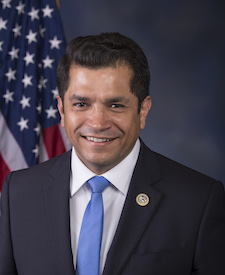
Rep. Jimmy Gomez
Sponsored bills
Maddy summaryHRES 736 is a House resolution designating September 25-October 1, 2023, as "Asian American and Native American Pacific Islander-Serving Institutions Week" to recognize institutions that serve high proportions of Asian American, Native Hawaiian, and Pacific Islander students. These institutions - enrolling over 46% of such students despite representing only 6.5% of U.S. colleges - provide critical support for low-income, first-generation students through culturally relevant programs. The resolution encourages eligible institutions to seek funding and urges the public to observe the week with activities celebrating their educational contributions. It has no legal effect but serves as a symbolic acknowledgment of their role in higher education.
Maddy summaryThis bill ensures continued funding for key housing assistance programs during government shutdowns. It appropriates necessary funds for fiscal year 2024 to maintain rental assistance under five specific programs at 2023 rates, including Section 8 housing choice vouchers, project-based rental assistance, and supportive housing for the elderly and disabled. The funding applies automatically during any lapse in discretionary appropriations starting after the bill's enactment. This directly affects low-income renters enrolled in these programs, preventing disruptions to their housing stability during federal funding gaps. The bill does not change eligibility or benefit levels - it only guarantees existing funding continues through shutdowns.
Maddy summaryThis bill replaces "Columbus Day" with "Indigenous Peoples’ Day" as the official federal holiday observed on the second Monday in October. It directly affects federal government operations and all federal documents, rules, or laws that previously referenced "Columbus Day" by automatically updating those references to "Indigenous Peoples’ Day" upon enactment. The key mechanism is a simple amendment to federal law (5 U.S.C. § 6103(a)) to change the holiday name and a provision ensuring all existing federal references to Columbus Day are legally treated as referring to Indigenous Peoples’ Day instead. This is a procedural change to federal holidays and references, not a new policy or program.
Maddy summaryThe Eviction Protection Act of 2023 establishes a new Office of Eviction Prevention within the Department of Housing and Urban Development (HUD). This office, led by a career-appointed Director, will administer a new Eviction Protection Grant Program, coordinate eviction prevention strategies across federal agencies, and develop a national eviction database while protecting tenant privacy. The bill directly affects renters (including those in federally subsidized housing), housing providers receiving HUD assistance, and local governments through its focus on preventing both court-ordered evictions and illegal "self-help" evictions like lockouts or utility shutoffs. It authorizes $100 million annually for fiscal years 2024-2028 to fund the grant program and the office's operations, including technical assistance for grantees and tenant education initiatives.
Maddy summaryThis bill expands access to Head Start services by raising the family income eligibility threshold to 138% of the federal poverty level and broadening the definition of "public assistance" to include programs like SNAP and Medicaid. It authorizes $36 billion annually for Head Start programs (2025-2030), plus $1 billion yearly for infrastructure grants to modernize aging facilities meeting specific safety and health criteria. Additionally, it creates $6.8 billion in annual funding for Head Start employee salary increases and offers student loan forgiveness for childcare workers employed full-time in Head Start/Early Head Start programs for three years. These changes directly affect low-income families seeking early childhood education and Head Start staff in over 1,000 agencies nationwide.
Maddy summaryThis bill requires federal agencies to adjust contract prices to reimburse contractors for paying employees during government funding lapses (e.g., shutdowns). It covers costs for furloughed, laid-off, or reduced-hour workers, or for restoring paid leave used during the lapse, with a weekly cap of $1,442 per employee. Directly affecting federal contractors and their employees who experienced work disruptions due to funding gaps, it mandates agencies to make these adjustments promptly after enactment. Contractors must provide proof of costs, and the Office of Federal Procurement Policy must report on implementation to Congress within a year.
Maddy summaryHR 5784 would provide federal grants to public schools (including Bureau of Indian Education schools) to make them more environmentally sustainable and equitable. It prioritizes schools in the most vulnerable communities (based on CDC Social Vulnerability Index) for full funding to become "healthy zero-carbon schools" through energy-efficient retrofits and new construction, while offering reduced funding for less vulnerable schools. The grants require community engagement in planning, mandate hiring from local communities with specific diversity goals, fund social services and mental health support, and include strict energy efficiency standards for all projects. The bill also includes funding for educational equity planning and climate resiliency programs to help schools serve as community centers during disasters.
This resolution requests the Department of State to transmit to Congress a statement on human rights practices in Azerbaijan, including the steps the United States has taken to promote human rights in the region and an assessment of whether circumstances exist that necessitate a continuation of security assistance for Azerbaijan.
Maddy summaryThe WIC for Kids Act expands eligibility for the Special Supplemental Nutrition Program for Women, Infants, and Children (WIC) by adding new qualifying pathways. It allows children to qualify if they live in households where someone receives Head Start, Indian reservation food assistance, or Puerto Rico/Northern Mariana Islands nutrition block grants, and streamlines documentation by permitting states to use existing records. The bill extends certification periods for children from one to two years and automatically enrolls infants born to current WIC participants. This directly affects low-income families with children who qualify for related assistance programs but previously faced barriers to WIC access.