

Maddy summaryThe Access Technology Affordability Act of 2025 creates a new tax credit for individuals who purchase technology designed to assist blind people, such as screen readers or braille displays. This credit covers up to $2,000 in expenses per three-year period for qualified access technology used by the taxpayer, their spouse, or a blind dependent. The credit adjusts for inflation after 2026 but does not apply to costs already covered by other tax benefits. The credit expires after 2030, with adjustments for cost-of-living changes starting in 2027.
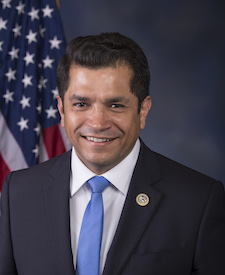
Rep. Jimmy Gomez
Sponsored bills
Maddy summaryHR 1502 authorizes the creation of a Congressional Gold Medal to honor the volunteers and communities (primarily from Nebraska, Colorado, and Kansas) who supported the North Platte Canteen during World War II. The bill directs the Treasury Secretary to design and strike the medal, which will be presented to the individuals who contributed to the canteen’s operations and then permanently displayed at the Lincoln County Historical Museum in North Platte, Nebraska. It also permits the sale of bronze duplicates to cover production costs, with proceeds going to the U.S. Mint. This is a commemorative measure recognizing historical service, not a policy change affecting current laws or programs.
Maddy summaryThe Poverty Line Act of 2025 updates how the federal poverty line is calculated to better reflect current costs of basic needs. It requires annual revisions using a 5-year average of household spending on food, housing, childcare, and healthcare (adjusted for inflation), with regional variations based on state or county data. This change directly affects households applying for federal assistance programs like SNAP or Medicaid, as eligibility will now align with more accurate, location-specific costs. The bill also mandates a public online tool to help determine poverty line thresholds and includes safeguards to prevent sudden eligibility changes during relocations.
Maddy summaryHR 1410 expands access to mental health care for 9/11 responders and survivors by allowing licensed mental health providers (not just physicians) to conduct initial health evaluations and certifications under the World Trade Center Health Program. It adjusts the program’s funding formula to account for changing enrollment numbers by linking annual funding to the previous year’s enrollment ratio, and clarifies that deceased individuals are excluded from enrollment counts. The bill also extends the timeframe for adding new health conditions to the program’s list and requires a 2028 report assessing long-term funding needs through 2090. These changes aim to streamline eligibility, improve care access, and ensure sustainable funding for the program.
Maddy summaryThis bill (HR 1314, TIPS Act) requires employers to pay tipped workers the standard federal minimum wage instead of the current lower rate (currently $2.13/hour), directly affecting workers in hospitality, food service, and similar roles. It also creates a new tax deduction for cash tips received in qualifying jobs (e.g., restaurants, hotels), allowing workers to deduct these tips from taxable income up to $112,500 in adjusted gross income. The deduction applies only to tips from unrelated customers without business ownership stakes, excluding credit card tips. The tax provisions take effect for 2026 tax years.
Maddy summaryHR 1330 establishes the Smithsonian National Museum of the American Latino, authorizing its location within the National Mall's "Reserve" area. The bill requires the Smithsonian Board to coordinate with federal agencies managing potential museum sites, including notifying relevant congressional committees before land transfers. It mandates that the museum's exhibits and programs accurately represent the diverse cultures, histories, and viewpoints of Hispanic and Latino communities in the U.S., seeking input from a broad range of community experts. The Smithsonian must also submit regular reports to Congress detailing compliance with these representation requirements.
Maddy summaryThe Office of Gun Violence Prevention Act of 2025 would create a new office within the Department of Justice to coordinate federal efforts on reducing gun violence. The office, led by a Director appointed by the Attorney General, would integrate existing DOJ programs, evaluate data gaps, and develop evidence-based recommendations for Congress and the President. It would also establish an advisory council including survivors of gun violence, public health officials, and community representatives to guide its work. The office would produce annual reports detailing gun violence trends and policy proposals, while collaborating with agencies like Health and Human Services and the FBI.
Maddy summaryHR 1269, the Honoring Our Fallen Heroes Act of 2025, expands benefits for public safety officers (like police and firefighters) who develop certain cancers linked to their work. It adds 22 specific cancers - including lung, mesothelioma, and breast cancer - to the list of conditions presumed to be "exposure-related" and sustained in the line of duty. This presumption applies if the officer served at least 5 years, was diagnosed with the cancer within 15 years after last active duty, and the cancer directly caused death or permanent disability. The bill also establishes a process for adding new cancers every 3 years based on medical evidence from agencies like NIOSH, and allows claims to be filed within 3 years of the law's enactment.
Maddy summaryThis bill restricts access to Treasury payment systems (including the Bureau of the Fiscal Service) to only Treasury employees with a "fully successful" performance rating and at least one year of civil service, or contractors/outsiders with security clearances, required privacy/cybersecurity training, ethics agreements, and no conflicts of interest. It treats non-government users accessing these systems as government employees for ethics rules and defines specific actions (like stopping payments) as "personal and substantial participation" in government matters. The Treasury Inspector General must investigate any unauthorized access within 30 days and report to Congress, detailing the breach, security risks, and any halted payments. The bill directly affects Treasury staff, contractors, and any external entities accessing federal payment systems.
Protecting Sensitive Locations Act This bill prohibits immigration enforcement actions within 1,000 feet of a sensitive location except in exigent circumstances, such as the imminent risk of death, violence, or physical harm to any person. Sensitive locations include health care facilities; schools and school bus stops; places that provide assistance for people such as children, pregnant women, and abuse victims; child care facilities; places that provide disaster or emergency services; places of worship; courthouses and lawyers’ offices; facilities used as polling places; certain labor union facilities; and public assistance offices. The prohibition shall apply to Department of Homeland Security officers and agents, as well as state employees pursuing immigration enforcement actions. If an enforcement action is carried out in violation of this prohibition (1) no information resulting from the action may be entered into the record in a resulting removal proceeding, and (2) the affected individual may move to immediately terminate such a proceeding. U.S. Immigration and Customs Enforcement and U.S. Customs and Border Protection shall annually report to Congress about enforcement actions taken at sensitive locations in the preceding year.