

Maddy summaryHR 2928, the Mortgage Relief for Disaster Survivors Act, provides temporary payment relief for homeowners and renters with federally backed mortgages in areas affected by federally declared disasters. Borrowers with damaged or destroyed properties can request an 180-day pause on mortgage payments (extendable by another 180 days) from their loan servicer by submitting written requests and proof of property damage. During this relief period, no fees, penalties, or additional interest accrue beyond what would have been due under the original loan terms. This applies to loans backed by Fannie Mae, Freddie Mac, or similar programs, including both single-family and multifamily residential properties.
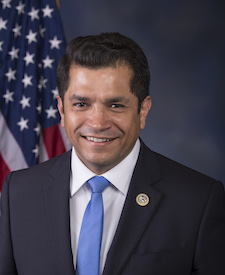
Rep. Jimmy Gomez
Sponsored bills
Maddy summaryHRES 327 is a procedural resolution requesting the President to provide the House of Representatives with specific documents about Social Security Administration (SSA) operations after March 12, 2025. It seeks information on policies ending phone applications for benefits (effective March 18 and 26, 2025), office closures/consolidations, and staffing reductions. The resolution does not change laws but asks for records related to how these changes may affect public access to SSA services. This is a request for information, not a policy change.
Maddy summaryHRES 326 is a non-binding resolution designating April 10 as "Dolores Huerta Day" to honor the late labor and civil rights leader Dolores Huerta. It recognizes her foundational work co-founding the United Farm Workers, leading grape boycotts that secured union contracts, advocating for farm workers' safety, and championing women's rights and Latino political representation. The resolution has no policy impact or direct effect on any group, as it solely serves to commemorate Huerta's legacy. It was introduced by multiple House members in recognition of her contributions to civil rights and equality.
Maddy summaryHR 2888, the "Stopping a Rogue President on Trade Act," terminates specific executive orders imposing tariffs (EOs 14257, 14193, and 14194) and requires congressional approval for new tariffs or trade restrictions. It directly affects the President, who can no longer unilaterally impose or increase tariffs without Congress passing a joint resolution approving the action. Key mechanisms include mandating a formal joint resolution process for tariff decisions (with limited exceptions for existing antidumping duties and trade agreements) and applying expedited congressional procedures. This bill shifts authority from the executive branch to Congress for major trade policy changes.
Maddy summaryH.J. Res. 91 terminates the national emergency declared by the President on April 2, 2025, under Executive Order 14257. The resolution ends this emergency status by invoking Section 202 of the National Emergencies Act (50 U.S.C. 1622). This action would halt the use of emergency powers associated with the declaration, such as special authorities or funding mechanisms. The bill directly affects federal agencies and the executive branch by removing the legal basis for operating under the emergency framework.
Maddy summaryHRES 314 is a resolution requesting the President and Secretary of Health and Human Services to provide documents to the House of Representatives about the so-called Department of Government Efficiency (DOGE) seeking access to two federally protected data systems: the National Directory of New Hires (NDNH) and Federal Parent Locator Service (FPLS). The resolution seeks records on DOGE's requests for taxpayer and child support data, data security measures, legal opinions, and staff changes related to these systems, which store sensitive information on over 40 million Americans. This procedural resolution focuses on transparency around access to legally protected data, not on enacting new policy.
Maddy summaryThe American Family Act (HR 2763) establishes a new refundable child tax credit that provides monthly payments to eligible families with children. It would pay $300 per month for each child under age 6 and $360 per month (120% of $300) for each child age 6 or older, with income limits of $150,000 for joint filers and $112,500 for other filers. The bill creates a "period of presumptive eligibility" to determine eligibility for monthly payments, allowing families to receive advance payments based on information from previous tax returns. This would directly affect millions of families with children who meet the income requirements, providing more consistent financial support throughout the year rather than an annual tax credit.
Maddy summaryHRES 302 is a House resolution requesting documents about economic impacts, not a policy bill. It asks the President and Secretaries of Treasury and Labor to provide specific documents within 14 days, including: (1) data on local GDP effects from federal layoffs recommended by the Department of Government Efficiency (DOGE), and (2) unemployment and tariff impact details for communities affected by workforce reductions or new tariffs on imports from Canada, Mexico, or other countries. The resolution focuses solely on gathering existing information for congressional review. This procedural request does not create new law or alter policies.
Maddy summaryThe Raise the Wage Act of 2025 gradually increases the federal minimum wage from $9.50 to $17.00 per hour over six years, with annual adjustments based on median wage growth. It raises the base wage for tipped workers from $6.00 to $17.00 per hour, phasing out their separate minimum wage structure by 2029. The bill also eliminates special minimum wage certificates for disabled workers after 2029, requiring employers to pay the standard minimum wage. These changes apply to most covered workers, including tipped employees and those under 20, with specific transition timelines for each group.
Maddy summaryThis bill establishes federal minimum standards for collective bargaining rights for public employees and supervisors. The Federal Labor Relations Authority would determine if state laws provide these rights, and if not, would establish them for affected employees. The bill guarantees public employees the right to form unions, bargain collectively, and engage in concerted activities, while requiring public employers to recognize unions and put agreements in writing. It also prohibits strikes or lockouts that would disrupt emergency services. This would apply to public employees in states that don't meet the federal standards for collective bargaining rights.