

Maddy summaryThis bill extends preferential U.S. trade benefits for Haitian exports until 2037 (previously ending in 2025) under the Caribbean Basin Economic Recovery Act. It requires Haitian producers to comply with core labor standards and Haitian labor laws related to minimum wages, working hours, and safe conditions to maintain these benefits. The bill also creates a new technical assistance program where the U.S. Trade Representative will work with Haitian government agencies, businesses, labor groups, and trade support institutions to boost exports - focusing on agricultural processing, apparel sector competitiveness, and export strategy development. These changes directly affect Haitian exporters seeking U.S. trade preferences and U.S. agencies administering trade programs.
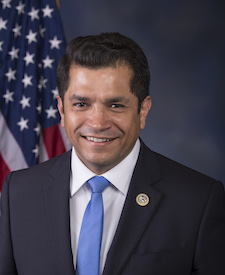
Rep. Jimmy Gomez
Sponsored bills
Maddy summaryThe Nationwide Right to Unionize Act (HR 5159) would repeal a federal provision allowing states to pass "right-to-work" laws, which currently prevent workers from being required to join a union or pay dues as a condition of employment. By removing this allowance, the bill would permit unions and employers to negotiate agreements requiring membership or dues in all states, including those with existing right-to-work laws. This change would directly affect workers and employers in the 27 states that currently have such laws. The bill focuses on eliminating state-level barriers to union security agreements without mandating union formation or membership.
Maddy summaryHR 4966 prohibits grocery stores from selling items at "grossly excessive prices," defined as 120% or more above the average market price over the previous six months (with exceptions for unavoidable cost increases like supply chain issues). It bans using facial recognition or personal data to set different prices for individual customers (e.g., adjusting prices based on shopping history) and requires clear signage if facial recognition is used. Stores over 10,000 square feet must replace electronic shelf labels with physical price tags. The Federal Trade Commission enforces these rules, allowing consumers to seek $3,000 per violation or actual damages, with penalties for willful violations.
Maddy summaryThis bill removes a barrier preventing most low-income students from accessing SNAP benefits. It amends the Food and Nutrition Act to explicitly allow students enrolled at least half-time in recognized higher education programs to qualify for SNAP, reversing a prior exclusion. The key change eliminates the previous requirement that students meet specific exceptions (now deleted) and adds a new eligibility category under Section 3(m)(5). This directly affects low-income undergraduate and graduate students at colleges and training programs who were previously ineligible. The changes take effect January 2, 2026.
Maddy summaryHR 4763, the PTO Act, requires most employers to provide employees with at least 1 hour of paid annual leave for every 25 hours worked, with a maximum of 80 hours per year. It applies to private-sector workers and certain government employees, protecting their right to use paid leave for any purpose without disclosing the reason. The bill mandates employers to maintain health benefits during leave, allow carryover of up to 40 hours of unused leave, and pay out unused leave upon separation. It also prohibits employers from discriminating against employees for using paid leave or requiring them to find replacements while on leave. The law includes enforcement mechanisms, allowing employees to file complaints with the Department of Labor or pursue private lawsuits.
Maddy summaryHR 4759, the "Ban Military Drones Spying on Civilians Act," prohibits federal agencies (including DHS and the military) from using military-grade drones to surveil U.S. citizens participating in protests or civil disobedience. It bans the use of funds for operating covered drones - like the MQ-9 Reaper or high-altitude military drones - within the U.S. for this purpose. The bill also requires annual reports detailing any drone use, including justification, locations, equipment, and whether U.S. persons were identified, to Congress. This directly affects how federal agencies deploy surveillance technology during public demonstrations. The law aims to prevent military drone surveillance of civilians during protests, focusing on concrete policy restrictions rather than outcomes.
Maddy summaryHJRES 111 is a joint resolution seeking congressional disapproval of a U.S. Fish and Wildlife Service rule on barred owl management. The rule, published in September 2024, outlined strategies to reduce barred owl populations to protect the endangered spotted owl. Under the Congressional Review Act, this resolution would nullify the rule, preventing its implementation. If enacted, the rule would have no legal effect, and the agency could not enforce the barred owl management strategy.
Maddy summaryHR 4674, the Baby Hygiene Tax Relief Act, removes existing tariffs and prohibits future tariffs on 11 specific baby hygiene items, including diapers, baby wipes, baby soap, shampoo, and changing tables. The bill requires the President to terminate all current tariffs on these items imposed under the International Emergency Economic Powers Act and invalidates any similar tariffs from other authorities. This directly affects parents and caregivers who purchase these products, as it eliminates cost-increasing import duties. The key mechanism is a legal prohibition on tariff imposition and a mandate to end existing tariffs on the listed items.
Maddy summaryThe Baby Sleep Tax Relief Act (HR 4654) prohibits the President from imposing or continuing tariffs on specific baby sleep products under emergency economic powers. It directly affects parents, caregivers, and retailers by removing existing and preventing future tariffs on cribs, toddler beds, mattresses/bedding, bassinets, cradles, and baby monitors. The bill mandates the termination of all current tariffs on these items and invalidates any similar duties imposed under other authorities. This is a concrete policy change that eliminates a specific cost burden on essential baby sleep equipment. The legislation focuses solely on removing these tariffs, with no additional provisions or funding.
Maddy summaryHR 4696 amends Section 249 of the Immigration and Nationality Act to update eligibility for a registry program that provides a pathway to legal status for long-term residents. It changes the requirement from entering the U.S. before January 1, 1972, to entering at least 7 years before the application date. This adjustment bases eligibility on a rolling 7-year window instead of a fixed historical cutoff, allowing more recent long-term residents to qualify. The bill directly affects individuals who entered the U.S. after 1972 but maintained continuous residence for at least seven years prior to applying.