

Immigrants' Mental Health Act of 2021 This bill directs Customs and Border Protection (CBP) to take steps to address mental health issues among immigrants and CBP agents and officers. It also restricts the sharing of mental health information for use in certain immigration proceedings. CBP shall develop training to enable its agents and officers to (1) identify mental health issues and risk factors in immigrants and refugees, (2) provide crisis intervention using a trauma-informed approach, and (3) better manage work-related stress and psychological pressures. CBP shall assign at least one qualified mental or behavioral health expert to each Border Patrol station, port of entry, checkpoint, forward operating base, secondary inspection area, and short-term custody facility. The Department of Health and Human Services may not provide to the Department of Homeland Security information about the mental health of an alien that was obtained by a mental health professional while the alien was in federal government custody if the information will be used for (1) an asylum determination, (2) an immigration hearing, or (3) a deportation hearing.
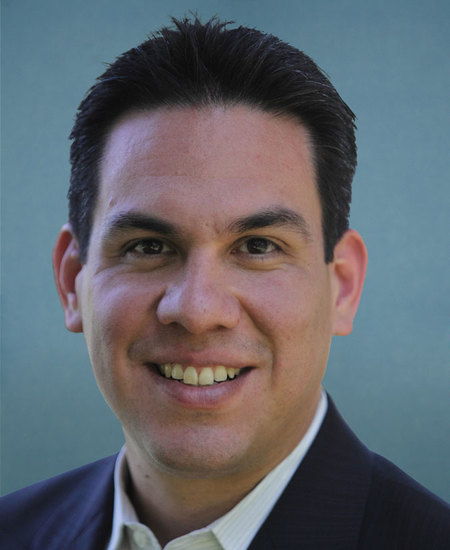
Rep. Pete Aguilar
Sponsored bills
Khalid Jabara and Heather Heyer National Opposition to Hate, Assault, and Threats to Equality Act of 2021 or the Jabara-Heyer NO HATE Act of 2021 This bill creates grants for state and local governments to combat hate crimes. It also authorizes additional penalties for hate crime offenses. Specifically, it establishes grants for states to create state-run hate crimes reporting hotlines. It also authorizes grants for states and local governments to implement the National Incident-Based Reporting System and to conduct law enforcement activities or crime reduction programs to prevent, address, or respond to hate crimes. Finally, in the case of an individual convicted of a hate crime offense and placed on supervised release, the bill allows a court to order that the individual participate in educational classes or community service as a condition of supervised release.
Camp Lejeune Justice Act of 2021 This bill allows certain individuals to sue and recover damages for harm from exposure to contaminated water at Camp Lejeune in North Carolina between August 1, 1953, and December 31, 1987. This action is available only to individuals who were exposed to contaminated water for at least 30 days. The bill prohibits the U.S. government from asserting specified immunity from litigation in response to such a lawsuit. The bill also prohibits an individual who brings such an action from bringing a separate tort action against the United States based on the same harm.
Healthcare Workforce Resilience Act This bill makes previously unused immigrant visas available to nurses and physicians who petition for such a visa before the date that is 90 days after the end of the declared national emergency relating to the COVID-19 (i.e., coronavirus disease 2019) outbreak. The number of visas available shall be the total number of unused employment-based immigrant visas from FY1992-FY2020, up to 40,000. Of such visas, 25,000 shall be reserved for nurses and 15,000 for physicians. Certain family members may accompany the principal beneficiary of a visa provided under this bill, and visas for such family members shall (1) be made available from the unused visas from FY1992-FY2020, and (2) not be counted against the 40,000 cap. Visas provided under this bill shall be exempt from per-country limitations.
Equal Access to Abortion Coverage in Health Insurance Act of 2021 or the EACH Act of 2021 This bill requires federal health care programs to provide coverage for abortion services and requires federal facilities to provide access to those services. The bill also permits qualified health plans to use funds attributable to premium tax credits and reduced cost sharing assistance to pay for abortion services.
Help Extract Animals from Red Tape Act of 2021 or the HEART Act of 2021 This bill modifies notice requirements in a civil forfeiture proceeding that involves the seizure of an animal involved in animal fighting. Specifically, the government must notify interested parties of an animal's seizure within 30 days (currently, 60 days). The notice period may be extended only if a delay is warranted after considering certain factors, including the cost to the government of providing shelter for the animal, the health of the animal and the effect of a delay on its rehabilitation, any increased risk that a delay could necessitate the euthanasia of the animal, and any psychological harm incurred by the animal's owner due to the delay in disposition. Additionally, the bill authorizes amounts in the Department of Justice Assets Forfeiture Fund to be used to pay for costs associated with a seized animal, including transportation, shelter, care, veterinary services, and humane euthanasia.
Medication Access and Training Expansion Act of 2021 or the MATE Act of 2021 This bill requires health care providers, as a condition of receiving or renewing a registration to prescribe potentially addictive drugs, to complete a one-time training on managing patients with substance use disorders. In addition, the Department of Health and Human Services must award grants to health professional associations and education programs for integrating substance use disorder training into relevant curricula.
Outdoors for All Act This bill directs the Department of the Interior to establish an outdoor recreation legacy partnership grant program under which Interior may award grants to states, certain political subdivisions of a state, special purpose districts, Indian tribes, or Alaska Native or Native Hawaiian communities or organizations. Funds must be used for projects to (1) acquire land and water for parks and other outdoor recreation purposes in qualifying areas, and (2) develop new or renovate existing outdoor recreation facilities that provide outdoor recreation opportunities to the public in qualifying areas. A qualifying area is an area that has a population of 30,000 or more in the most recent census, or that is administered by an Indian tribe or an Alaska Native or Native Hawaiian community organization. Interior shall give priority to projects that create or significantly enhance access to park and recreational opportunities in an urban neighborhood or community, engage and empower underserved communities and youth, provide opportunities for employment or job training for youth or underserved communities, establish or expand public-private partnerships, and take advantage of coordination among various levels of government.
Cybersecurity Opportunity Act This bill requires the Department of Homeland Security to establish a grant program to promote cybersecurity training and education at institutions of higher education with an enrollment of needy students, historically Black colleges and universities, and minority-serving institutions.
Reducing Waste in National Parks Act This bill directs the National Park Service to establish a program for the National Park System to reduce disposable plastic products and, if applicable, eliminate the sale and distribution of disposable plastic products. Each regional office of the National Park Service must eliminate the sale of water in disposable plastic products and the sale and distribution of other disposable plastic products after consideration of several specified factors (e.g., the costs and benefits to overall operations). Each regional office must develop a proactive visitor education strategy to address visitor expectations of water availability and explain the rationale for the program and its implementation.