Maddy summaryHR 6020, the Supporting Medicare Providers Act of 2021, extends temporary Medicare payment increases for physicians through 2022 instead of ending them on January 1, 2022. It updates specific dates in Medicare law (Section 1848(t) of the Social Security Act) to maintain current payment rates for doctors treating Medicare patients. This directly affects physicians and clinics participating in Medicare who rely on these temporary payment adjustments. The bill makes no new policy changes but ensures existing payment levels continue for providers during 2022.
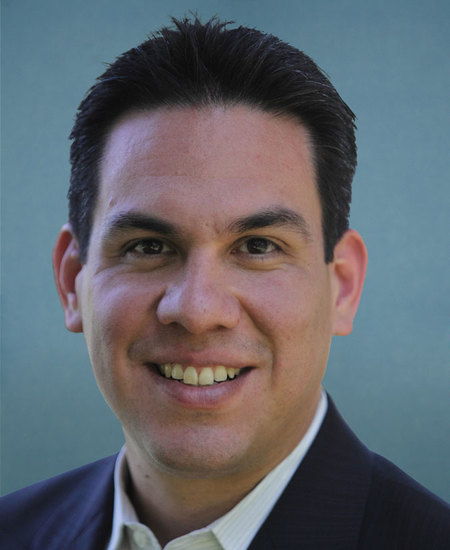
Rep. Pete Aguilar
Sponsored bills
Access to Birth Control Act This bill requires pharmacies to comply with certain rules related to ensuring access to contraceptives. Specifically, pharmacies must provide without delay a customer with any contraceptive or related medication that is in stock. If the contraceptive is not in stock, the pharmacy must immediately inform the customer and either order the contraceptive or refer the customer to a pharmacy that has it in stock. Laws in some states provide pharmacists with the right to refuse to dispense contraceptive-related drugs on religious or conscience grounds. Pharmacies may refuse to provide a contraceptive to a customer (1) if the customer lacks a valid prescription for a prescription contraceptive or is unable to pay for the contraceptive, or (2) based on a pharmacy employee's professional clinical judgment. The bill also establishes a private cause of action and civil monetary penalties for violations of the bill.
Original Slavery Remembrance Day Resolution This joint resolution designates a Slavery Remembrance Day annually and condemns slavery and its progenies.
This resolution supports the designation of National GIS Day and encourages the continued use of geographic information system (GIS) technology to learn, address societal challenges, and drive economic growth.
Men's Health Awareness and Improvement Act This bill establishes the Office of Men's Health within the Department of Health and Human Services (HHS) and requires other activities to improve men's health in the United States. The office must support and promote men's health programs and initiatives, including by working with relevant federal agencies (e.g., the Department of Defense and the Department of Veterans Affairs) and consulting with other HHS offices and agencies on activities related to men's health. HHS must issue associated guidance and recommendations on improving men's health outcomes that include short-term and long-term objectives for disease prevention, health promotion, and other areas of concern. The bill also requires studies and reports on men's health topics. The Office of the Assistant Secretary for Health must study men's use of health screenings and services, and the Government Accountability Office must report on the effectiveness of federal outreach related to men's health initiatives.
IDEA Full Funding Act This bill provides permanent, mandatory funding for the grant program that assists states and outlying areas in providing special education and related services to children with disabilities.
National Wildland Fire Risk Reduction Program Act This bill directs the President to establish a National Wildland Fire Risk Reduction Program to achieve major measurable reductions in the losses of life and property from wildland fires. This program shall coordinate federal efforts to improve the assessment of fire environments and the understanding and prediction of wildland fires, associated smoke, and their impacts; develop and encourage the adoption of science-based and cost-effective measures to prevent and mitigate wildland fire and associated smoke impacts; and improve the understanding and mitigation of the impacts of climate change and variability on wildland fire risk, frequency, and severity and inform the other goals described here. Not later than 90 days after enactment of this bill, the Office of Science and Technology Policy shall establish an Interagency Coordinating Committee on Wildland Fire Risk Reduction to oversee the planning, management, and coordination of the program. The committee shall submit a strategic plan for the program to Congress. The Government Accountability Office shall submit a report to Congress on the progress and performance of the program. Further, the bill sets forth the responsibilities of the National Institute of Standards and Technology, National Science Foundation, National Oceanic and Atmospheric Administration, Federal Emergency Management Agency, National Aeronautics and Space Administration, Environmental Protection Agency, and Department of Energy with respect to the program.

Mental Health Workforce and Language Access Act of 2021 This bill establishes within the Department of Health and Human Services (HHS) two demonstration programs to increase access to mental health services provided in languages other than English at federally qualified health centers (FQHCs). In carrying out the programs, HHS must give preference to FQHCs at which at least 20% of the patients are best served in a language other than English. First, HHS must provide National Health Service Corps (NHSC) loan repayments to mental health care providers who agree to serve their period of obligated service in an FQHC. HHS may provide enhanced payments to those who serve in an FQHC with non-English language needs. (The NHSC is a scholarship and student loan repayment program for eligible health care providers who agree to work in areas with a shortage of primary care, dental care, and mental health care providers.) Second, HHS must award grants to FQHCs for recruiting and retaining mental health care providers who are fluent in a language other than English.
Early Childhood Nutrition Improvement Act This bill makes various changes to the Child and Adult Care Food Program, which reimburses child care centers, day care homes, and other sites for meals and snacks provided to low-income individuals. Among these changes, the bill authorizes reimbursements for an additional meal or snack provided to children who are in care for at least eight hours, allows certain child care centers to certify their eligibility on an annual (rather than a monthly) basis, and establishes an advisory committee to make recommendations to reduce unnecessary recordkeeping requirements for program participants.
FHA Fairness Act This bill increases the mortgage limit for federal mortgage insurance eligibility for homes in certain cities and counties. Specifically, this increase applies to metropolitan cities and urban counties with higher housing costs that have experienced a decrease in home values over a specified time period.