

National Discovery Trails Act This bill amends the National Trails System Act to include national discovery trails as part of the national trails system. Such trails (1) shall be extended, continuous, interstate trails located to provide for outstanding outdoor recreation and travel and to connect representative examples of America's trails and communities; (2) shall provide for the conservation and enjoyment of significant natural, cultural, and historic resources and be so located as to represent metropolitan, urban, rural, and back country regions of the Nation; and (3) may be designated on federal lands and, with the owner's consent, on nonfederal lands. The 6,000-mile American Discovery Trail extending from Cape Henlopen State Park in Delaware, to Point Reyes National Seashore in California, splitting into northern and southern routes near Cincinnati, Ohio, and rejoining at Denver, Colorado, is designated as a national discovery trail. The bill sets forth requirements for designation of a trail as a national discovery trail. The appropriate federal department for each national discovery trail shall (1) administer the trail in cooperation with at least one competent trailwide volunteer-based organization; and (2) submit a comprehensive plan for the trail's protection, management, development, and use.
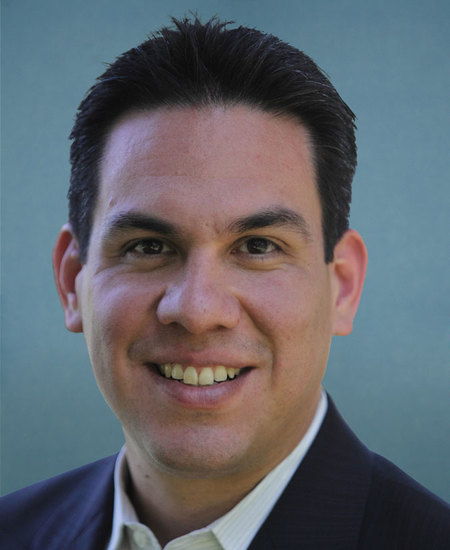
Rep. Pete Aguilar
Sponsored bills
University Centers for Growth, Development, Prosperity (GDP) Act This bill requires the Economic Development Administration (EDA) to establish in each state a university center at an institution of higher education that must, to the extent possible, collaborate with economic development districts, provide technical assistance and business development services to area businesses, and conduct research and analysis relating to economic development. In selecting such centers, the EDA must prioritize Historically Black Colleges and Universities, Tribal Colleges and Universities, Hispanic-Serving Institutions, and other minority-serving institutions.
Wildlife Refuge Conservation and Recreation for the Community Act This bill directs the Fish and Wildlife Service (FWS) to establish as a national wildlife refuge the lands, waters, and interests therein acquired pursuant to this bill, to be known as the Western Riverside County National Wildlife Refuge. The FWS shall publish notice of the establishment of the wildlife refuge in the Federal Register. The FWS shall establish the acquisition boundaries of the wildlife refuge as the lands and waters within the Western Riverside County Multiple Species Habitat Conservation Plan Area.
Help for Healing Communities Act This bill establishes a program through which the Substance Abuse and Mental Health Services Administration may award grants to support mental and behavioral health services for survivors of active shooter events and incidents of targeted violence. Eligible grant recipients include state, tribal, territorial, and local governments and nonprofits located in or serving a community that experienced an active shooter event or incident of targeted violence in the preceding fiscal year.
Excess Urban Heat Mitigation Act of 2022 This bill requires the Department of Housing and Urban Development (HUD) to establish a grant program for state, tribal and local governments; metropolitan planning organizations; and certain nonprofits (or consortia of nonprofits) to carry out activities to mitigate heat in urban areas. HUD must coordinate with the Environmental Protection Agency on the program.
Time Off to Vote Act This bill requires an employer, upon the request of an employee, to provide the employee with a minimum of two consecutive hours of paid leave in order to vote in a federal election. The employer may determine the two-hour period, excluding any lunch break or other break. Taking such leave shall not result in the employee losing accrued employment benefits. The bill makes it unlawful for an employer to interfere with the right to take such leave or for an employer to discriminate against an employee for taking such leave. Further, the bill makes it unlawful for any employer to retaliate against an employee for (1) opposing any practice made unlawful by this bill; (2) filing a charge, or instituting or causing to be instituted any proceeding, under or related to this bill; or (3) testifying or preparing to testify in an inquiry or proceeding relating to such leave. The bill specifies penalties for employers who violate these provisions.
Targeting Resources for Equitable Access to Treatment for Long COVID Act or the TREAT Long COVID Act This bill requires the Department of Health and Human Services to award competitive grants to create or expand the capacity of clinics that treat patients with persistent, long-term symptoms following recovery from acute COVID-19 (i.e., Long COVID). Eligible recipients include federally qualified health centers, rural health clinics, urban Indian health centers, and state and local health departments.
Burma Unified through Rigorous Military Accountability Act of 2022 or the BURMA Act of 2022 This bill imposes sanctions pertaining to Burma (Myanmar) and addresses related issues. The President must impose property- and visa-blocking sanctions on certain foreign persons (i.e., an individual or entity), including those that (1) knowingly operate in Burma's defense sector, (2) are responsible for or complicit in undermining Burma's democratic processes, or (3) are senior leaders in Burma's military or government. The Department of the Treasury must prohibit or impose strict conditions on certain accounts used to facilitate transactions for such sanctioned persons. The President may impose sanctions on Myanma Oil and Gas Enterprise if such sanctions would support certain objectives, including reducing the Burmese military's ability to undermine democracy in Burma. Before removing certain foreign persons from a list of specially designated nationals and blocked persons (commonly known as the SDN list), the President must certify to Congress that the person in question has not knowingly engaged in certain activities, such as supporting terrorism. The bill authorizes Department of State and U.S. Agency for International Development activities in Burma and the surrounding region to support democracy activists, humanitarian assistance, and reconciliation efforts. The State Department may (1) continue to assist organizations supporting political prisoners in Burma, and (2) provide assistance to entities investigating crimes against humanity. The President must direct U.S. representatives to the United Nations to vote and advocate for certain actions related to Burma, such as cutting off assistance to Burma's government.
Reporting Efficiently to Proper Officials in Response to Terrorism Act of 2021 or the REPORT Act This bill requires specified federal agencies to report to Congress concerning any act of terrorism that occurs in the United States. Whenever an act of terrorism occurs, the Department of Homeland Security (DHS), the Department of Justice (DOJ), the Federal Bureau of Investigation (FBI), and, as appropriate, the National Counterterrorism Center (NCC), must submit to the appropriate congressional committees, as specified by this bill, an unclassified report not later than one year after the completion of the investigation by the primary agency conducting the investigation concerning the terrorist act. Such report shall (1) include a statement of the facts of the act of terrorism that are known at the time of such report; (2) identify any gaps in homeland or national security that could be addressed to prevent future acts of terrorism; and (3) include any recommendations for additional measures that could be taken to improve homeland or national security, such as changes in law enforcement practices or changes in law. If DHS, DOJ, and the FBI or, as appropriate, the NCC, determines any information required to be reported could jeopardize an ongoing investigation or prosecution, such entities (1) may withhold from reporting such information, and (2) shall notify the appropriate congressional committees of that determination.
Ensuring Lasting Smiles Act This bill requires private health insurance plans to cover diagnosis and treatment of congenital anomalies and birth defects, such as reconstructive services and items. Coverage must include services and items that functionally improve, repair, or restore any body part that is medically necessary for normal bodily functions or appearance, as determined by the treating physician. Coverage limits and cost-sharing requirements for such services and items may not be more restrictive than those applicable to all medical and surgical benefits under the plan.