This resolution expresses support for (1) equal rights and protections for all people, regardless of actual or perceived sexual orientation or gender identity; and (2) the designation of LGBTQ Equality Day on June 26 to commemorate Supreme Court decisions handed down on that day in 2003, 2013, and 2015. The resolution also acknowledges the need for further legislation to ensure that people in the United States are free from all forms of discrimination on the basis of actual or perceived sexual orientation or gender identity.
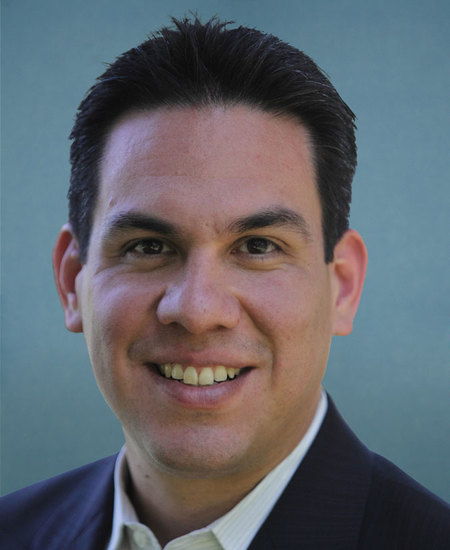
Rep. Pete Aguilar
Sponsored bills
Maddy summaryHRES 490 is a symbolic House resolution (not a law) passed on June 22, 2021, that reaffirms the U.S. commitment to supporting refugees and displaced persons globally. It highlights the scale of the global displacement crisis (over 82 million forcibly displaced people in 2020) and emphasizes the importance of the U.S. refugee resettlement program as a tool for security, diplomacy, and humanitarian aid. The resolution calls on the Secretary of State to continue robust funding, uphold U.S. leadership in refugee protection, support host countries, and meet refugee admissions goals. It directly affects U.S. foreign policy implementation and international humanitarian efforts, though it does not create new legal requirements or allocate funds.
ATF Data and Anti-Trafficking Accountability Act or the ATF DATA Act This bill directs the Bureau of Alcohol, Tobacco, Firearms and Explosives to report to Congress and make publicly available certain data sets regarding firearms tracing data.
Fair Housing Improvement Act of 2022 This bill prohibits discrimination against individuals based on their source of income, veteran status, or military status in the sale or rental of housing and other related real estate transactions and services.
Safety From Violence for Healthcare Employees Act or the SAVE Act This bill establishes a new criminal offense for knowingly assaulting or intimidating hospital personnel during the performance of their official duties in a manner that interferes with their performance of the duties or limits their ability to perform the duties. Additionally, the bill authorizes grants to reduce the incidence of violence at hospitals, including violence or intimidation against hospital personnel in the performance of their duties.
Stopping Harmful Image Exploitation and Limiting Distribution Act of 2022 or the SHIELD Act of 2022 This bill establishes a new criminal offense related to the distribution of intimate visual depictions. Specifically, it makes it a crime to knowingly distribute (or intentionally threaten to distribute) an intimate visual depiction of an individual (1) with knowledge of or reckless disregard for the individual's lack of consent and reasonable expectation of privacy, and (2) without a reasonable belief that distributing the depiction touches a matter of public concern. A violator is subject to criminal penalties—a fine, a prison term of up to two years for each individual victim depicted, or both.
Housing for All Act of 2022 This bill modifies existing, and creates new, grants and programs concerning affordable housing and homelessness. In particular, the bill authorizes federal funding of the Housing Trust Fund, which supports affordable housing activities. Currently, contributions to the fund come from the earnings of Fannie Mae and Freddie Mac. Additionally, the bill (1) expands eligibility for housing choice vouchers, which provide rental assistance to low-income individuals; and (2) entitles certain individuals to the vouchers. Other matters addressed in the bill include permanently authorizing the U.S. Interagency Council on Homelessness (which terminates on October 1, 2028) and modifying existing programs that support housing for the elderly, individuals with disabilities, and individuals experiencing homelessness or at risk of homelessness. The bill also creates various housing-related grant programs to, for example, support overnight parking for individuals who live in vehicles and no-cost legal assistance with evictions for low-income individuals. The bill also incorporates housing into certain transportation grants and programs.
Latonya Reeves Freedom Act of 2022 This bill prohibits government entities and insurance providers from denying community-based services to individuals with disabilities that require long-term service or support that would enable such individuals to live in the community and lead an independent life. Specifically, these entities may not discriminate against such individuals in the provision of community-based services by such actions as imposing prohibited eligibility criteria, cost caps, or waiting lists or failing to provide a specific community-based service. Additionally, community-based services must be offered to individuals with such disabilities prior to institutionalization. Institutionalized individuals must be notified regularly of community-based alternatives. The bill requires the Department of Justice to issue regulations requiring government entities and insurance providers to offer community-based long-term services to individuals with such disabilities who would otherwise qualify for institutional placement. Government entities must ensure sufficient availability of affordable, accessible, and integrated housing that is not a disability-specific residential setting or a setting where services are tied to tenancy. Regulations shall also (1) require government entities and insurance providers to perform self-evaluation on current services, policies, and practices and concerning compliance with requirements of this bill; and (2) require government entities to submit a transition plan. The bill provides funds for FY2022 for the Department of Health and Human Services to provide technical assistance with respect to transition plans. The bill allows civil actions by individuals subjected to, or about to be subjected to, a violation of its requirements.

Porch Pirates Act of 2022 This bill extends federal criminal penalties for obstruction of correspondence and theft of stolen mail matter (which apply to U.S. Postal Service mail) to matter (e.g., packages) sent or delivered by private or commercial interstate carriers.
Protecting Immigrants From Legal Exploitation Act of 2021 This bill establishes that certain acts of immigration-related fraud shall be punished by fines, imprisonment, or both. The bill provides for such punishment for a person who knowingly or recklessly executes a scheme or artifice in a matter arising under immigration law to (1) defraud any person; or (2) obtain anything of value from any person through false pretenses, representations, or promises. A person who knowingly and falsely represents that such person is an attorney or accredited representative in any matter arising under immigration law shall be subject to such punishment. The Department of Justice (DOJ) may seek civil injunctions to stop an immigration service provider from further engaging in fraudulent conduct or willfully misrepresenting the provider's authority to provide representation in immigration matters. An alien who left the United States based on erroneous advice from a person engaged in immigration practitioner fraud or the unauthorized practice of law shall not be barred from reentering the country. An alien may withdraw an application for immigration benefits that was prepared or submitted by an individual engaging in immigration practitioner fraud or the unauthorized practice of law, if the alien had no prior knowledge of the individual's fraudulent or unauthorized status. The Department of Homeland Security (DHS), the Department of State, and DOJ shall develop procedures for allowing such an alien to submit corrected filings. DHS and DOJ shall establish a program to provide grants to eligible nonprofit organizations to provide direct legal services to aliens.