

Protecting Sensitive Locations Act This bill prohibits immigration enforcement actions within 1,000 feet of a sensitive location except in exigent circumstances, such as the imminent risk of death, violence, or physical harm to any person. Sensitive locations include health care facilities; schools and school bus stops; places that provide assistance for people such as children, pregnant women, and abuse victims; child care facilities; places that provide disaster or emergency services; places of worship; courthouses and lawyers’ offices; facilities used as polling places; certain labor union facilities; and public assistance offices. The prohibition shall apply to Department of Homeland Security officers and agents, as well as state employees pursuing immigration enforcement actions. If an enforcement action is carried out in violation of this prohibition (1) no information resulting from the action may be entered into the record in a resulting removal proceeding, and (2) the affected individual may move to immediately terminate such a proceeding. U.S. Immigration and Customs Enforcement and U.S. Customs and Border Protection shall annually report to Congress about enforcement actions taken at sensitive locations in the preceding year.
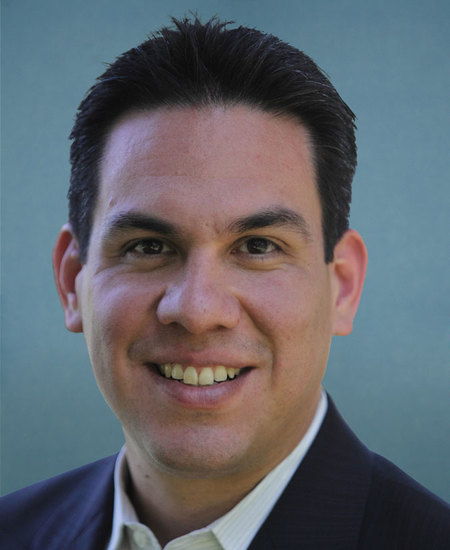
Rep. Pete Aguilar
Sponsored bills
Protect Our Letter Carriers Act of 2025 This bill requires or authorizes certain actions related to the U.S. Postal Service (USPS). The bill requires the Department of Justice to appoint an assistant U.S. attorney in each judicial district to coordinate and supervise the investigation and prosecution of various crimes related to postal services (for example, assault on a postal service employee, breaking into a post office, or obstruction of mails). The bill also requires the U.S. Sentencing Commission to amend sentencing guidelines to provide that the assault or robbery of a postal employee shall be treated the same as the assault of a law enforcement officer. Additionally, the bill authorizes appropriations for the USPS to install high security collection boxes and replace older versions of the universal mailbox key with electronic versions.
Maddy summaryH.Res. 108 is a procedural resolution that ranks Congresswoman Judy Chu immediately after Congresswoman Pramila Jayapal on the House Committee on the Budget. This adjustment modifies the internal committee ranking order without changing the committee's responsibilities or creating new policy. The resolution affects only the organizational structure of the Budget Committee's membership sequence. It is a routine administrative action common in House committee assignments.
Maddy summaryThis bill establishes a federal right to access contraception, protecting individuals' ability to obtain contraceptives and health care providers' ability to offer them without government interference. It prohibits states from banning or restricting contraceptive services, products, or information, including laws that force providers to deny care based on personal beliefs or limit access to specific methods. The law immediately overrides conflicting state regulations and ensures that contraception remains available regardless of factors like race, income, disability, or location. It applies to all individuals and providers, building on existing federal protections like the Affordable Care Act's coverage requirements.
This bill provides for the presentation of a Congressional Gold Medal to the Freedom Riders, in recognition of their contribution to civil rights by fighting for equality in interstate travel.
Maddy summaryThis resolution formally appoints specific House members to four standing committees for the 119th Congress: the Budget Committee (including Reps. Doggett, Scott, and Escobar), House Administration (including Reps. Morelle and Sewell), Natural Resources (including Reps. Velázquez and Soto), and Oversight and Government Reform (including Reps. Pressley and Tlaib). It directly affects the named representatives by assigning them to committee roles without altering legislative policy. The resolution serves as a procedural mechanism to establish committee membership, consistent with House rules for committee appointments. This is a routine administrative action, not a policy change.
Maddy summaryHRES 44 is a procedural resolution that assigns specific House members to four standing committees: Agriculture, Foreign Affairs, Natural Resources, and Science, Space, and Technology. It names 14 members for Agriculture, 15 for Foreign Affairs, 12 for Natural Resources, and 14 for Science, Space, and Technology committees. This resolution does not create new policy or affect any constituents - it only formalizes committee membership assignments for the current Congress. The resolution was introduced on January 15, 2025, and is purely administrative.
Maddy summaryHR 429, the Rosie the Riveter Commemorative Coin Act, authorizes the U.S. Treasury to mint and sell three types of commemorative coins ($5 gold, $1 silver, and half-dollar) to honor women who worked on the U.S. home front during World War II. The coins will be sold at face value plus surcharges ($35 for gold, $10 for silver, $5 for half-dollar), with all surcharge revenue directed to the Rosie the Riveter Trust to support the Rosie the Riveter WWII Home Front National Historical Park and related educational programs. The coins must be issued between January 1, 2028, and December 31, 2028, in specified quantities (50,000 gold, 400,000 silver, 750,000 half-dollar), with all costs covered by the sales revenue to avoid net government expense.
Maddy summaryThis is a procedural resolution (HRES 40), not a policy bill. It formally assigns specific members of the U.S. House of Representatives to serve on 10 standing committees for the 119th Congress, including committees like Armed Services, Education and Workforce, and Judiciary. The resolution lists individual representatives (e.g., Mr. Nadler on Judiciary, Ms. Lofgren on Judiciary) and does not change any laws or policies. It serves only to confirm committee membership assignments as determined by House leadership.
Maddy summaryHRES 14 is a procedural resolution formally assigning specific U.S. Representatives to membership on 17 House standing committees for the 119th Congress (2025 session). It names individual members, such as Ms. Craig for Agriculture, Ms. DeLauro for Appropriations, and Mr. Smith for Armed Services, to serve on their designated committees. This resolution has no policy provisions or legislative impact - it solely establishes committee membership as part of the House's organizational process. It directly affects the named committee members by assigning their official committee roles.