

Designates the facility of the United States Postal Service located at 1663 East Date Place in San Bernardino, California, as the "Dr. Margaret B. Hill Post Office Building."
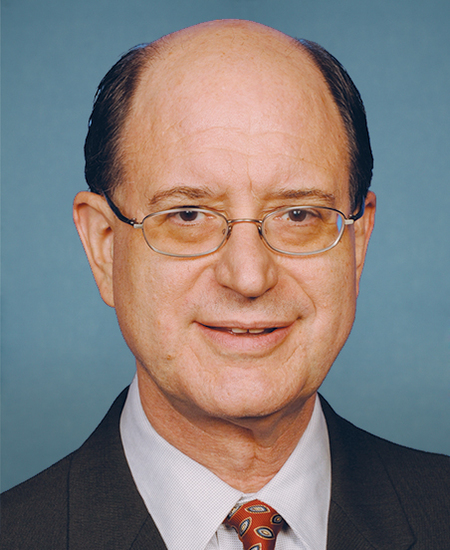
Rep. Brad Sherman
Sponsored bills
Designates the facility of the United States Postal Service located at 4770 Eureka Ave in Yorba Linda, California, as the "Cottle Centanni Post Office Building."
Integrity, Notification, and Fairness in Online Retail Marketplaces for Consumers Act or the INFORM Consumers Act This bill requires online marketplaces (e.g., Amazon) to collect and verify certain contact and financial information from third-party sellers whose transactions and related revenues exceed specified thresholds. Subject to certain exceptions, online marketplaces must clearly and conspicuously disclose the contact information of certain high-volume third-party sellers to consumers and must also provide consumers with methods to report suspicious activity on the marketplace. The bill provides the Federal Trade Commission and state attorneys general with the authority to enforce these requirements.
Lymphedema Treatment Act This bill provides for Medicare coverage of lymphedema compression treatment items. Specifically, the bill provides for coverage of standard and custom fitted gradient compression garments and other approved items that are prescribed by a physician or other specified health care professional to treat lymphedema.
Prevent All Soring Tactics Act of 2022 or the PAST Act of 2022 This bill addresses the practice of soring horses. The soring of horses includes various actions taken on horses' limbs to produce higher gaits that may cause pain, distress, inflammation, or lameness. Specifically, the bill expands soring regulation and enforcement at horse shows, exhibitions, sales, and auctions, including by establishing a new system for inspecting horses for soring. In addition, the bill increases penalties for violations.
Norman Y. Mineta Japanese American Confinement Education Act This bill increases the authorization of appropriations for the Japanese American Confinement Sites (JACS) grant program, which supports the preservation of U.S. confinement sites that were used to detain Japanese Americans during World War II (i.e., internment camps). It also establishes a program within JACS to provide grants to Japanese American nonprofits to educate individuals about the historical significance of these events.
This concurrent resolution expresses opposition to the application of criminal laws to pregnancy outcomes and affirms that people deserve access to high-quality health care without fear of reprisal or punishment.
Maddy summaryThis resolution (HRES 981) commemorates the one-year anniversary of the March 16, 2021, Atlanta spa shootings that killed eight people, six of whom were Asian women, and denounces anti-Asian hate. It formally condemns the violence, honors the victims, and recognizes the ongoing impact of anti-Asian hate crimes on the Asian American and Pacific Islander community. The resolution reaffirms support for the existing COVID-19 Hate Crimes Act and commits the federal government to combating hate and violence against AAPI communities. As a symbolic measure, it does not create new laws or funding but serves as a formal statement of solidarity.
This resolution recognizes the sacrifices and bravery of the Afghan people in their struggle for democracy while enduring decades-long conflict and oppression by the Taliban. It also condemns the Taliban's continued human rights violations.
Maddy summaryHRES 490 is a symbolic House resolution (not a law) passed on June 22, 2021, that reaffirms the U.S. commitment to supporting refugees and displaced persons globally. It highlights the scale of the global displacement crisis (over 82 million forcibly displaced people in 2020) and emphasizes the importance of the U.S. refugee resettlement program as a tool for security, diplomacy, and humanitarian aid. The resolution calls on the Secretary of State to continue robust funding, uphold U.S. leadership in refugee protection, support host countries, and meet refugee admissions goals. It directly affects U.S. foreign policy implementation and international humanitarian efforts, though it does not create new legal requirements or allocate funds.