

Maddy summaryThe Rohingya GAP Act establishes a U.S. Special Coordinator for Rohingya Atrocities Prevention and Response to coordinate U.S. government efforts on Rohingya issues. It authorizes $10 million annually for atrocity investigations and $8 million for a Burma-focused conflict observatory to document human rights violations. The bill directs U.S. agencies to support Rohingya refugees' protection, education, and livelihoods in Bangladesh while promoting durable solutions including safe return to Myanmar with full citizenship rights when conditions allow. It requires annual reporting on U.S. efforts to address atrocity risks, protect Rohingya, and advance accountability for crimes against them. The legislation aims to address root causes of violence against Rohingya through empowerment, inclusion in decision-making, and support for transitional justice mechanisms.
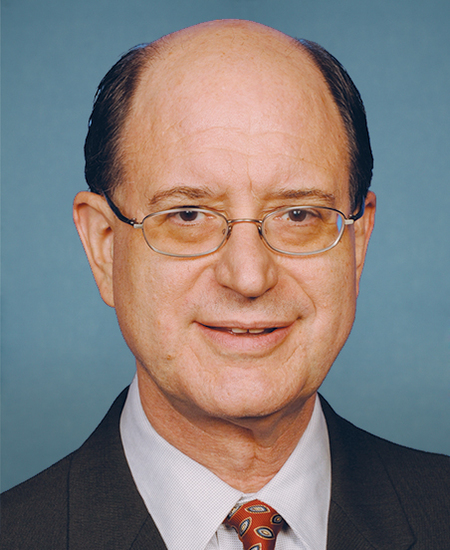
Rep. Brad Sherman
Sponsored bills
Maddy summaryThe Sanction Sea Pirates Act of 2024 requires the U.S. President to impose sanctions on foreign individuals or entities that knowingly engage in piracy, as defined by U.S. law. Key mechanisms include blocking their assets within U.S. jurisdiction and denying visas or entry to the United States. Exceptions apply for humanitarian aid, compliance with international agreements, and national security operations. The bill targets the recent surge in piracy off Somalia and in the Gulf of Aden, which Congress links to heightened Houthi attacks in the Red Sea.
Maddy summaryHR 7914, the Accountability for Terrorist Perpetrators of October 7th Act, imposes U.S. sanctions on the Popular Resistance Committees (PRC) and associated individuals or groups, including blocking property transactions and denying visas to members. The bill requires the President to enforce these sanctions 90 days after enactment, with exceptions for United Nations operations and national security activities, and allows temporary 180-day waivers for national security reasons. It also mandates a 90-day report to Congress on whether the PRC and the group "Lion's Den" meet criteria for designation as terrorist organizations under existing laws. Ongoing reports every two years will track new entities linked to the PRC.
Maddy summaryThis bill reauthorizes the United States Commission on International Religious Freedom (USCIRF) through fiscal year 2026. It extends the commission's funding authorization from 2023-2024 to 2025-2026 and delays the expiration date of its statutory authorization from September 30, 2024, to September 30, 2026. The bill directly affects USCIRF by ensuring its continued operation and funding without altering its existing mandate or reporting requirements. It is a procedural extension, not a policy change.
Maddy summaryHRES 1355 is a non-binding resolution supporting the designation of July 10 as Journeyman Lineworkers Recognition Day. It honors lineworkers who maintain electrical infrastructure under hazardous conditions, including during disasters, and commemorates Henry Miller, the first president of the International Brotherhood of Electrical Workers, who died on July 10, 1896, while troubleshooting an electrical outage. The resolution encourages public recognition of these workers' contributions but does not create new laws or policies.
Maddy summaryThis bill creates a national registry to help Korean American families separated from relatives in North Korea after the 1953 Korean War Armistice reunite. The Secretary of State must identify eligible families and collect their information (including deceased members) to support future in-person or video reunions. It authorizes $1 million for this registry and requires the State Department to push for family reunions during U.S.-North Korea talks, while consulting South Korea. The State Department must also report annually to Congress on the registry's status, reunion progress, and North Korea's policies affecting family reunions.
Maddy summaryThis bill (HR 2365, Public Law 118-66) directs the U.S. Department of Health and Human Services (HHS) to establish the National Parkinson’s Project. It requires HHS to create and update a coordinated national plan for preventing, diagnosing, treating, and researching Parkinson’s disease and related disorders (including multiple system atrophy and progressive supranuclear palsy), while coordinating federal research and care efforts across agencies like the NIH, CDC, and VA. The law mandates annual progress assessments, an advisory council with patient advocates and diverse experts, and annual reports to Congress on federal Parkinson’s programs and recommendations for improvement. It affects federal agencies managing Parkinson’s-related programs and aims to improve care coordination and research efficiency for patients and caregivers, with the law sunsetting in 2035.
Maddy summaryHRES 1329 is a resolution formally acknowledging and apologizing for the U.S. government's historical discrimination against lesbian, gay, bisexual, and transgender (LGBT) individuals who served in the military, Foreign Service, and Federal civil service. It condemns past policies - including the 1949 Department of Defense decree banning "homosexual personnel" and the "Don't Ask, Don't Tell" policy (1993-2011) - that led to the discharge or termination of thousands of LGBT service members and employees. The resolution offers a formal apology on behalf of the United States to affected individuals and their families, reaffirming the government's commitment to equal treatment without authorizing legal claims or providing benefits. This is a symbolic act of acknowledgment, not a policy change or financial remedy.
Maddy summaryHRES 1332 is a symbolic resolution recognizing June as LGBTQIA+ Pride Month. It encourages the celebration of Pride Month to honor the historical struggles and achievements of LGBTQIA+ people in the United States, while acknowledging the ongoing challenges they face. This resolution does not create new laws or policies, but serves as a formal recognition of LGBTQIA+ rights as human rights and highlights their integral role in American history. The resolution was introduced by multiple members of Congress and passed by the House of Representatives.
Maddy summaryHR 8904, the Tenant Empowerment Act of 2024, directly affects tenants in multifamily housing projects receiving federal assistance through HUD or USDA programs. It establishes key mechanisms including: (1) allowing tenants to withhold rent into an escrow fund when housing violations occur (Section 2A), (2) permitting tenants to pay for repairs themselves and deduct costs from rent (Section 2B), and (3) requiring tenant participation in inspections and management reviews (Section 6). The bill prohibits evictions for using these rights and mandates that housing owners address violations, with HUD or local authorities enforcing standards. These provisions apply specifically to projects under Section 8 housing assistance contracts and similar federal agreements.