

Maddy summaryHR 4206, the Bank Safety Act of 2024, requires large banks with over $100 billion in assets to include certain accounting adjustments (like unrealized gains or losses on investments) in their capital calculations for regulatory purposes. This directly affects major bank holding companies and large insured depository institutions, as defined by the bill. The key provision amends existing law to mandate this inclusion, excluding specific cash flow hedge adjustments. The rule must be implemented by federal banking agencies no later than December 31, 2024. This changes how these institutions measure their financial strength for regulatory capital requirements.
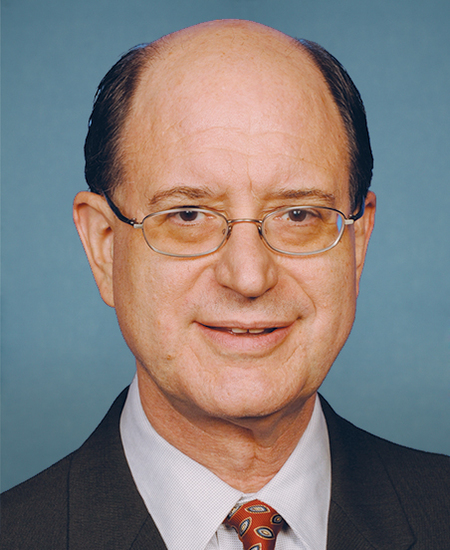
Rep. Brad Sherman
Sponsored bills
Maddy summaryThe VA Employee Fairness Act of 2024 modifies collective bargaining rules for employees of the Veterans Health Administration (VHA). It removes existing subsections (b), (c), and (d) from the law governing VHA employee bargaining and renumbers the remaining provision. This change streamlines the collective bargaining framework but does not alter the Secretary of Veterans Affairs' existing authorities over incentive pay and expedited hiring. The bill directly affects VHA employees by changing how their collective bargaining rights are structured under federal law. The law remains neutral, focusing solely on procedural adjustments to the existing bargaining framework.
Maddy summaryHRES 1537 is a non-binding House resolution condemning Hamas' October 7, 2023, attacks on Israel, which killed over 1,200 people and took 251 hostages, including 7 Americans still held captive. It calls on Hamas to immediately surrender, cease attacks, and release all hostages unconditionally, while reaffirming Israel's right to self-defense. The resolution also urges international organizations to condemn Hamas' actions and address the global surge in antisemitism following the attacks. As a symbolic statement, it does not create new laws or alter policy but expresses congressional position. The bill specifically references the ongoing captivity of seven U.S. citizens: Edan Alexander, Itay Chen, Sagui Dekel-Chen, Gadi Haggai, Judith Weinstein Haggai, Omer Neutra, and Keith Siegel.
Maddy summaryHRES 1504 designates October 2024 as Filipino American History Month to celebrate the history, culture, and contributions of Filipino Americans to the United States. The resolution urges the American public to observe the month through educational programs and activities highlighting the community's early settlements, military service (including World War II veterans' contributions), and roles in healthcare, labor movements, and other fields. As a non-binding congressional resolution, it formally recognizes Filipino American heritage without creating new legal obligations or policy changes.
Maddy summaryHR 9814, the Rural Homeownership Continuity Act of 2024, simplifies the process for rural homeowners to transfer FHA-guaranteed mortgages when selling their homes. It requires the Secretary of Housing and Urban Development to create a rule within one year establishing a process allowing a qualified buyer to assume the existing loan, while fully relieving the original borrower and any co-borrowers or guarantors of liability. This directly affects rural homeowners using the Doug Bereuter Section 502 Single Family Housing Loan Guarantee Program who wish to sell their property without remaining responsible for the mortgage. The key provision eliminates the seller's ongoing financial obligation upon a successful transfer to a qualified buyer.
Maddy summaryThis bill amends the tax code to exclude veteran disability compensation or pension payments (from Title 38, U.S. Code) when calculating income for two housing programs: the Low Income Housing Tax Credit and Qualified Residential Rental Project Bonds. It directly affects veterans receiving these disability payments who apply for or qualify for these housing tax benefits. The key provision adds a specific exclusion to the income calculation rules, ensuring these veteran payments are not counted as income for eligibility purposes. This change simplifies the income determination process for veterans seeking housing assistance through these federal programs. The amendment applies to income determinations made after the bill's enactment date.
Maddy summaryThe Houthi Human Rights Accountability Act requires the U.S. State Department to issue three key reports within 180 days: one on Houthi indoctrination efforts in Yemen, another on obstacles to humanitarian aid in Houthi-controlled areas, and a third on Houthi human rights abuses (including child soldier recruitment and gender-based violence) since 2015. It also mandates annual assessments to determine if Houthi members who restrict aid or commit human rights violations should face sanctions under existing U.S. laws. The bill directly targets Houthi leadership (referred to as "Ansarallah") in Yemen by subjecting them to potential U.S. sanctions and accountability measures. The Act expires five years after enactment, with all reports covering specific timeframes (e.g., humanitarian aid reports cover 2020-2023).
Maddy summaryThe DISPOSE Act authorizes the U.S. government to partner with Colombia, Mexico, and Peru to safely destroy chemicals used in illegal drug production. It requires the State Department, in coordination with Justice and Defense, to create a detailed implementation plan within 90 days - including timelines, budgets, and measurable goals - and provide annual progress reports to Congress on chemical destruction efforts. The initiative aims to prevent these chemicals from re-entering drug manufacturing, free storage space for future seizures, and reduce environmental harm from hazardous waste.
Maddy summaryHR 9082, the Summit of the Americas Act, authorizes the U.S. government to regularly host the Summit of the Americas every four years (or more frequently with funding) to strengthen cooperation with Western Hemisphere nations and partner groups. It specifically directs the Secretary of State to coordinate a separate "Cities Summit of the Americas" as part of each main summit, focusing on subnational city and regional leaders. The bill creates a new State Department implementation unit to track U.S. and partner commitments from these summits, requiring quarterly public updates and annual congressional reports for five years. This act directly affects the State Department's operations and U.S. diplomatic engagement with Western Hemisphere partners.
Maddy summaryHR 8683 requires the Secretaries of Defense and State to map global strategic ports critical to U.S. interests (military, economic, or diplomatic) and track China's efforts to build or buy such ports. Within 180 days of enactment, they must submit a strategy to counter Chinese port investments, including analyzing Chinese port capabilities, ongoing projects, and vulnerabilities like cyber attacks linked to China. The bill also mandates coordination with agencies like the Export-Import Bank to promote U.S. or allied alternatives to Chinese port investments. It directly affects federal agencies responsible for defense, diplomacy, and development finance, focusing on monitoring and strategic planning rather than immediate policy changes.