

Maddy summaryHR 7480, the Disabled Veterans Housing Support Act, changes how housing programs calculate income eligibility for veterans. It requires states and local governments to exclude service-connected disability compensation from the Department of Veterans Affairs (VA) when determining if a veteran qualifies as "low or moderate income" for HUD housing programs (like Section 8 or public housing). This directly helps disabled veterans whose VA disability pay would otherwise disqualify them from housing assistance they need. The bill also mandates a report within one year examining how VA disability pay is treated across HUD programs and recommending improvements to better serve veterans. The change simplifies access to housing support by ensuring VA benefits aren't counted as income for these programs.
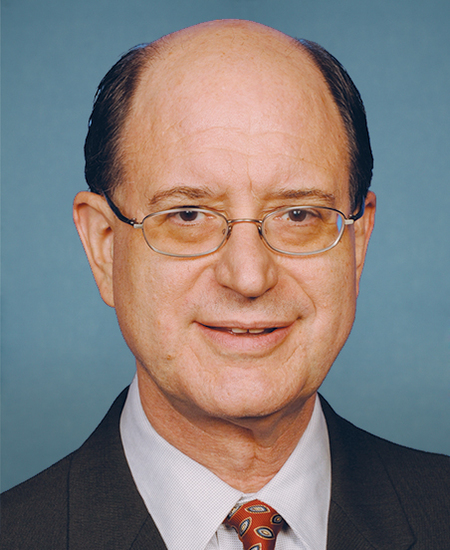
Rep. Brad Sherman
Sponsored bills
Maddy summaryHR 6751 authorizes the U.S. Mint to produce commemorative coins honoring Roberto Clemente, a Hall of Fame baseball player and humanitarian, including 50,000 $5 gold coins, 400,000 $1 silver coins, and 750,000 half-dollar coins. The coins must feature Clemente's image and inscriptions like "Roberto Clemente" and "2027," with all sales including a surcharge ($5-$35 per coin) paid to the Roberto Clemente Foundation. The foundation, which supports youth sports, education, and disaster relief programs, will use these funds for its mission, while the U.S. Treasury must recover all production costs. The coins will be sold exclusively in 2027, with no net cost to the government.
Maddy summaryHR 760, the Chinese Military and Surveillance Company Sanctions Act of 2023, expands U.S. sanctions to block all transactions (including debt and equity financing) with Chinese military-affiliated and surveillance technology companies, moving beyond previous restrictions that only targeted public stock transactions. It requires the President to impose full asset-blocking sanctions via the Treasury’s Specially Designated Nationals (SDN) list on companies designated under updated Treasury lists or determined to support China’s military/surveillance sectors. This directly affects U.S. individuals and businesses, prohibiting them from engaging in any financial, commercial, or technological dealings with these designated entities. Exceptions include U.S. intelligence activities and the importation of physical goods, with the sanctions set to expire 7 years after enactment.
Maddy summaryThis bill names the U.S. Postal Service building at 333 West Broadway in Anaheim, California, as the "Dr. William I. 'Bill' Kott Post Office Building." It requires all federal documents, maps, and references to update the building's official name to honor Dr. Kott, a former Anaheim physician and community leader. The change applies immediately to all government records and communications involving the facility.
Maddy summaryThis bill designates the U.S. Postal Service facility at 517 Seagaze Drive in Oceanside, California, as the "Charlesetta Reece Allen Post Office Building." It updates all federal references in laws, maps, regulations, and documents to use this new name for the facility. The bill has no policy impact beyond renaming the building and altering official references. It was signed into law on November 25, 2024.
Maddy summaryThis bill designates the United States Postal Service facility at 28081 Marguerite Parkway in Mission Viejo, California, as the "Major Megan McClung Post Office Building." It changes all official references to this specific post office location to the new name. The bill directly affects the USPS facility and any government documents or records referencing it. This is a procedural naming resolution with no policy changes or financial impact.
Maddy summaryHR 1060 designates the United States Postal Service facility at 1663 East Date Place in San Bernardino, California, as the "Dr. Margaret B. Hill Post Office Building." The bill updates all federal references - such as in laws, maps, regulations, and official documents - to use this new name for the building. This is a procedural designation with no policy changes or direct impact on residents or services. The bill was passed by Congress and signed into law on November 25, 2024.
Maddy summaryThe Working Dog Commemorative Coin Act (HR 807) directs the U.S. Treasury to mint three types of commemorative coins honoring working dogs' service: $5 gold coins, $1 silver coins, and half-dollar coins with specific weight and composition requirements. Each coin will carry a surcharge ($35 for $5 coins, $10 for $1 coins, $5 for half-dollars) that will be paid directly to America's VetDogs to support their programs providing service dogs for veterans, the disabled, and others. The coins will be issued in 2027 with designs reflecting working dogs' roles in military, detection, therapy, and assistance work. The legislation specifies that all surcharge revenue must fund America's VetDogs' operations without creating new government programs. This is a commemorative measure focused on honoring working dogs' contributions through coin sales, with all surcharge funds going to a specific nonprofit organization.
Maddy summaryThis bill redesignates a United States Postal Service facility at 3500 West 6th Street, Suite 103 in Los Angeles, California, as the "Dosan Ahn Chang Ho Post Office." It directly affects the postal service location by changing its official name to honor Dosan Ahn Chang Ho, a Korean independence activist and community leader. The bill amends prior legislation to update references to the facility’s address and name in all federal records and documents. This is a ceremonial naming resolution with no policy changes to postal services or operations.
Maddy summaryThis bill creates the Critically Endangered Animals Conservation Fund within the existing Multinational Species Conservation Fund, authorizing $5 million annually from 2025-2030. It provides competitive grants to foreign wildlife authorities and qualified organizations to fund on-the-ground conservation projects for species facing severe extinction risk (defined by IUCN Red List categories). Projects must focus on habitat protection, research, anti-poaching enforcement, community engagement, or disease management, while requiring local community consent and matching funds. Grants cannot fund captive breeding except for reintroduction into the wild, and all project reports must be publicly available.