

Maddy summary# Summary of National Defense Authorization Act for Fiscal Year 2025 This extensive legislation contains numerous provisions governing U.S. defense programs, with key themes including: 1. **Aircraft Inventory Requirements & Restrictions**: - Extended prohibitions on reducing E-3 aircraft inventory through 2025 - Minimum inventory requirements for A-10 (96 aircraft), C-130 (minimum 205 aircraft), and KC-135 aircraft - Prohibition on retiring F-15E aircraft until September 2027 - Requirements for recapitalizing Air National Guard fighter fleet with a plan to maintain similar capability mix as active components 2. **F-35 Aircraft Procurement Limitations**: - Strict limits on F-35 procurement (30 F-35A, 9 F-35B, 9 F-35C maximum for FY2025) - Requires certification of multiple improvement plans before accepting additional aircraft - Mandates development of digital-twin models, test beds, and mission software integration labs 3. **Artificial Intelligence Initiatives**: - Establishment of a Chief Digital Engineering Recruitment and Management Officer - Development of AI education courses for military personnel - Requirements for identifying and planning the AI workforce - New restrictions on AI models that could pose national security risks 4. **Supply Chain Resilience**: - Comprehensive measures to increase supply chain resilience for small unmanned aerial systems (sUAS) - Disassembly and analysis of foreign drone aircraft (specifically Da Jiang Innovations) - Development of a supply chain risk framework 5. **Technology Restrictions**: - Prohibition on use of foreign-made LiDAR technology from covered foreign countries (China, Iran, North Korea, Russia) - Requires certification for any exceptions to this prohibition 6. **Defense Research & Development**: - Modifications to numerous research programs - Expansion of the Laboratory Quality Enhancement Program - Requirements for a biotechnology roadmap - Modifications to quantum information science programs The legislation contains numerous detailed requirements for military readiness, equipment maintenance, and strategic planning across all branches of the military, with significant focus on modernization, technology security, and maintaining force structure requirements.
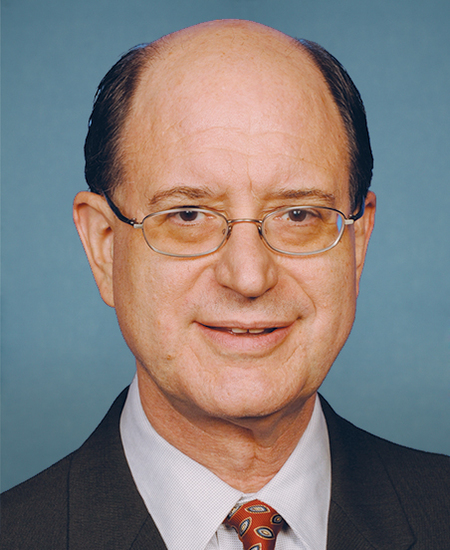
Rep. Brad Sherman
Sponsored bills
Maddy summaryThis bill, HR 1097 (Everett Alvarez, Jr. Congressional Gold Medal Act of 2023), authorizes the award of a Congressional Gold Medal to Everett Alvarez, Jr., in recognition of his service as a U.S. Navy pilot and Vietnam War prisoner of war. It directly honors Alvarez, who was the first U.S. pilot shot down in the Vietnam War, spent over 8.5 years in captivity, and later served in the Peace Corps and Veterans Administration. The bill’s key mechanism is directing the U.S. Mint to strike a gold medal bearing his name and image, with bronze duplicates available for sale to cover costs. It does not create new policies or affect any group beyond the honoree.
Maddy summaryThis bill approves new agreements that amend the Compact of Free Association between the United States and the Federated States of Micronesia, the Republic of the Marshall Islands, and the Republic of Palau. It incorporates related agreements including fiscal procedures and trust fund agreements that govern how U.S. funding is managed and distributed to these nations. The bill provides funding for 2024-2043 to support programs like healthcare, education, veterans' services, and economic development in the Freely Associated States. It establishes reporting requirements and oversight mechanisms for federal agencies implementing these agreements. The bill directly affects U.S. federal agencies, the Freely Associated States, and U.S. funding mechanisms for these Pacific Island nations.
Maddy summaryHR 5409, the Safeguarding American Farms from Foreign Influence Act, requires the Committee on Foreign Investment (CFIUS) to review certain foreign purchases of U.S. farmland within 30 days. It applies to transactions where a foreign person (not from an exempt country) acquires agricultural land and must be reported under the 1978 Agricultural Foreign Investment Disclosure Act. The Committee must determine if the transaction is "covered" and whether to initiate a full review. This directly affects foreign buyers of U.S. farmland and landowners selling to them. The bill adds a federal review step for specific transactions already subject to reporting, without changing who may legally purchase farmland.
Maddy summaryThis bill amends the Defense Production Act to require the Secretary of Agriculture to review specific transactions in the agricultural sector. It directly affects businesses and individuals involved in purchasing agricultural land, agricultural biotechnology, or other defined agriculture industry transactions within the U.S. The key mechanism adds a new review requirement under the Secretary's authority for these transactions, as determined by the Secretary. This is a procedural change to existing law, not a new funding or regulatory program.
Maddy summaryHR 8796, the "Stop Comstock Act," removes outdated restrictions from federal law that previously banned the distribution of materials related to contraception and abortion as "obscene" or "indecent." The bill amends Title 18 and the Tariff Act by deleting references to "indecent," "immoral," "unlawful abortion," and "procuring abortion" from provisions governing obscene materials. It clarifies that the law only prohibits "obscene materials" in commerce, eliminating broad restrictions on reproductive health information. This directly affects internet platforms, healthcare providers, and individuals sharing reproductive health resources by removing legal barriers to their distribution.
Maddy summaryThis bill requires Medicare Advantage plans to implement electronic prior authorization systems by 2027 and publish detailed data on their approval and denial rates for medical services by 2026. It directly affects Medicare Advantage plans (private insurers offering Medicare coverage) and their enrollees (seniors 65+), mandating transparency about prior authorization decisions, processing times, and appeal outcomes. Key provisions include requiring plans to report annual statistics on request approvals/denials, average processing times, and use of technology, with this data published publicly by the Centers for Medicare & Medicaid Services. The bill also sets timelines for plan responses to prior authorization requests and mandates reports to Congress on implementation and impacts.
Maddy summaryThe MEGOBARI Act directs the U.S. government to investigate and address democratic backsliding in Georgia. It requires reports within 90 days on Georgian corruption tied to Russian interests, sanctions evasion, and Russian intelligence assets, followed by potential sanctions against Georgian officials deemed responsible for undermining democracy or advancing Russian-style laws. The bill also establishes a U.S. democracy monitoring task force in Georgia and links additional U.S. aid - including trade negotiations, visa liberalization, economic packages, and defense support - to Georgia's progress toward fair elections and a free political environment. These provisions directly affect Georgia's government officials (who could face sanctions) and Georgia's eligibility for U.S. assistance. The bill does not impose new sanctions but mandates U.S. agencies to identify and sanction specific Georgian individuals under existing legal authorities.
Maddy summaryHR 6417 amends the existing "Ending Importation of Russian Oil Act" to ban imports of energy products (classified under Harmonized Tariff Schedule chapter 27) produced at any refinery using crude oil originating in Russia. This directly affects U.S. importers and companies bringing in such refined petroleum products. The key provision prohibits these imports regardless of where the refinery is located, targeting oil that has been "laundered" through foreign processing. The bill updates the existing law by adding this origin-based import ban as a new section.
Maddy summaryHR 6063, the Empowering Striking Workers Act of 2023, modifies unemployment insurance rules to provide benefits for workers unable to work due to strikes or lockouts. It directs that unemployment compensation begins 14 days after a strike starts, or earlier if permanent replacements are hired, a lockout begins, or the dispute ends. The bill directly affects workers participating in labor disputes by making them eligible for benefits under these specific conditions, rather than requiring them to meet standard job search requirements. This change is implemented through amendments to the Internal Revenue Code and Social Security Act.